
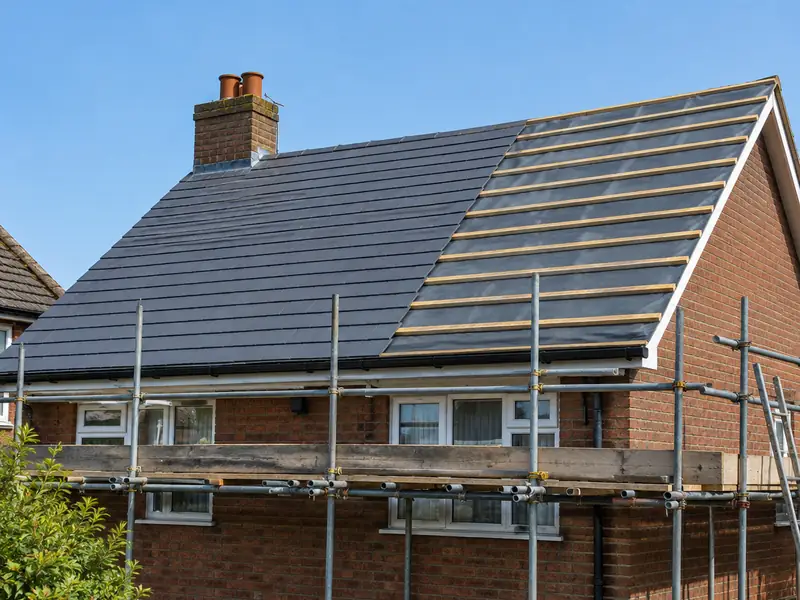
A roof replacement, or re-roof, strips the old tiles or slates, battens and felt from a pitched roof and replaces them with a new breathable membrane, battens and covering, repairing timbers and renewing ridges, valleys and flashings at the same time.
Whatever prompted you to look into a new roof, whether wear and tear, a growing family or plans to move, we can survey your Bridgend home and give you a price in writing. Homes in Wales typically come in at £6,400–£14,000, VAT included, for this kind of work. We also cover Porthcawl, Llantwit Major and Maesteg, and the same steps apply wherever you are in Mid Glamorgan.
- Guide price
- £6,400–£14,000 inc VAT
- Time on site
- 1–2 weeks on site, plus scaffolding time
- Postcodes
- CF31
- Planning rules
- Wales
- Local area
- Mid Glamorgan
- Survey
- Free, with a written quote
How much does a new roof cost in Bridgend?
What will a new roof cost in Bridgend? Our guide range is £6,400–£14,000 including VAT. That figure is adjusted for Wales, about 8% below the national guide, and is intended for planning a budget. A firm written price for your chosen specification follows a free survey at your home.
| Type of job | What it usually involves | Guide in Bridgend |
|---|---|---|
| Terraced house or bungalow | A smaller pitched roof re-covered in concrete or clay tiles, including scaffolding. | £4,600–£9,200 |
| Typical semi-detached | A 3-bed semi re-roofed in concrete or clay tiles with new membrane, battens and leadwork. | £6,400–£14,000 |
| Detached or natural slate | Larger or more complex roofs, or any roof finished in natural slate. | £11,000–£23,000 |
The main things that change the figure:
- Roof area, pitch and the number of hips, valleys and dormers
- Covering material: concrete tile, clay tile or natural slate
- Chimneys, leadwork and roof windows to rework
- Scaffolding, access and the height of the house
What does the job include in Bridgend?
- Survey of the covering, timbers, chimneys and loft ventilation
- Stripping old tiles or slates, battens and felt in stages
- Repairs or replacement of damaged rafters and fascia boards
- Breathable membrane and new treated battens
- Ridges, hips and verges dry-fixed or bedded, with new leadwork
- Waste removal by skip and a clean site on completion
What are homes like around Bridgend?
The Rhondda, Cynon and Merthyr valleys are lined with stone terraces built for mining families, stepped along steep hillsides. Pontypridd, Caerphilly and Merthyr Tydfil have Victorian centres, and Bridgend has grown with large modern estates alongside interwar and post-war housing.
The valleys get heavy rainfall and steep, sloping sites are common, so drainage, retaining walls and render specification matter.
If your house in Bridgend fits one of these patterns, it helps us anticipate what a new roof will involve, though we always confirm the details on site.
Do you need permission in Bridgend?
For anyone in Bridgend, the relevant framework is Wales's. The summary below is general, so we always contact the council about your address before putting a price in writing.
Re-roofing with similar materials does not usually need planning permission in Wales, except on listed buildings or where a conservation area restricts materials.
Building Regulations in Wales apply to major re-roofing, including insulation upgrades. Bats are protected across the UK; if they roost under roof tiles, soffits or fascias, work stops and a licensed ecologist advises before it restarts.
Rules change and every property is different, so we check the planning history and constraints for your address before we quote.
How does the job run?
We look at the job
Book a visit and we'll come to you. The survey covers measurements, the state of what's there now and any obvious constraints, so the price that follows is based on your actual home, not an average.
Written quote
We turn the survey notes into a written quote. The price is fixed for the specification we agree, and the document sets out materials, scope and payment stages in plain language.
Dates and permissions
We handle the paperwork side: checking whether planning permission or building control approval is needed, submitting applications where they are, and scheduling the trades and materials around your dates.
On site to finish
On site, the agreed plan is followed and any change is put in writing first. At completion we do a final clean, go through the snagging list with you and leave you with the relevant documents.
What you can expect from us
Roof replacement in Bridgend: questions
How long does a roof replacement take?
Re-roofing a typical semi-detached house takes around one to two weeks once scaffolding is up, depending on the roof's size, complexity and the weather. Smaller terraced roofs can take a few days. Scaffolding usually goes up a day or two before work starts and comes down once everything is inspected. We give you a programme and keep the roof weathertight overnight.
Who do I deal with during the job?
One point of contact manages your project from survey to handover. They schedule the trades working under our contract, keep you updated on progress, and are the person to call with any question. You don't need to coordinate builders, electricians or decorators separately, because that is part of what we do.
Will my loft insulation and ventilation be improved?
Re-roofing is a good time to improve loft ventilation and insulation. A breathable membrane and eaves or ridge vents keep air moving and reduce condensation in the loft. Building regulations may require insulation upgrades when a large part of the roof is renewed. We check your current insulation and ventilation and include any required improvements in the quote.
Is the price fixed?
Yes, for the specification we agree. Your written quote sets out exactly what is included at a fixed price. It only changes if you ask for something different, or if a problem the survey could not reasonably reveal later needs extra work. In either case we explain the change and confirm it in writing before going ahead.
How long will a new roof last?
A well-installed roof lasts for decades. Concrete tiles typically last around 50 years or more, clay tiles longer, and natural slate can last a century with proper upkeep. Lifespan depends on the quality of materials, fixings, ventilation and leadwork, and on how exposed the roof is. Keeping gutters clear and fixing slipped tiles quickly helps it reach its full life.
Also covering areas around Bridgend
From CF31 to the edges of Bridgend and on into Porthcawl, Llantwit Major and Maesteg, we can arrange a site visit and a written quote for your project, planned around dates that work for you.