
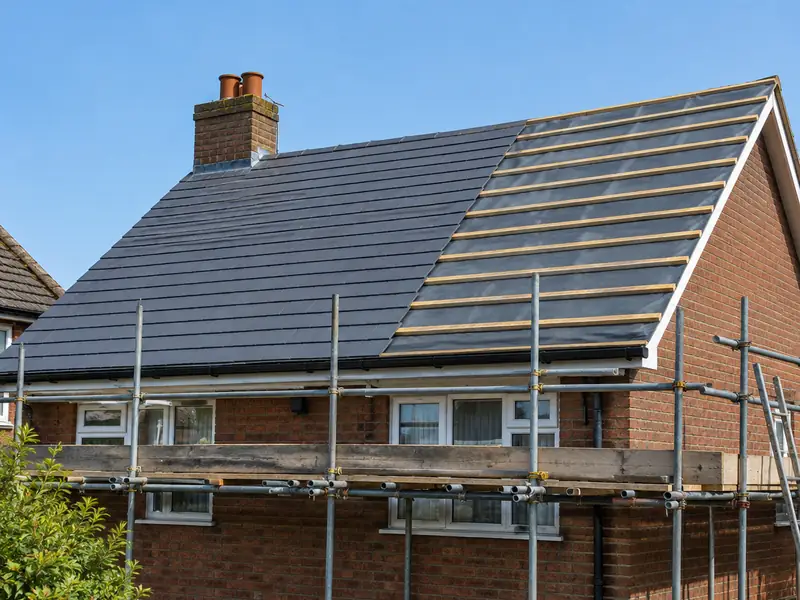
A roof replacement, or re-roof, strips the old tiles or slates, battens and felt from a pitched roof and replaces them with a new breathable membrane, battens and covering, repairing timbers and renewing ridges, valleys and flashings at the same time.
Horsforth sits within our coverage for a new roof, as do neighbouring Yeadon, Pudsey and Guiseley. Before giving a price we want to see the property: the condition of what's there now, the access, and anything that might need extra work. The guide range for Yorkshire and the Humber is £6,600–£14,000 including VAT, and your written quote will spell out exactly what that covers.
- Guide price
- £6,600–£14,000 inc VAT
- Time on site
- 1–2 weeks on site, plus scaffolding time
- Postcodes
- LS5, LS13, LS16, LS18 and LS19
- Planning rules
- England
- Local area
- Leeds
- Survey
- Free, with a written quote
How much does a new roof cost in Horsforth?
In Horsforth, guide figures for a new roof sit at £6,600–£14,000, VAT included. We set them using rates for Yorkshire and the Humber, currently about 6% below the national guide. The table shows what pushes a project towards either end of the range; your own price is set after a free survey.
| Type of job | What it usually involves | Guide in Horsforth |
|---|---|---|
| Terraced house or bungalow | A smaller pitched roof re-covered in concrete or clay tiles, including scaffolding. | £4,700–£9,400 |
| Typical semi-detached | A 3-bed semi re-roofed in concrete or clay tiles with new membrane, battens and leadwork. | £6,600–£14,000 |
| Detached or natural slate | Larger or more complex roofs, or any roof finished in natural slate. | £11,500–£23,500 |
The main things that change the figure:
- Roof area, pitch and the number of hips, valleys and dormers
- Covering material: concrete tile, clay tile or natural slate
- Chimneys, leadwork and roof windows to rework
- Scaffolding, access and the height of the house
Scope of the work
- Stripping old tiles or slates, battens and felt in stages
- Repairs or replacement of damaged rafters and fascia boards
- Breathable membrane and new treated battens
- New tiles or slates, or sound originals refitted where suitable
- Ridges, hips and verges dry-fixed or bedded, with new leadwork
- Waste removal by skip and a clean site on completion
Homes in West Yorkshire
Leeds and Bradford are known for back-to-back and through terraces, many in sandstone or millstone grit, with stone-slate roofs on older properties. Halifax, Huddersfield and the Calder valley have mill-town stone terraces climbing steep hillsides, and interwar semis, post-war estates and newer housing surround the larger towns.
Back-to-backs and through terraces often suit dormer loft conversions and careful kitchen layouts. Stone properties commonly need repointing with suitable mortar, roof repairs and window replacement, and hillside plots can need retaining walls.
These patterns matter for a new roof: older walls, roofs and floors in Horsforth can need different materials or extra preparation compared with newer homes.
Planning and building rules in Horsforth
England, Wales, Scotland and Northern Ireland each handle planning a little differently. Horsforth comes under England, covered below, and we raise any questions with the council before your quote is finalised.
Re-roofing a house with similar materials does not usually need planning permission in England. Listed buildings and conservation areas may need consent if the covering changes.
Replacing more than a quarter of a roof’s covering counts as renovation under Building Regulations, so the work is notified and the roof insulation may need upgrading. Bats are protected across the UK; if they roost under roof tiles, soffits or fascias, work stops and a licensed ecologist advises before it restarts.
Rules change and every property is different, so we check the planning history and constraints for your address before we quote.
How does the job run?
Survey and measure
A free survey comes first. It gives us what we need to price a new roof properly, including dimensions, existing materials and access for deliveries, and gives you the chance to ask anything you like.
Your fixed price
You get the price in writing, itemised so you can see where the money goes. As long as the specification stays the same, that is the price you pay for a new roof.
Getting ready
Once you accept, we agree start dates, order materials and deal with any planning, building control or neighbour notices the job needs. You'll know who is coming and when before work begins.
Finish and handover
On site, the agreed plan is followed and any change is put in writing first. At completion we do a final clean, go through the snagging list with you and leave you with the relevant documents.
Why homeowners choose us
Common questions
Who do I deal with during the job?
One point of contact manages your project from survey to handover. They schedule the trades working under our contract, keep you updated on progress, and are the person to call with any question. You don't need to coordinate builders, electricians or decorators separately, because that is part of what we do.
What happens if it rains during the work?
We strip the roof in sections and only remove as much covering as we can replace or protect the same day. New breathable membrane goes on straight after stripping, which keeps most rain out, and we sheet exposed areas at the end of each day and before forecast showers. If heavy rain or high winds are forecast, we pause work. The house is never left open.
What happens at the survey?
We visit your home at a time that suits you, look at the area involved, take measurements and check access, condition and any services that might be affected. We talk through what you want from a new roof, explain the options and answer questions. There is no charge and no obligation; afterwards we send a written quote.
Can my old tiles or slates be reused?
Old tiles or slates can sometimes be reused if they are sound, which can help keep the look of a period house. Many older concrete tiles and some slates are porous, cracked or have failing fixing nibs, so they would not last. Reclaimed slates or tiles can make up shortfalls. We check a sample during the survey and explain the cost difference.
Will my loft insulation and ventilation be improved?
Re-roofing is a good time to improve loft ventilation and insulation. A breathable membrane and eaves or ridge vents keep air moving and reduce condensation in the loft. Building regulations may require insulation upgrades when a large part of the roof is renewed. We check your current insulation and ventilation and include any required improvements in the quote.
Also covering areas around Horsforth
Coverage for Horsforth spans LS5, LS13, LS16 and LS18. Close by, Yeadon, Pudsey and Guiseley are covered too, and the rest of our UK-wide area follows the same survey-then-quote process from start to finish.