
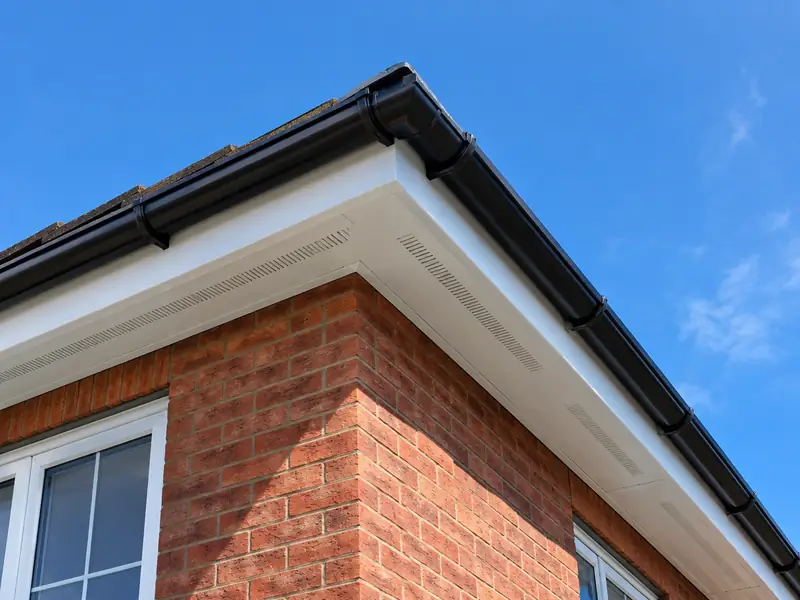
Roofline replacement renews the fascia boards that carry your gutters, the soffits beneath the eaves, bargeboards on gable ends and the gutters and downpipes, usually in low-maintenance uPVC, to protect rafter ends and carry rainwater safely away.
For a homeowner in Blackheath, planning new fascias, soffits and guttering tends to begin with two questions: what will it cost, and how disruptive will it be? Our guide range is £2,600–£5,800 including VAT, and a typical job runs to 1–3 days for a typical house. Both numbers firm up once we have seen the property, measured up and agreed exactly what is included.
- Guide price
- £2,600–£5,800 inc VAT
- Time on site
- 1–3 days for a typical house
- Postcodes
- SE3, SE4, SE7, SE10 and SE12
- Planning rules
- England
- Local area
- Greater London
- Survey
- Free, with a written quote
What should you budget for new fascias, soffits and guttering in Blackheath?
What will new fascias, soffits and guttering cost in Blackheath? Our guide range is £2,600–£5,800 including VAT. That figure is adjusted for London, about 30% above the national guide, and is intended for planning a budget. A firm written price for your chosen specification follows a free survey at your home.
| Type of job | What it usually involves | Guide in Blackheath |
|---|---|---|
| Guttering and downpipes only | New gutters and downpipes on a typical house, where fascias are sound. | £500–£1,950 |
| Full roofline on a semi | Fascias, soffits, gutters and downpipes on the front and rear of a 3-bed semi. | £2,600–£5,800 |
| Detached or with bargeboards | Larger houses, gable bargeboards, dormers or extensive rafter repairs. | £5,200–£10,500 |
Your price depends mostly on:
- Length of eaves and number of gable ends
- Colour and finish of the uPVC or metal chosen
- Rafter end repairs found when old boards come off
- Scaffolding and access, including over conservatories
What’s included?
- Scaffolding or access towers as needed
- Removal and disposal of old fascias, soffits and gutters
- Repairs to rotten rafter ends and sprockets
- New uPVC fascias, soffits and bargeboards in your chosen colour
- Eaves ventilation and tile support trays fitted
- Downpipes connected to existing drains and the site cleaned
What are homes like around Blackheath?
London's housing is dominated by Victorian and Edwardian terraces, often in yellow London stock brick, with Georgian terraces in central districts and mansion blocks across many inner areas. Outer boroughs have large belts of interwar semis, and there are extensive post-war council estates. Many houses have been split into flats, and conservation areas are widespread.
Terraces suit side-return extensions and rear dormer loft conversions; interwar semis commonly take hip-to-gable lofts. Shared party walls, restricted parking and conservation rules often shape the plans and the programme.
That variety is why a guide price for new fascias, soffits and guttering in Blackheath is only a starting point; the survey shows what your particular property needs.
Planning and building rules in Blackheath
Each UK nation sets its own consent rules, and Blackheath is in England. What follows is a plain summary; we check the specifics for your property with the council before pricing anything.
Replacing fascias, soffits and guttering does not need planning permission in England unless the house is listed or a conservation area restricts materials.
Building Regulations do not normally apply to like-for-like roofline replacement. Bats are protected across the UK; if they roost under roof tiles, soffits or fascias, work stops and a licensed ecologist advises before it restarts.
Rules change and every property is different, so we check the planning history and constraints for your address before we quote.
The four stages
A visit to your home
Book a visit and we'll come to you. The survey covers measurements, the state of what's there now and any obvious constraints, so the price that follows is based on your actual home, not an average.
Price and scope agreed
Next you receive a written quote with a fixed price for the agreed specification. It lists what is included, what is not, and how payments are staged, so you can compare it properly.
Booking the work
Preparation matters as much as the build. We agree access, parking and working hours with you, order materials in good time, and confirm any permissions so the job isn't held up once it starts.
On site to finish
Our trades complete new fascias, soffits and guttering while your point of contact keeps you updated. When everything is finished, we clear the site, take away waste and go through the result with you before handover.
How we work
Fascias, soffits and guttering in Blackheath: questions
Which postcodes in Blackheath do you cover?
We cover SE3, SE4, SE7 and SE10, along with the rest of London. If your postcode is not listed, get in touch anyway: our coverage is UK-wide, and we can usually arrange a survey wherever you live. Enter your postcode in the guide-price tool or contact form and we will confirm.
What if birds or bats are nesting in my roofline?
Nesting birds and roosting bats are protected by law across the UK, so work that would disturb an active nest or roost must wait or be planned with advice. Birds commonly nest under the eaves in spring and summer. If we find signs during the survey, we explain the options and timing. New soffits can include gaps or boxes for wildlife if you want them.
Can I stay at home during the work?
In most cases, yes. Most people can live at home throughout, and we plan the work to keep disruption down by protecting floors, agreeing working hours and keeping access routes clear. Bigger jobs affecting kitchens, bathrooms or heating may mean a short spell with reduced facilities, and we talk this through with you at the survey.
How long does roofline replacement take?
Replacing fascias, soffits and guttering on a typical semi-detached house usually takes one to three days, once scaffolding is in place. Larger houses, dormers and gable bargeboards take longer, as do rafter repairs found when the old boards come off. We work one elevation at a time and connect the new guttering as we go, so rainwater is always carried away.
Why do my gutters overflow?
Gutters usually overflow because they are blocked by leaves, moss or debris, have lost their fall so water sits rather than running to the outlet, or are too small for the roof area. Sagging brackets and failed joints also cause leaks. We check falls, joints and outlet sizes during the survey and may suggest deeper gutters or extra downpipes for large roofs.
Nearby towns
Blackheath and its SE3, SE4, SE7 and SE10 postcodes are part of our coverage. Homeowners in Greenwich, Catford and Eltham can also book a free survey with us and receive a written price for their job.