
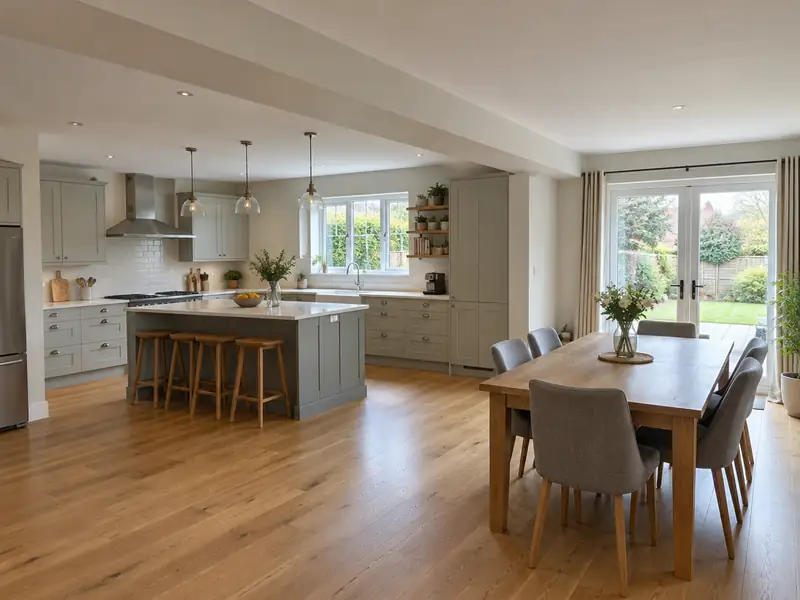
Wall removal is taking out an internal wall to open up rooms; where the wall is load-bearing, a steel beam sized by a structural engineer is installed on padstones to carry the weight above, with the work approved by building control.
Every house in Strabane is a little different, so we never price removing a wall from a brochure. We look at the structure, access and existing finishes first, then put in writing a fixed figure for the scope we settle on. As a rough steer, homeowners in Northern Ireland should budget £2,600–£6,900 including VAT, with work typically taking 1–3 weeks including making good.
- Guide price
- £2,600–£6,900 inc VAT
- Time on site
- 1–3 weeks including making good
- Postcodes
- BT82
- Planning rules
- Northern Ireland
- Local area
- County Tyrone
- Survey
- Free, with a written quote
How much does removing a wall cost in Strabane?
Every figure below is a guide for removing a wall in Strabane, inclusive of VAT. Regional pricing for Northern Ireland works out about 14% below the national guide, and the overall span is £2,600–£6,900. The survey costs you nothing, and after it we commit to a firm price for your specification in writing.
| Type of job | What it usually involves | Guide in Strabane |
|---|---|---|
| Non-load-bearing wall | Removing a stud or block partition and making good walls, ceiling and floor. | £700–£1,700 |
| Load-bearing wall up to 4m | A typical kitchen-diner knock-through with one steel beam, calculations and building control. | £2,600–£6,900 |
| Wide or complex opening | Openings over 4m, posts, flush beams or chimney breast removal. | £6,900–£14,000 |
The main things that change the figure:
- Opening width and the load the wall carries
- Beam size, posts, flush fixing and padstone details
- Services in the wall that need rerouting
- Floor and ceiling repairs where the wall stood
Scope of the work
- Survey to establish what the wall supports and where loads go
- Structural engineer's calculations and beam specification
- Building control application and inspections
- Temporary propping and dust protection during the work
- Wall taken down and waste removed from site
- Plastering, flooring repairs and making good ready for decorating
Local housing and removing a wall
Tyrone is largely rural, with detached houses and bungalows on individual plots across the countryside, many finished in render or roughcast. Omagh, Dungannon, Cookstown and Strabane have Victorian terraced streets, post-war estates and newer developments, and stone farmhouses survive in older rural areas.
Wet and fairly cool, with upland exposure in the Sperrins and frost common through the winter months.
For removing a wall in Strabane, this means checking things like wall construction, roof structure and existing services before we put a figure on paper.
Planning and building rules in Strabane
England, Wales, Scotland and Northern Ireland each handle planning a little differently. Strabane comes under Northern Ireland, covered below, and we raise any questions with the council before your quote is finalised.
Removing an internal wall does not need planning permission in Northern Ireland unless the building is listed.
Structural alterations need building control approval and engineer’s calculations. There is no Party Wall Act in Northern Ireland.
Rules change and every property is different, so we check the planning history and constraints for your address before we quote.
How does the job run?
We look at the job
It starts with a survey at the property, free of charge. We check condition, access and services, ask how you want the finished result to look, and answer any questions you have about removing a wall.
Your fixed price
You get the price in writing, itemised so you can see where the money goes. As long as the specification stays the same, that is the price you pay for removing a wall.
Booking the work
Before anyone starts, we confirm the programme in writing, check whether consents are required and arrange deliveries. If a skip or scaffolding on the road needs a permit, we apply for it.
Finish and handover
On site, the agreed plan is followed and any change is put in writing first. At completion we do a final clean, go through the snagging list with you and leave you with the relevant documents.
Why homeowners choose us
Common questions
How long will removing a wall take?
On a typical home, allow 1–3 weeks including making good. Larger projects, older buildings and extra work found once things are opened up can extend that, while simpler jobs may be shorter. Your quote includes an estimate of time on site, and your point of contact keeps you updated on the programme as the work progresses.
What is a steel beam and why is it needed?
A steel beam, often called an RSJ, is a strong steel section installed where a load-bearing wall used to be, so the weight above is carried across the opening to the walls at each end. It sits on padstones that spread the load. The size depends on the span and the load, which a structural engineer calculates. The beam is then boxed in or plastered.
Can I stay at home during the work?
In most cases, yes. Most people can live at home throughout, and we plan the work to keep disruption down by protecting floors, agreeing working hours and keeping access routes clear. Bigger jobs affecting kitchens, bathrooms or heating may mean a short spell with reduced facilities, and we talk this through with you at the survey.
Does the Party Wall Act apply to wall removal?
The Party Wall etc. Act 1996 applies in England and Wales only. Removing an internal wall usually does not involve it, but if the beam bears into a wall shared with a neighbour, as is common in terraced and semi-detached houses, you must serve notice first. Scotland and Northern Ireland have no equivalent Act. We tell you during the survey whether notices are needed.
How much does it cost to remove a load-bearing wall?
Removing a load-bearing wall of about 3–4m with a steel beam typically costs £2,600–£6,900, including structural calculations, building control and making good. A non-load-bearing partition costs much less. As a rough guide, allow around £600–£1,600 per metre of opening plus fixed costs for the engineer, approvals and propping. Wider openings, posts and flush beams cost more. We confirm a fixed price after the survey.
Nearby towns
Coverage for Strabane spans BT82. Close by, Derry/Londonderry, Omagh and Limavady are covered too, and the rest of our UK-wide area follows the same survey-then-quote process from start to finish.