
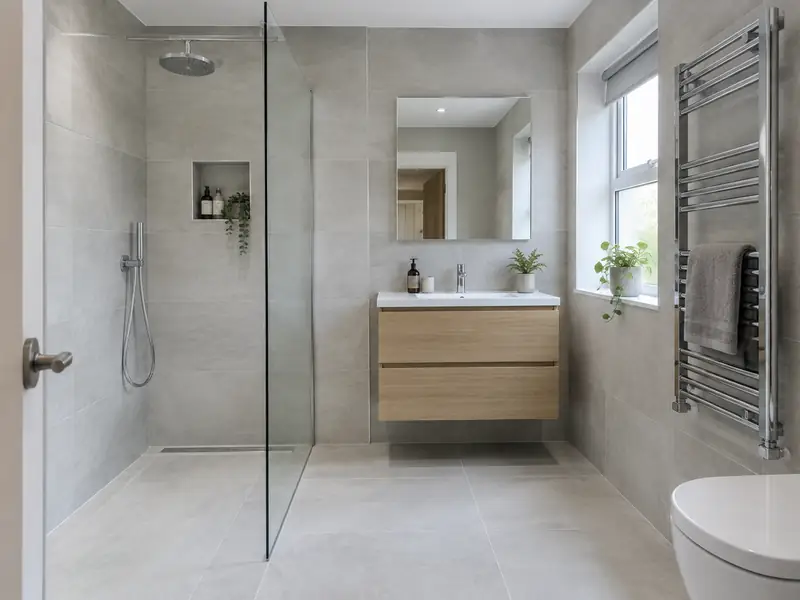
A bathroom installation replaces your old suite with new sanitaryware, a bath or shower, tiling and fittings, including the plumbing, electrics, ventilation and waterproofing needed for a complete, watertight room.
Homes across Isle of Wight vary a great deal, so we price a new bathroom only after seeing the property. Our coverage takes in Newport, Isle of Wight, Ryde, Cowes and Sandown and the surrounding districts. As a guide, expect £5,600–£13,500 including VAT in the South East; the final figure depends on size, materials and access. Any permissions are checked against the rules for England before we quote.
- Guide price
- £5,600–£13,500 inc VAT
- Time on site
- 1–2 weeks per bathroom
- Planning rules
- England
- Price level
- About 12% above the national guide
- Towns listed
- 4
- Survey
- Free, with a written quote
Bathrooms prices in Isle of Wight
What should you budget for a new bathroom in Isle of Wight? Use the figures below as a starting point. Prices in the South East sit about 12% above the national guide, so the range here is £5,600–£13,500 including VAT. Your fixed price comes in writing once we've surveyed the property, at no charge.
| Type of job | What it usually involves | Guide in Isle of Wight |
|---|---|---|
| Shower room or en-suite | A compact room with a shower, basin and toilet, keeping the existing layout. | £4,500–£9,000 |
| Family bathroom | A full suite with bath and shower, new tiling, lighting and an extractor fan. | £5,600–£13,500 |
| Premium bathroom or wet room | Standalone bath, wet room or walk-in shower, underfloor heating and large-format tiles. | £13,500–£22,500 |
What moves the price up or down:
- Room size and the amount of tiling
- Suite, shower and tap specification
- Moving the toilet, bath or shower to a new position
- Wet room waterproofing and underfloor heating
Scope of the work
- Measured survey and layout planning for your room
- Electrics, lighting and extractor fan by qualified trades, with certificates
- Waterproofing behind showers and in wet areas
- Wall and floor tiling to your chosen design
- Bath or shower, basin, toilet and taps fitted and tested
- Heated towel rail, silicone sealing and a final clean
Homes in Isle of Wight
The island has Victorian seaside villas and terraces in Ryde, Ventnor, Shanklin and Cowes, older cottages in island sandstone and limestone, and thatched roofs in some villages. Post-war bungalows, chalets and newer estates are common around Newport and the larger towns.
Victorian villas often need sash-style windows, render repairs and roof work. Bungalows suit loft conversions and extensions, while coastal properties commonly need roofline, fencing and external decorating renewed more often.
Salt and wind exposure is high on most coasts, and parts of the south, such as the Undercliff near Ventnor, are known for ground movement.
Do you need permission in Isle of Wight?
For anyone in Isle of Wight, the relevant framework is England's. The summary below is general, so we always contact the council about your address before putting a price in writing.
Internal work such as a new kitchen, bathroom, flooring, plastering or decorating does not need planning permission in England, unless the house is listed, when listed building consent may be needed even for internal changes.
Some internal work is covered by Building Regulations: new electrical circuits and work in bathrooms (Part P), new drainage, structural changes, extractor ventilation and any new window. Notifiable work is certified by a registered installer or by building control.
Rules change and every property is different, so we check the planning history and constraints for your address before we quote.
How does the job run?
Survey and measure
A free survey comes first. It gives us what we need to price a new bathroom properly, including dimensions, existing materials and access for deliveries, and gives you the chance to ask anything you like.
Price and scope agreed
You get the price in writing, itemised so you can see where the money goes. As long as the specification stays the same, that is the price you pay for a new bathroom.
Getting ready
Before anyone starts, we confirm the programme in writing, check whether consents are required and arrange deliveries. If a skip or scaffolding on the road needs a permit, we apply for it.
Build and hand over
Our trades complete a new bathroom while your point of contact keeps you updated. When everything is finished, we clear the site, take away waste and go through the result with you before handover.
What you can expect from us
Questions about a new bathroom in Isle of Wight
Will I have to go without a bathroom?
If it is your only bathroom, you will usually be without a shower or bath for most of the fitting time. We aim to keep the toilet working overnight wherever possible, refitting it temporarily at the end of each day during strip-out and first fix. If you have a second bathroom or downstairs toilet, the disruption is much easier. We plan the sequence with you before starting.
What ventilation does a bathroom need?
A bathroom needs mechanical ventilation, usually an extractor fan, to remove steam and help prevent condensation and mould. Building regulations set minimum extraction rates for new or refitted bathrooms. A fan linked to the light with an overrun timer, or one with a humidity sensor, works well. Ducting should vent outside by the shortest practical route. We include a suitable fan in every bathroom quote.
Do I need planning permission in Isle of Wight?
It depends on the work, the size of the project, your property type and whether the building is listed or in a conservation area. Isle of Wight is in England, so England's rules apply. Many smaller jobs need no planning application, but some still need building control approval. We check what applies to your address before quoting.
Who do I deal with during the job?
One point of contact manages your project from survey to handover. They schedule the trades working under our contract, keep you updated on progress, and are the person to call with any question. You don't need to coordinate builders, electricians or decorators separately, because that is part of what we do.
Which tiles are easiest to keep clean?
Large-format porcelain tiles are usually easiest to keep clean, because there are fewer grout lines to collect dirt and porcelain absorbs very little water. Glossy tiles show water marks more than matt ones, while textured floor tiles give better grip. Grout colour matters too: mid-grey hides staining better than white. We can suggest anti-slip ratings and grout options that suit how you use the room.
Towns in Isle of Wight
These are the towns in Isle of Wight where you can book a free survey for a new bathroom. Each has its own page with guide prices and coverage details.