
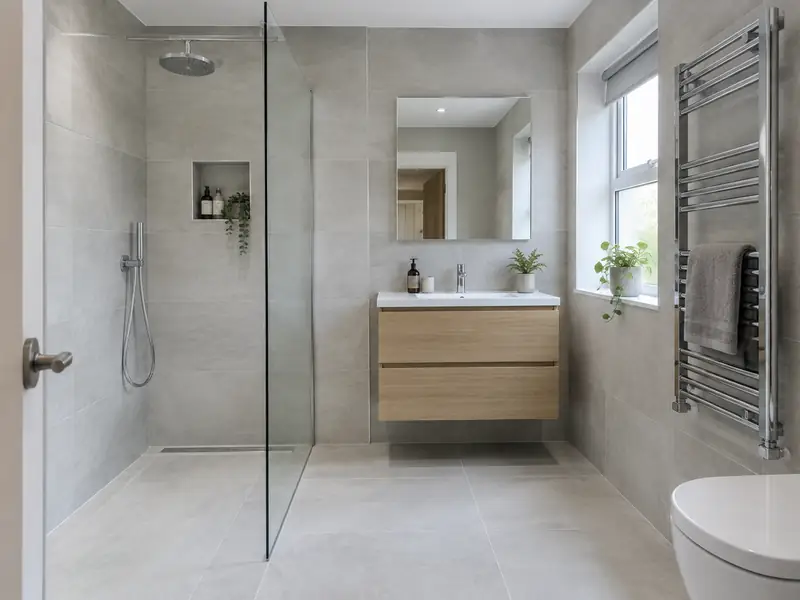
A bathroom installation replaces your old suite with new sanitaryware, a bath or shower, tiling and fittings, including the plumbing, electrics, ventilation and waterproofing needed for a complete, watertight room.
Thinking about a new bathroom in Chalk Farm? We take charge of the whole project, co-ordinating every trade involved, and one person keeps you updated. Guide prices for London sit at £6,500–£15,500 including VAT, and a typical job takes 1–2 weeks per bathroom. Your own figure depends on what the survey finds and the specification you settle on.
- Guide price
- £6,500–£15,500 inc VAT
- Time on site
- 1–2 weeks per bathroom
- Postcodes
- N7, N1C, NW1, NW3 and NW5
- Planning rules
- England
- Local area
- Greater London
- Survey
- Free, with a written quote
What should you budget for a new bathroom in Chalk Farm?
What will a new bathroom cost in Chalk Farm? Our guide range is £6,500–£15,500 including VAT. That figure is adjusted for London, about 30% above the national guide, and is intended for planning a budget. A firm written price for your chosen specification follows a free survey at your home.
| Type of job | What it usually involves | Guide in Chalk Farm |
|---|---|---|
| Shower room or en-suite | A compact room with a shower, basin and toilet, keeping the existing layout. | £5,200–£10,500 |
| Family bathroom | A full suite with bath and shower, new tiling, lighting and an extractor fan. | £6,500–£15,500 |
| Premium bathroom or wet room | Standalone bath, wet room or walk-in shower, underfloor heating and large-format tiles. | £15,500–£26,000 |
The main things that change the figure:
- Room size and the amount of tiling
- Moving the toilet, bath or shower to a new position
- Wet room waterproofing and underfloor heating
- Condition of the floor, walls and existing pipework
What’s included?
- Measured survey and layout planning for your room
- Removal and disposal of the old suite and tiles
- Electrics, lighting and extractor fan by qualified trades, with certificates
- Wall and floor tiling to your chosen design
- Bath or shower, basin, toilet and taps fitted and tested
- Heated towel rail, silicone sealing and a final clean
Homes in London
London's housing is dominated by Victorian and Edwardian terraces, often in yellow London stock brick, with Georgian terraces in central districts and mansion blocks across many inner areas. Outer boroughs have large belts of interwar semis, and there are extensive post-war council estates. Many houses have been split into flats, and conservation areas are widespread.
Terraces suit side-return extensions and rear dormer loft conversions; interwar semis commonly take hip-to-gable lofts. Shared party walls, restricted parking and conservation rules often shape the plans and the programme.
These patterns matter for a new bathroom: older walls, roofs and floors in Chalk Farm can need different materials or extra preparation compared with newer homes.
Permissions for a new bathroom in Chalk Farm
Because Chalk Farm falls under England's rules, the guidance below is the version relevant to you. Before sending a price, we check your property's position with the council.
Internal work such as a new kitchen, bathroom, flooring, plastering or decorating does not need planning permission in England, unless the house is listed, when listed building consent may be needed even for internal changes.
Some internal work is covered by Building Regulations: new electrical circuits and work in bathrooms (Part P), new drainage, structural changes, extractor ventilation and any new window. Notifiable work is certified by a registered installer or by building control.
Rules change and every property is different, so we check the planning history and constraints for your address before we quote.
From survey to handover
A visit to your home
Book a visit and we'll come to you. The survey covers measurements, the state of what's there now and any obvious constraints, so the price that follows is based on your actual home, not an average.
Price and scope agreed
The quote arrives in writing, not over the phone. It covers the full scope, the finishes you've chosen, any exclusions and the payment schedule, with a fixed price tied to that specification.
Booking the work
Before anyone starts, we confirm the programme in writing, check whether consents are required and arrange deliveries. If a skip or scaffolding on the road needs a permit, we apply for it.
The work itself
Our trades complete a new bathroom while your point of contact keeps you updated. When everything is finished, we clear the site, take away waste and go through the result with you before handover.
What you can expect from us
Frequently asked questions
Who do I deal with during the job?
One point of contact manages your project from survey to handover. They schedule the trades working under our contract, keep you updated on progress, and are the person to call with any question. You don't need to coordinate builders, electricians or decorators separately, because that is part of what we do.
Do I need a new boiler for a new shower?
You do not always need a new boiler for a new shower, but your hot water system decides what kind of shower will work well. Combi boilers suit mixer showers directly from the mains. Tank-fed systems may need a pump for good pressure, and electric showers heat their own water. We check your boiler, cylinder and water pressure during the survey and recommend a shower to match.
How long will a new bathroom take?
On a typical home, allow 1–2 weeks per bathroom. Larger projects, older buildings and extra work found once things are opened up can extend that, while simpler jobs may be shorter. Your quote includes an estimate of time on site, and your point of contact keeps you updated on the programme as the work progresses.
Is a wet room right for my home?
A wet room is a fully waterproofed room with a shower area that drains through the floor, with no tray or step. It suits accessible bathrooms and modern designs, and makes cleaning easy. It needs a floor with enough depth for a gentle fall to the drain, and careful tanking of the whole room. Timber floors often need strengthening. We check suitability at the survey.
What ventilation does a bathroom need?
A bathroom needs mechanical ventilation, usually an extractor fan, to remove steam and help prevent condensation and mould. Building regulations set minimum extraction rates for new or refitted bathrooms. A fan linked to the light with an overrun timer, or one with a humidity sensor, works well. Ducting should vent outside by the shortest practical route. We include a suitable fan in every bathroom quote.
Nearby towns
We welcome enquiries from all N7, N1C, NW1 and NW3 postcodes in Chalk Farm, plus Camden Town, Holloway and Archway. Each one gets the same survey at no charge and a written price fixed for the work described.