
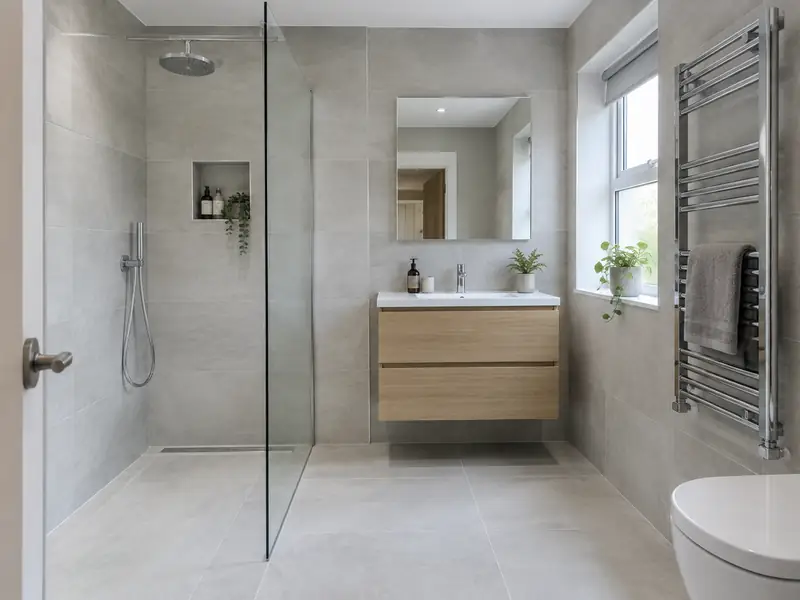
A bathroom installation replaces your old suite with new sanitaryware, a bath or shower, tiling and fittings, including the plumbing, electrics, ventilation and waterproofing needed for a complete, watertight room.
For a homeowner in Didcot, planning a new bathroom tends to begin with two questions: what will it cost, and how disruptive will it be? Our guide range is £5,600–£13,500 including VAT, and a typical job runs to 1–2 weeks per bathroom. Both numbers firm up once we have seen the property, measured up and agreed exactly what is included.
- Guide price
- £5,600–£13,500 inc VAT
- Time on site
- 1–2 weeks per bathroom
- Postcodes
- OX11
- Planning rules
- England
- Local area
- Oxfordshire
- Survey
- Free, with a written quote
Bathrooms prices in Didcot
What will a new bathroom cost in Didcot? Our guide range is £5,600–£13,500 including VAT. That figure is adjusted for the South East, about 12% above the national guide, and is intended for planning a budget. A firm written price for your chosen specification follows a free survey at your home.
| Type of job | What it usually involves | Guide in Didcot |
|---|---|---|
| Shower room or en-suite | A compact room with a shower, basin and toilet, keeping the existing layout. | £4,500–£9,000 |
| Family bathroom | A full suite with bath and shower, new tiling, lighting and an extractor fan. | £5,600–£13,500 |
| Premium bathroom or wet room | Standalone bath, wet room or walk-in shower, underfloor heating and large-format tiles. | £13,500–£22,500 |
Expect these to shape the final quote:
- Suite, shower and tap specification
- Moving the toilet, bath or shower to a new position
- Wet room waterproofing and underfloor heating
- Condition of the floor, walls and existing pipework
What’s included?
- Measured survey and layout planning for your room
- New supply and waste pipework, including concealed fittings
- Waterproofing behind showers and in wet areas
- Wall and floor tiling to your chosen design
- Bath or shower, basin, toilet and taps fitted and tested
- Heated towel rail, silicone sealing and a final clean
Local housing and a new bathroom
West Oxfordshire's Cotswold villages are built of honey-coloured limestone, while Banbury and the north use orange ironstone. Oxford has Victorian terraces in Jericho and East Oxford and Gothic brick villas in North Oxford. Didcot, Bicester and Witney have grown with large new estates around older market-town centres.
Stone cottages often need lime pointing and conservation-sensitive windows. Victorian terraces suit loft conversions and side-return extensions, and newer estate homes commonly take garage conversions and garden landscaping.
So when we survey a Didcot property for a new bathroom, the first step is working out how it was built and what has been changed since.
Permissions for a new bathroom in Didcot
Homes in Didcot come under the regulations for England, summarised below. We don't rely on general rules alone: we confirm the position for your address with the council before a quote goes out.
Internal work such as a new kitchen, bathroom, flooring, plastering or decorating does not need planning permission in England, unless the house is listed, when listed building consent may be needed even for internal changes.
Some internal work is covered by Building Regulations: new electrical circuits and work in bathrooms (Part P), new drainage, structural changes, extractor ventilation and any new window. Notifiable work is certified by a registered installer or by building control.
Rules change and every property is different, so we check the planning history and constraints for your address before we quote.
How does the job run?
A visit to your home
A free survey comes first. It gives us what we need to price a new bathroom properly, including dimensions, existing materials and access for deliveries, and gives you the chance to ask anything you like.
Written quote
Next you receive a written quote with a fixed price for the agreed specification. It lists what is included, what is not, and how payments are staged, so you can compare it properly.
Booking the work
Once you accept, we agree start dates, order materials and deal with any planning, building control or neighbour notices the job needs. You'll know who is coming and when before work begins.
The work itself
The work is carried out to the agreed specification, with floors and furniture protected and the site kept tidy. At the end we clean up, walk through the finished job with you and hand over any certificates.
Working with SK Home Improvements
Common questions
What happens at the survey?
We visit your home at a time that suits you, look at the area involved, take measurements and check access, condition and any services that might be affected. We talk through what you want from a new bathroom, explain the options and answer questions. There is no charge and no obligation; afterwards we send a written quote.
How much will a new bathroom cost in Didcot?
As a guide, expect to pay £5,600–£13,500 including VAT for a new bathroom in Didcot. That range is adjusted for the South East, which runs about 12% above the national guide. Where your project lands depends on size, materials, access and the condition of what is already there. We confirm a fixed price in writing after a free survey of your home.
Do I need a new boiler for a new shower?
You do not always need a new boiler for a new shower, but your hot water system decides what kind of shower will work well. Combi boilers suit mixer showers directly from the mains. Tank-fed systems may need a pump for good pressure, and electric showers heat their own water. We check your boiler, cylinder and water pressure during the survey and recommend a shower to match.
What ventilation does a bathroom need?
A bathroom needs mechanical ventilation, usually an extractor fan, to remove steam and help prevent condensation and mould. Building regulations set minimum extraction rates for new or refitted bathrooms. A fan linked to the light with an overrun timer, or one with a humidity sensor, works well. Ducting should vent outside by the shortest practical route. We include a suitable fan in every bathroom quote.
Which tiles are easiest to keep clean?
Large-format porcelain tiles are usually easiest to keep clean, because there are fewer grout lines to collect dirt and porcelain absorbs very little water. Glossy tiles show water marks more than matt ones, while textured floor tiles give better grip. Grout colour matters too: mid-grey hides staining better than white. We can suggest anti-slip ratings and grout options that suit how you use the room.
Also covering areas around Didcot
Live in Didcot? Our coverage takes in the OX11 postcode areas and reaches out to Abingdon, Oxford and Thatcham, so homes on the outskirts and in the next town along are included.