
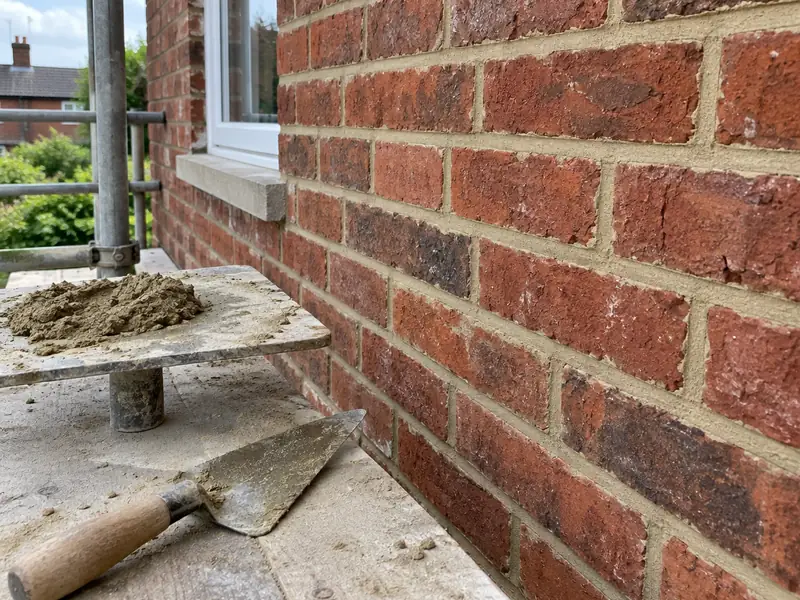
Repointing is raking out old, crumbling mortar from between bricks and replacing it with fresh mortar, sealing the joints against rain and protecting the wall; brickwork repairs replace spalled or cracked bricks and rebuild damaged sections.
If you are planning brickwork and repointing anywhere in East Riding of Yorkshire, including Hull, Bridlington, Beverley and Goole, we can visit, measure up and talk through the options. The planning and building regulations we work to are those for England, and we check them for your address before quoting. Prices remain guide figures for Yorkshire and the Humber, at £2,400–£5,600 including VAT, until the survey is done.
- Guide price
- £2,400–£5,600 inc VAT
- Time on site
- 3–10 days for a typical house
- Planning rules
- England
- Price level
- About 6% below the national guide
- Towns listed
- 5
- Survey
- Free, with a written quote
How much does brickwork and repointing cost in East Riding of Yorkshire?
To help you plan, we show what brickwork and repointing typically costs in East Riding of Yorkshire instead of holding figures back for a sales call. The range is £2,400–£5,600 with VAT, using rates in Yorkshire and the Humber that are about 6% below the national guide. A free survey then fixes your actual price.
| Type of job | What it usually involves | Guide in East Riding of Yorkshire |
|---|---|---|
| Chimney or small area | Repointing a chimney stack, gable or single wall, including access. | £550–£1,700 |
| Typical semi-detached | Repointing the main elevations of a 3-bed semi, including scaffolding. | £2,400–£5,600 |
| Detached or lime work | Larger houses, or period homes repointed in lime with brick repairs. | £4,700–£9,400 |
What moves the price up or down:
- Mortar type: cement or lime, and joint style
- Number of bricks to replace and how well they match
- Scaffolding and access, including chimneys
- Condition of the existing mortar and how hard it is to remove
What’s included?
- Survey of mortar, bricks, cracks and the cause of any damp
- Scaffolding or access towers where needed
- Raking out old mortar to the correct depth
- Mortar mixed to suit the wall, in lime or cement
- Replacement of spalled or cracked bricks
- Waste removal and a tidy site
Housing across East Riding of Yorkshire
Hull has large areas of Victorian and Edwardian terraces, many arranged in the city's distinctive short cul-de-sac terraces running off the main streets, plus extensive interwar and post-war estates. Beverley keeps Georgian brick houses, Wolds villages use chalk and brick, and red clay pantile roofs are common across the area. Coastal towns such as Bridlington mix guest-house terraces with bungalows.
Terraced homes often suit loft rooms and rear extensions; pantile roofs may need re-roofing with matching tiles. Bungalows commonly benefit from loft conversions, and older brick houses need repointing with a suitable mortar.
Much of the area is low-lying near the Humber and coast, with flood risk, cold easterly winds and an eroding Holderness coastline.
Planning and building rules in East Riding of Yorkshire
England, Wales, Scotland and Northern Ireland each handle planning a little differently. East Riding of Yorkshire comes under England, covered below, and we raise any questions with the council before your quote is finalised.
Repointing and repairing brickwork with matching materials is maintenance, so it does not need planning permission in England. On a listed building, work that affects its character, including a change of mortar or brick, may need listed building consent.
Building Regulations do not normally apply to repointing or brick repairs, but rebuilding a wall, chimney or structural section can need building control involvement.
Rules change and every property is different, so we check the planning history and constraints for your address before we quote.
The four stages
A visit to your home
It starts with a survey at the property, free of charge. We check condition, access and services, ask how you want the finished result to look, and answer any questions you have about brickwork and repointing.
Written quote
We turn the survey notes into a written quote. The price is fixed for the specification we agree, and the document sets out materials, scope and payment stages in plain language.
Getting ready
Once you accept, we agree start dates, order materials and deal with any planning, building control or neighbour notices the job needs. You'll know who is coming and when before work begins.
Build and hand over
The work is carried out to the agreed specification, with floors and furniture protected and the site kept tidy. At the end we clean up, walk through the finished job with you and hand over any certificates.
How we work
Frequently asked questions
Do you cover Hull, Bridlington and Beverley?
Yes. As well as East Riding of Yorkshire, we cover Hull, Bridlington and Beverley and the rest of East Riding of Yorkshire. Our coverage is UK-wide, so the process is the same wherever you are: a free site survey, a quote in writing that fixes the price for the agreed scope, and one point of contact while the work is planned and carried out.
How much does repointing a house cost?
Repointing a typical 3-bed semi costs £2,400–£5,600, including scaffolding. As a guide, allow roughly £25–£55 per square metre of wall plus fixed costs for access and set-up. Chimney stacks, lime mortar and brick replacement add cost, while repointing a single elevation costs less. We confirm a fixed price after inspecting your walls.
Is the price fixed?
Yes, for the specification we agree. Your written quote sets out exactly what is included at a fixed price. It only changes if you ask for something different, or if a problem the survey could not reasonably reveal later needs extra work. In either case we explain the change and confirm it in writing before going ahead.
How do I know if my house needs repointing?
A house needs repointing when the mortar between bricks is crumbling, recessed well behind the brick face, cracked or missing. You may be able to scrape it out with a key. Damp patches inside, especially on exposed walls, and plants growing in joints are other signs. Patches of failed mortar can be repointed on their own, but widespread decay usually means a full elevation.
Should my house be repointed with lime or cement?
Houses built before about the 1920s were usually built with soft bricks and lime mortar, and should normally be repointed in lime. Hard cement mortar in these walls traps moisture and can cause the brick faces to crumble. Newer homes built with cement mortar are usually repointed in a similar mix. We check your wall construction before recommending a mortar.
Towns in East Riding of Yorkshire
Below is our list of East Riding of Yorkshire towns for brickwork and repointing. If yours isn't shown, we may still cover it, so it is worth asking us directly.