
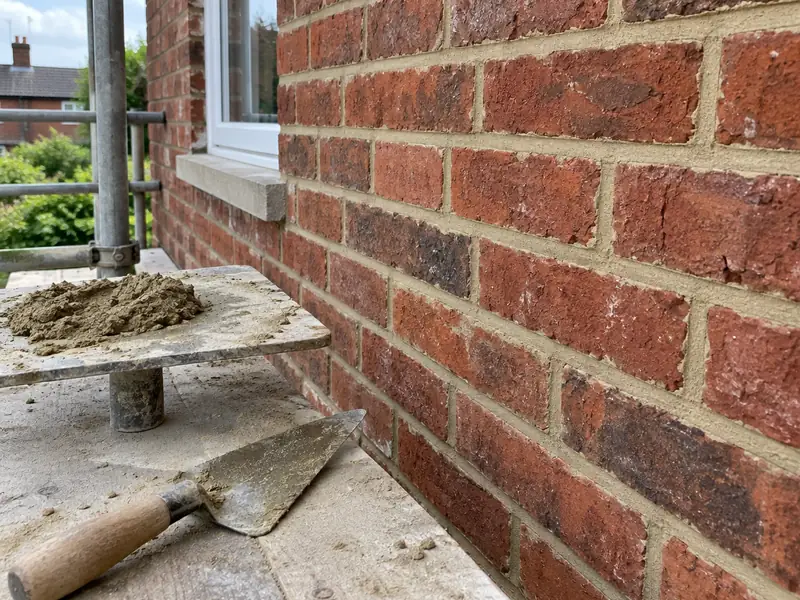
Repointing is raking out old, crumbling mortar from between bricks and replacing it with fresh mortar, sealing the joints against rain and protecting the wall; brickwork repairs replace spalled or cracked bricks and rebuild damaged sections.
Gloucester sits within our coverage for brickwork and repointing, as do neighbouring Cheltenham, Stroud and Tewkesbury. Before giving a price we want to see the property: the condition of what's there now, the access, and anything that might need extra work. The guide range for the South West is £2,600–£6,100 including VAT, and your written quote will spell out exactly what that covers.
- Guide price
- £2,600–£6,100 inc VAT
- Time on site
- 3–10 days for a typical house
- Postcodes
- GL1, GL2 and GL4
- Planning rules
- England
- Local area
- Gloucestershire
- Survey
- Free, with a written quote
Brickwork and repointing prices in Gloucester
Use the table to gauge the cost of brickwork and repointing in Gloucester before we visit. Figures include VAT and are scaled for the South West, coming out about 2% above the national guide, which gives £2,600–£6,100 overall. After a free survey, you receive a fixed written price.
| Type of job | What it usually involves | Guide in Gloucester |
|---|---|---|
| Chimney or small area | Repointing a chimney stack, gable or single wall, including access. | £600–£1,850 |
| Typical semi-detached | Repointing the main elevations of a 3-bed semi, including scaffolding. | £2,600–£6,100 |
| Detached or lime work | Larger houses, or period homes repointed in lime with brick repairs. | £5,100–£10,000 |
The main things that change the figure:
- Wall area to repoint and the height of the house
- Mortar type: cement or lime, and joint style
- Number of bricks to replace and how well they match
- Scaffolding and access, including chimneys
What do you get?
- Survey of mortar, bricks, cracks and the cause of any damp
- Scaffolding or access towers where needed
- Raking out old mortar to the correct depth
- Mortar mixed to suit the wall, in lime or cement
- Replacement of spalled or cracked bricks
- Clean-down of brick faces after pointing
Local housing and brickwork and repointing
Golden Cotswold limestone defines towns and villages such as Cirencester, Stow and Tetbury, often with stone-slate roofs. Cheltenham is known for Regency stucco terraces and villas, Gloucester has Victorian brick terraces and interwar estates, the Stroud valleys have mill-era stone cottages, and the Forest of Dean uses its own sandstone.
Cotswold stone homes often need lime pointing, stone repairs and windows that suit conservation areas. Regency houses may call for render and decorating, while brick terraces and estate homes suit loft rooms and extensions.
With that background in mind, here is how we typically handle brickwork and repointing for homes in Gloucester, from the first visit to the finished result.
Permissions for brickwork and repointing in Gloucester
England, Wales, Scotland and Northern Ireland each handle planning a little differently. Gloucester comes under England, covered below, and we raise any questions with the council before your quote is finalised.
Repointing and repairing brickwork with matching materials is maintenance, so it does not need planning permission in England. On a listed building, work that affects its character, including a change of mortar or brick, may need listed building consent.
Building Regulations do not normally apply to repointing or brick repairs, but rebuilding a wall, chimney or structural section can need building control involvement.
Rules change and every property is different, so we check the planning history and constraints for your address before we quote.
The four stages
A visit to your home
We arrange a free site survey on a date convenient to you. We measure up, look at the existing structure and access, and discuss your plans for brickwork and repointing so the price reflects your home.
Your fixed price
After the survey we send a quote for brickwork and repointing that fixes the price for the scope we've agreed. If you want to change materials or scope, we revise it in writing before anything is booked.
Dates and permissions
We handle the paperwork side: checking whether planning permission or building control approval is needed, submitting applications where they are, and scheduling the trades and materials around your dates.
The work itself
Work goes ahead as scheduled and you deal with one contact throughout. When the last trade leaves, we clear and clean the site, talk you through what has been done and pass on any certificates and care instructions.
What you can expect from us
Common questions
How much does repointing a house cost?
Repointing a typical 3-bed semi costs £2,600–£6,100, including scaffolding. As a guide, allow roughly £25–£55 per square metre of wall plus fixed costs for access and set-up. Chimney stacks, lime mortar and brick replacement add cost, while repointing a single elevation costs less. We confirm a fixed price after inspecting your walls.
Can I stay at home during the work?
In most cases, yes. Most people can live at home throughout, and we plan the work to keep disruption down by protecting floors, agreeing working hours and keeping access routes clear. Bigger jobs affecting kitchens, bathrooms or heating may mean a short spell with reduced facilities, and we talk this through with you at the survey.
Do you cover Cheltenham, Stroud and Tewkesbury?
Yes. As well as Gloucester, we cover Cheltenham, Stroud and Tewkesbury and the rest of Gloucestershire. Our coverage is UK-wide, so the process is the same wherever you are: a free site survey, a quote in writing that fixes the price for the agreed scope, and one point of contact while the work is planned and carried out.
What causes bricks to crumble?
Bricks usually crumble, or spall, when water gets into them and turns to ice, pushing the face off. This is often caused by hard cement mortar or impermeable paint trapping moisture in soft bricks, or by leaking gutters soaking the wall. Damaged bricks can be cut out and replaced with matching ones, or turned round if the back face is sound. We fix the cause at the same time.
When is the right time of year to repoint?
Repointing should be done in mild, dry weather, usually spring to early autumn. Fresh mortar must be kept from frost while it cures, and lime mortar in particular needs protection from frost, rain and strong sun for several days. We cover fresh work with hessian or sheeting where needed and plan the job around the forecast.
Nearby towns
If your address falls within GL1, GL2 and GL4, we cover it. The same goes for neighbouring Cheltenham, Stroud and Tewkesbury, which we include alongside Gloucester when arranging surveys and quotes.