
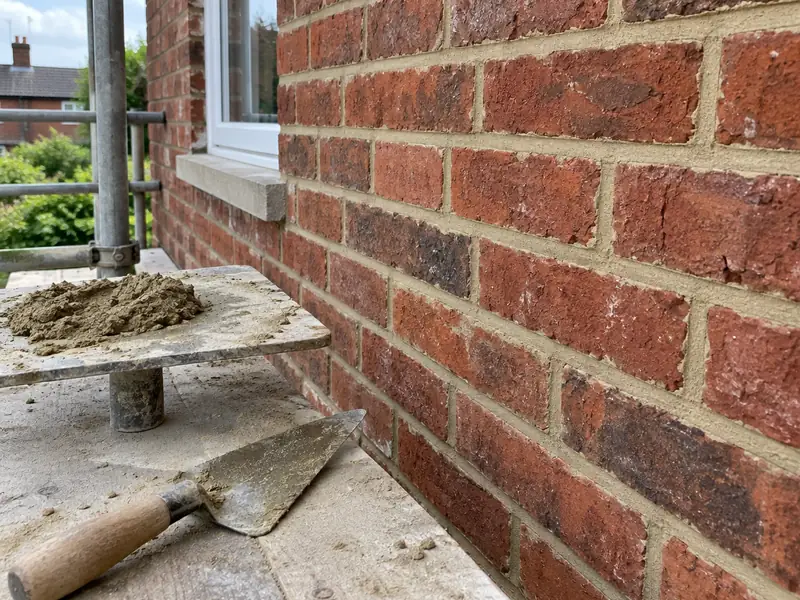
Repointing is raking out old, crumbling mortar from between bricks and replacing it with fresh mortar, sealing the joints against rain and protecting the wall; brickwork repairs replace spalled or cracked bricks and rebuild damaged sections.
In Stroud, as anywhere in Gloucestershire, the price of brickwork and repointing is driven mainly by size, materials and access. Across the South West our guide sits at £2,600–£6,100 with VAT, but restricted parking, a narrow side passage or extra preparation can move the figure either way. That is why every price we give follows a visit to the house.
- Guide price
- £2,600–£6,100 inc VAT
- Time on site
- 3–10 days for a typical house
- Postcodes
- GL5 and GL6
- Planning rules
- England
- Local area
- Gloucestershire
- Survey
- Free, with a written quote
What should you budget for brickwork and repointing in Stroud?
In Stroud, guide figures for brickwork and repointing sit at £2,600–£6,100, VAT included. We set them using rates for the South West, currently about 2% above the national guide. The table shows what pushes a project towards either end of the range; your own price is set after a free survey.
| Type of job | What it usually involves | Guide in Stroud |
|---|---|---|
| Chimney or small area | Repointing a chimney stack, gable or single wall, including access. | £600–£1,850 |
| Typical semi-detached | Repointing the main elevations of a 3-bed semi, including scaffolding. | £2,600–£6,100 |
| Detached or lime work | Larger houses, or period homes repointed in lime with brick repairs. | £5,100–£10,000 |
What moves the price up or down:
- Wall area to repoint and the height of the house
- Number of bricks to replace and how well they match
- Scaffolding and access, including chimneys
- Condition of the existing mortar and how hard it is to remove
What do you get?
- Survey of mortar, bricks, cracks and the cause of any damp
- Raking out old mortar to the correct depth
- Colour and joint style matched as closely as possible
- Replacement of spalled or cracked bricks
- Clean-down of brick faces after pointing
- Waste removal and a tidy site
Homes in Gloucestershire
Golden Cotswold limestone defines towns and villages such as Cirencester, Stow and Tetbury, often with stone-slate roofs. Cheltenham is known for Regency stucco terraces and villas, Gloucester has Victorian brick terraces and interwar estates, the Stroud valleys have mill-era stone cottages, and the Forest of Dean uses its own sandstone.
Cotswold stone homes often need lime pointing, stone repairs and windows that suit conservation areas. Regency houses may call for render and decorating, while brick terraces and estate homes suit loft rooms and extensions.
So when we survey a Stroud property for brickwork and repointing, the first step is working out how it was built and what has been changed since.
Do you need permission in Stroud?
Which rules apply depends on where you live. For Stroud, the answer is England, and the points below reflect that; we verify them with the council before quoting.
Repointing and repairing brickwork with matching materials is maintenance, so it does not need planning permission in England. On a listed building, work that affects its character, including a change of mortar or brick, may need listed building consent.
Building Regulations do not normally apply to repointing or brick repairs, but rebuilding a wall, chimney or structural section can need building control involvement.
Rules change and every property is different, so we check the planning history and constraints for your address before we quote.
The four stages
Survey and measure
We arrange a free site survey on a date convenient to you. We measure up, look at the existing structure and access, and discuss your plans for brickwork and repointing so the price reflects your home.
Quote in writing
You get the price in writing, itemised so you can see where the money goes. As long as the specification stays the same, that is the price you pay for brickwork and repointing.
Dates and permissions
We handle the paperwork side: checking whether planning permission or building control approval is needed, submitting applications where they are, and scheduling the trades and materials around your dates.
Finish and handover
Our trades complete brickwork and repointing while your point of contact keeps you updated. When everything is finished, we clear the site, take away waste and go through the result with you before handover.
Working with SK Home Improvements
Questions about brickwork and repointing in Stroud
How do I know if my house needs repointing?
A house needs repointing when the mortar between bricks is crumbling, recessed well behind the brick face, cracked or missing. You may be able to scrape it out with a key. Damp patches inside, especially on exposed walls, and plants growing in joints are other signs. Patches of failed mortar can be repointed on their own, but widespread decay usually means a full elevation.
Do I need planning permission in Stroud?
It depends on the work, the size of the project, your property type and whether the building is listed or in a conservation area. Stroud is in England, so England's rules apply. Many smaller jobs need no planning application, but some still need building control approval. We check what applies to your address before quoting.
Do you cover Gloucester, Cirencester and Cheltenham?
Yes. As well as Stroud, we cover Gloucester, Cirencester and Cheltenham and the rest of Gloucestershire. Our coverage is UK-wide, so the process is the same wherever you are: a free site survey, a quote in writing that fixes the price for the agreed scope, and one point of contact while the work is planned and carried out.
How much does repointing a house cost?
Repointing a typical 3-bed semi costs £2,600–£6,100, including scaffolding. As a guide, allow roughly £25–£55 per square metre of wall plus fixed costs for access and set-up. Chimney stacks, lime mortar and brick replacement add cost, while repointing a single elevation costs less. We confirm a fixed price after inspecting your walls.
Is repointing messy or noisy?
Raking out old mortar is noisy and dusty, especially when power tools are used on hard mortar. We sheet scaffolding to contain dust, keep windows closed nearby and clear up at the end of each day. The noisy phase moves around the house elevation by elevation. Inside, you may notice some dust on windowsills, so it helps to keep windows shut.
Also covering areas around Stroud
If your address falls within GL5 and GL6, we cover it. The same goes for neighbouring Gloucester, Cirencester and Cheltenham, which we include alongside Stroud when arranging surveys and quotes.