
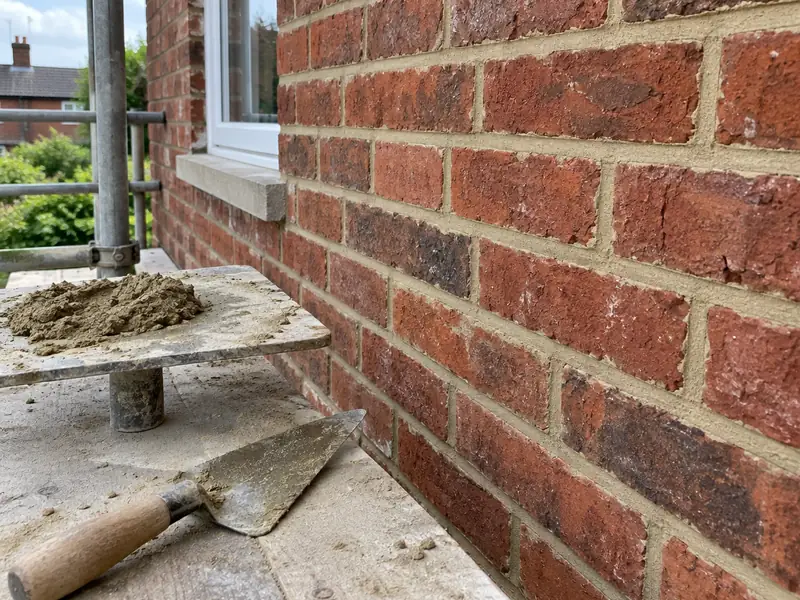
Repointing is raking out old, crumbling mortar from between bricks and replacing it with fresh mortar, sealing the joints against rain and protecting the wall; brickwork repairs replace spalled or cracked bricks and rebuild damaged sections.
From a first conversation about brickwork and repointing to the day the site is cleared, homeowners in Margate deal with us directly. We come out to measure up at no cost, explain the choices in plain terms and send a written quote. For context, comparable work in the South East usually falls within £2,800–£6,700 including VAT, and it is available across CT8, CT9 and CT11.
- Guide price
- £2,800–£6,700 inc VAT
- Time on site
- 3–10 days for a typical house
- Postcodes
- CT8, CT9 and CT11
- Planning rules
- England
- Local area
- Kent
- Survey
- Free, with a written quote
How much does brickwork and repointing cost in Margate?
The costs listed here are typical for brickwork and repointing around Margate and include VAT. They reflect labour and material costs in the South East, about 12% above the national guide, giving a range of £2,800–£6,700. Exact pricing depends on your home, so we only fix it once a free site survey is done.
| Type of job | What it usually involves | Guide in Margate |
|---|---|---|
| Chimney or small area | Repointing a chimney stack, gable or single wall, including access. | £650–£2,000 |
| Typical semi-detached | Repointing the main elevations of a 3-bed semi, including scaffolding. | £2,800–£6,700 |
| Detached or lime work | Larger houses, or period homes repointed in lime with brick repairs. | £5,600–£11,000 |
Expect these to shape the final quote:
- Wall area to repoint and the height of the house
- Mortar type: cement or lime, and joint style
- Scaffolding and access, including chimneys
- Condition of the existing mortar and how hard it is to remove
What does the job include in Margate?
- Survey of mortar, bricks, cracks and the cause of any damp
- Raking out old mortar to the correct depth
- Mortar mixed to suit the wall, in lime or cement
- Colour and joint style matched as closely as possible
- Replacement of spalled or cracked bricks
- Waste removal and a tidy site
Building in Margate
Kent's older buildings include oast houses, weatherboarded cottages, Wealden timber-framed houses and Kentish ragstone walls. Medway towns have long rows of Victorian terraces, Margate and Ramsgate have Regency and Victorian seafronts, and Ashford, Maidstone and Dartford have seen large new estates alongside interwar and post-war housing.
Victorian terraces suit loft rooms and rear extensions; weatherboarded and timber-framed buildings may need cladding repairs and lime work. Newer estate homes often take garage conversions, porches and landscaping.
Knowing the typical building types in Kent helps, but a survey of your own home in Margate is what decides the right approach to brickwork and repointing.
Planning and building rules in Margate
Because Margate falls under England's rules, the guidance below is the version relevant to you. Before sending a price, we check your property's position with the council.
Repointing and repairing brickwork with matching materials is maintenance, so it does not need planning permission in England. On a listed building, work that affects its character, including a change of mortar or brick, may need listed building consent.
Building Regulations do not normally apply to repointing or brick repairs, but rebuilding a wall, chimney or structural section can need building control involvement.
Rules change and every property is different, so we check the planning history and constraints for your address before we quote.
From survey to handover
We look at the job
We begin by looking at the job in person. During the free survey we discuss options, materials and budget for brickwork and repointing, and photograph or measure anything the quote needs to reflect.
Quote in writing
After the survey we send a quote for brickwork and repointing that fixes the price for the scope we've agreed. If you want to change materials or scope, we revise it in writing before anything is booked.
Dates and permissions
Next comes planning the work itself. We set a start date that suits you, line up the right trades, and make sure any approvals for brickwork and repointing are in place before the first day on site.
Build and hand over
Work goes ahead as scheduled and you deal with one contact throughout. When the last trade leaves, we clear and clean the site, talk you through what has been done and pass on any certificates and care instructions.
Why homeowners choose us
Common questions
How long will brickwork and repointing take?
On a typical home, allow 3–10 days for a typical house. Larger projects, older buildings and extra work found once things are opened up can extend that, while simpler jobs may be shorter. Your quote includes an estimate of time on site, and your point of contact keeps you updated on the programme as the work progresses.
Is repointing messy or noisy?
Raking out old mortar is noisy and dusty, especially when power tools are used on hard mortar. We sheet scaffolding to contain dust, keep windows closed nearby and clear up at the end of each day. The noisy phase moves around the house elevation by elevation. Inside, you may notice some dust on windowsills, so it helps to keep windows shut.
Do I need planning permission in Margate?
It depends on the work, the size of the project, your property type and whether the building is listed or in a conservation area. Margate is in England, so England's rules apply. Many smaller jobs need no planning application, but some still need building control approval. We check what applies to your address before quoting.
When is the right time of year to repoint?
Repointing should be done in mild, dry weather, usually spring to early autumn. Fresh mortar must be kept from frost while it cures, and lime mortar in particular needs protection from frost, rain and strong sun for several days. We cover fresh work with hessian or sheeting where needed and plan the job around the forecast.
Should my house be repointed with lime or cement?
Houses built before about the 1920s were usually built with soft bricks and lime mortar, and should normally be repointed in lime. Hard cement mortar in these walls traps moisture and can cause the brick faces to crumble. Newer homes built with cement mortar are usually repointed in a similar mix. We check your wall construction before recommending a mortar.
Nearby towns
We welcome enquiries from all CT8, CT9 and CT11 postcodes in Margate, plus Broadstairs, Ramsgate and Deal. Each one gets the same survey at no charge and a written price fixed for the work described.