
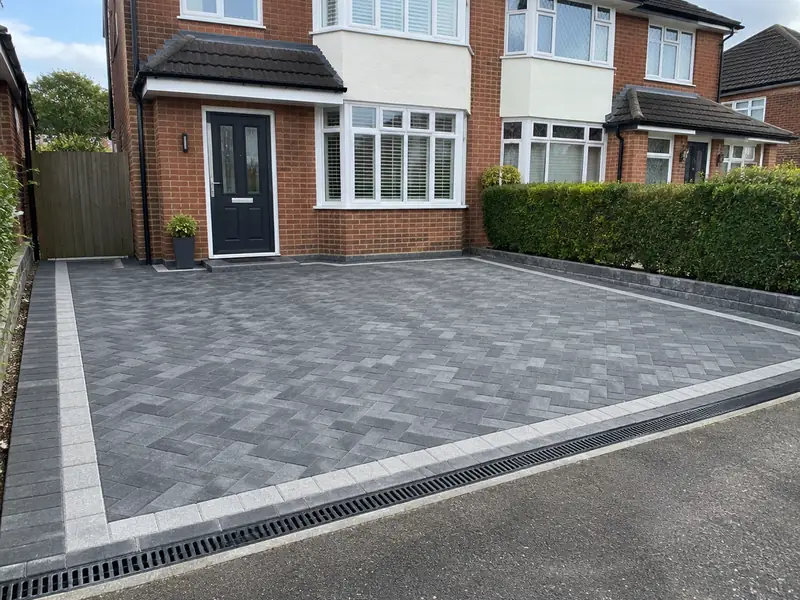
A new driveway is a hard-wearing surface for parking, such as block paving, resin bound gravel, tarmac or gravel, laid on an excavated and compacted sub-base with edging and drainage designed to carry vehicle loads and handle rainwater.
Every house in Cramlington is a little different, so we never price a new driveway from a brochure. We look at the structure, access and existing finishes first, then put in writing a fixed figure for the scope we settle on. As a rough steer, homeowners in the North East should budget £3,600–£8,100 including VAT, with work typically taking 3–7 days on site.
- Guide price
- £3,600–£8,100 inc VAT
- Time on site
- 3–7 days on site
- Postcodes
- NE23
- Planning rules
- England
- Local area
- Northumberland
- Survey
- Free, with a written quote
What should you budget for a new driveway in Cramlington?
Below is a breakdown of typical costs for a new driveway in Cramlington. Because rates in the North East are about 10% below the national guide, the overall guide comes to £3,600–£8,100, including VAT. Size, materials and access move the figure, and a free-of-charge survey settles it.
| Type of job | What it usually involves | Guide in Cramlington |
|---|---|---|
| Gravel or tarmac | A typical 40–50m² drive in gravel on a grid, or tarmac with block edging. | £1,800–£4,500 |
| Block paving or resin bound | A typical 40–50m² drive with sub-base, edging and drainage. | £3,600–£8,100 |
| Large or premium driveway | Larger drives, natural stone, walls, steps or a new dropped kerb. | £7,200–£14,500 |
Expect these to shape the final quote:
- Driveway area and the depth of excavation needed
- Surface: gravel, tarmac, block paving, resin or stone
- Edging, steps, walls and manhole adjustments
- Access for machinery and removal of spoil
What does the job include in Cramlington?
- Survey of levels, drainage, manholes and access
- Excavation and removal of the old surface and soil
- Edging kerbs or restraints to hold the surface in place
- Drainage channels or soakaway where needed
- Manhole covers raised or replaced to new levels
- Site cleared and waste removed
What are homes like around Cramlington?
Stone dominates rural Northumberland, from sandstone farmhouses and villages to fortified bastle houses in the uplands. Alnwick, Hexham and Morpeth have historic stone centres, Berwick has Georgian streets, and south-east towns such as Ashington, Blyth and Bedlington have colliery terraces. Cramlington grew from the 1960s with planned estates.
Stone homes often need lime pointing, roof slating and breathable render. Colliery terraces suit loft conversions and rear extensions, and estate homes commonly take garage conversions and window upgrades.
For a new driveway in Cramlington, this means checking things like wall construction, roof structure and existing services before we put a figure on paper.
Permissions for a new driveway in Cramlington
Which rules apply depends on where you live. For Cramlington, the answer is England, and the points below reflect that; we verify them with the council before quoting.
In England, a new or replacement front-garden surface over 5 m² needs planning permission unless it is permeable or drains to a lawn or border within your property. A new dropped kerb needs consent from the council’s highways team, and access onto a classified road may need planning permission.
Building Regulations do not usually apply to driveways, but drainage must not discharge onto the road or a neighbour’s land.
Rules change and every property is different, so we check the planning history and constraints for your address before we quote.
From survey to handover
Free site survey
We arrange a free site survey on a date convenient to you. We measure up, look at the existing structure and access, and discuss your plans for a new driveway so the price reflects your home.
Written quote
We put everything into a written, fixed-price quote: the specification, what's excluded, staged payments and the expected time on site. Take whatever time you need to decide; there's no pressure to commit.
Getting ready
We handle the paperwork side: checking whether planning permission or building control approval is needed, submitting applications where they are, and scheduling the trades and materials around your dates.
Finish and handover
Work goes ahead as scheduled and you deal with one contact throughout. When the last trade leaves, we clear and clean the site, talk you through what has been done and pass on any certificates and care instructions.
How we work
Common questions
Can I stay at home during the work?
In most cases, yes. Most people can live at home throughout, and we plan the work to keep disruption down by protecting floors, agreeing working hours and keeping access routes clear. Bigger jobs affecting kitchens, bathrooms or heating may mean a short spell with reduced facilities, and we talk this through with you at the survey.
Do I need permission for a dropped kerb?
A dropped kerb lets vehicles cross the pavement onto your drive, and creating or widening one needs consent from your local highways authority. They usually check visibility, the distance from junctions and trees, and whether there is enough space to park off the road. Many councils carry out the kerb work themselves or use approved contractors. We can help with the application.
What happens at the survey?
We visit your home at a time that suits you, look at the area involved, take measurements and check access, condition and any services that might be affected. We talk through what you want from a new driveway, explain the options and answer questions. There is no charge and no obligation; afterwards we send a written quote.
How much does a new driveway cost?
A typical 40–50m² block paved or resin bound driveway costs £3,600–£8,100, including excavation, sub-base, edging and drainage. As a guide, allow roughly £70–£150 per square metre plus fixed costs for machinery and waste. Gravel and tarmac cost less, while natural stone, steps and walls cost more. A new dropped kerb is a separate cost. We confirm a fixed price after measuring.
How do you stop a driveway flooding?
A driveway stays dry when rainwater can drain away rather than pooling or running towards the house. Permeable surfaces such as resin bound gravel or permeable block paving let water soak through to the ground. Non-permeable surfaces need falls directing water to a channel drain, soakaway or garden border. We check levels and drainage during the survey and design the falls accordingly.
Near Cramlington
Cramlington and its NE23 postcodes are part of our coverage. Homeowners in Bedlington, Blyth and Gosforth can also book a free survey with us and receive a written price for their job.