
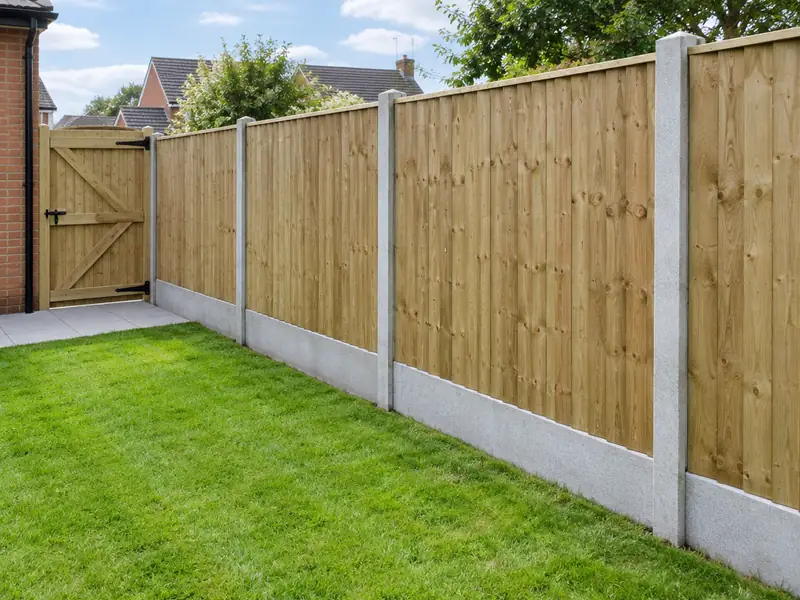
Fencing installation is setting fence posts into the ground, usually in concrete, and fixing panels or boards between them to mark a boundary, add privacy or keep children and pets in, with gates fitted where access is needed.
From a first conversation about new fencing and gates to the day the site is cleared, homeowners in Oban deal with us directly. We come out to measure up at no cost, explain the choices in plain terms and send a written quote. For context, comparable work in Scotland usually falls within £1,150–£2,900 including VAT, and it is available across PA34.
- Guide price
- £1,150–£2,900 inc VAT
- Time on site
- 1–3 days for a typical garden
- Postcodes
- PA34
- Planning rules
- Scotland
- Local area
- Argyll and Bute
- Survey
- Free, with a written quote
How much do new fencing and gates cost in Oban?
No two jobs cost exactly the same, but the ranges below give a fair picture of new fencing and gates in Oban. Pricing for Scotland runs about 4% below the national guide, and the overall guide is £1,150–£2,900 with VAT included. We'll confirm your figure after surveying the property for free.
| Type of job | What it usually involves | Guide in Oban |
|---|---|---|
| Repairs or a short run | Replacing a few panels and posts, or a short run of up to about 6m. | £300–£850 |
| Typical garden boundary | About 20m of panel or closeboard fencing with concrete posts and gravel boards. | £1,150–£2,900 |
| Composite or long runs with gates | Composite or premium fencing, longer runs, or a driveway gate. | £2,900–£6,700 |
Your price depends mostly on:
- Total length and height of fencing
- Fence style and material: panels, closeboard or composite
- Post type: concrete, timber or aluminium
- Number, size and type of gates
Scope of the work
- Removal and disposal of the old fence and posts
- Concrete or timber gravel boards to keep panels off the soil
- Panels or boards fixed level or stepped to follow the ground
- Post caps and capping rails where specified
- Gates hung with hinges, latches and locks
- Site cleared and waste removed
Local housing and new fencing and gates
Much of Argyll and Bute is rural and coastal, with whitewashed or harled stone cottages, slate roofs and island homes. Helensburgh has Victorian villas, Oban, Dunoon and Rothesay have Victorian seaside terraces, and post-war and newer housing surrounds the main towns.
Stone cottages need lime harling, repointing and slate roof repairs; villas may need roof and window renewal. Island and remote properties need the programme planned around ferries, deliveries and weather.
For new fencing and gates in Oban, this means checking things like wall construction, roof structure and existing services before we put a figure on paper.
Do you need permission in Oban?
England, Wales, Scotland and Northern Ireland each handle planning a little differently. Oban comes under Scotland, covered below, and we raise any questions with the council before your quote is finalised.
In Scotland, gates, fences and walls up to 2 m high are usually permitted development, with a 1 m limit in front of the house or next to a road.
A building warrant is not needed for ordinary garden fences.
Rules change and every property is different, so we check the planning history and constraints for your address before we quote.
The four stages
We look at the job
We begin by looking at the job in person. During the free survey we discuss options, materials and budget for new fencing and gates, and photograph or measure anything the quote needs to reflect.
Written quote
We turn the survey notes into a written quote. The price is fixed for the specification we agree, and the document sets out materials, scope and payment stages in plain language.
Dates and permissions
Once you accept, we agree start dates, order materials and deal with any planning, building control or neighbour notices the job needs. You'll know who is coming and when before work begins.
The work itself
The job proceeds in the order set out in the programme, with dust and debris kept under control. Finally we tidy away, inspect the work together and pass the finished project over to you with its paperwork.
Why homeowners choose us
Frequently asked questions
Is the price fixed?
Yes, for the specification we agree. Your written quote sets out exactly what is included at a fixed price. It only changes if you ask for something different, or if a problem the survey could not reasonably reveal later needs extra work. In either case we explain the change and confirm it in writing before going ahead.
How do I make my fence last longer?
A fence lasts longer when timber is kept off the soil and protected from moisture. Gravel boards beneath the panels, concrete posts and keeping plants and soil away from the fence all help. Treat timber with a preservative or stain every few years, and replace damaged boards promptly. Composite fencing needs only occasional washing.
How high can my fence be?
Fence height limits depend on planning rules, your home's location, whether it is listed or in a conservation area, and which UK nation you live in. In England, fences up to 2m high are usually permitted development, reduced to 1m next to a road used by vehicles. Higher fences need planning permission. We check the rules for your boundary before quoting.
What kind of gate do I need?
The right gate depends on its job. A side gate for access to the back garden is usually timber or metal, around 0.9m to 1m wide, with a secure lock. Driveway gates are wider, often in pairs, and need strong posts. Composite and metal gates resist warping. We measure the opening, check posts and suggest hinges, latches and locks for security.
What happens at the survey?
We visit your home at a time that suits you, look at the area involved, take measurements and check access, condition and any services that might be affected. We talk through what you want from new fencing and gates, explain the options and answer questions. There is no charge and no obligation; afterwards we send a written quote.
Near Oban
If your address falls within PA34, we cover it. The same goes for neighbouring Fort William, Dunoon and Helensburgh, which we include alongside Oban when arranging surveys and quotes.