
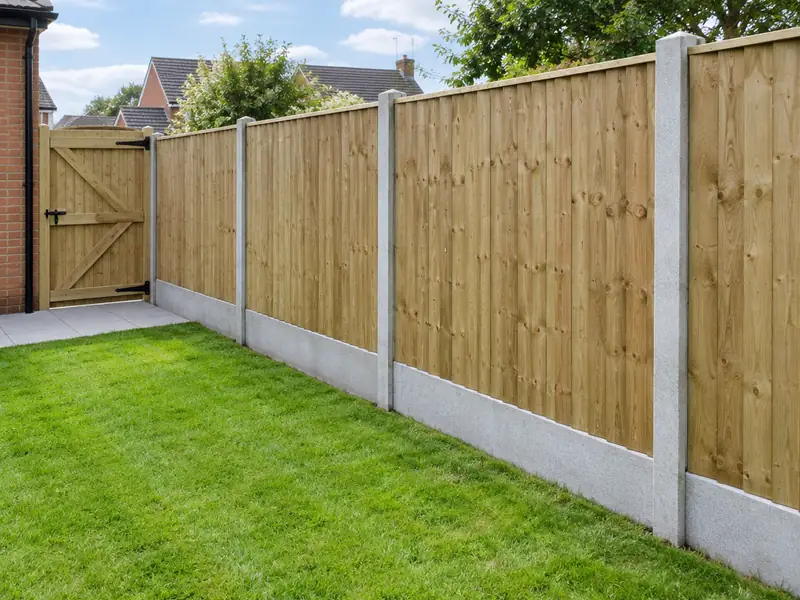
Fencing installation is setting fence posts into the ground, usually in concrete, and fixing panels or boards between them to mark a boundary, add privacy or keep children and pets in, with gates fitted where access is needed.
Across Highlands and Islands, people look into new fencing and gates to replace something worn out, to make the house work better for them, or to get it ready for a sale. We cover Inverness, Isle of Lewis, Fort William and Nairn and the smaller towns around them, working to the rules that apply in Scotland. Expect a guide of £1,150–£2,900, VAT included, in Scotland, and every quote follows a free visit.
- Guide price
- £1,150–£2,900 inc VAT
- Time on site
- 1–3 days for a typical garden
- Planning rules
- Scotland
- Price level
- About 4% below the national guide
- Towns listed
- 4
- Survey
- Free, with a written quote
Fencing and gates prices in Highlands and Islands
What should you budget for new fencing and gates in Highlands and Islands? Use the figures below as a starting point. Prices in Scotland sit about 4% below the national guide, so the range here is £1,150–£2,900 including VAT. Your fixed price comes in writing once we've surveyed the property, at no charge.
| Type of job | What it usually involves | Guide in Highlands and Islands |
|---|---|---|
| Repairs or a short run | Replacing a few panels and posts, or a short run of up to about 6m. | £300–£850 |
| Typical garden boundary | About 20m of panel or closeboard fencing with concrete posts and gravel boards. | £1,150–£2,900 |
| Composite or long runs with gates | Composite or premium fencing, longer runs, or a driveway gate. | £2,900–£6,700 |
Your price depends mostly on:
- Total length and height of fencing
- Fence style and material: panels, closeboard or composite
- Post type: concrete, timber or aluminium
- Number, size and type of gates
What’s included?
- Measured survey of each fence run, levels and slopes
- Removal and disposal of the old fence and posts
- Panels or boards fixed level or stepped to follow the ground
- Post caps and capping rails where specified
- Gates hung with hinges, latches and locks
- Site cleared and waste removed
Homes in Highlands and Islands
Inverness has Victorian villas and terraces and large modern estates, while rural Highland homes range from harled stone cottages and croft houses to modern timber-frame kit houses, which are common across the region. Orkney uses local flagstone, and island and coastal communities mix traditional stone homes with newer bungalows.
Croft houses and stone cottages often need lime harling, re-roofing and window renewal. Bungalows commonly take extensions and loft rooms, and remote projects need careful planning for materials and access.
Exposure to wind, rain and snow can be severe, especially on the west coast and islands, and remote sites need allowance for ferries and weather delays.
Do you need permission in Highlands and Islands?
Which rules apply depends on where you live. For Highlands and Islands, the answer is Scotland, and the points below reflect that; we verify them with the council before quoting.
In Scotland, gates, fences and walls up to 2 m high are usually permitted development, with a 1 m limit in front of the house or next to a road.
A building warrant is not needed for ordinary garden fences.
Rules change and every property is different, so we check the planning history and constraints for your address before we quote.
From survey to handover
A visit to your home
We begin by looking at the job in person. During the free survey we discuss options, materials and budget for new fencing and gates, and photograph or measure anything the quote needs to reflect.
Quote in writing
The quote arrives in writing, not over the phone. It covers the full scope, the finishes you've chosen, any exclusions and the payment schedule, with a fixed price tied to that specification.
Dates and permissions
Next comes planning the work itself. We set a start date that suits you, line up the right trades, and make sure any approvals for new fencing and gates are in place before the first day on site.
Build and hand over
On site, the agreed plan is followed and any change is put in writing first. At completion we do a final clean, go through the snagging list with you and leave you with the relevant documents.
How we work
Frequently asked questions
How high can my fence be?
Fence height limits depend on planning rules, your home's location, whether it is listed or in a conservation area, and which UK nation you live in. In England, fences up to 2m high are usually permitted development, reduced to 1m next to a road used by vehicles. Higher fences need planning permission. We check the rules for your boundary before quoting.
How long does it take to replace a fence?
Replacing a typical 20m garden fence usually takes one to two days, including taking down the old fence, setting posts in concrete and fitting panels or boards. Longer runs, slopes, hard ground and gates take longer. Post concrete needs time to set before panels are fully loaded. We give you an expected timeline with your quote.
Who owns the fence between me and my neighbour?
Fence ownership is usually shown on the title plan or deeds, sometimes with a T mark on the side of the owner. If it is unclear, it may be shared. Even on your own boundary, it is sensible to talk to neighbours before replacing a fence, agree access and confirm the line. We fit the fence on the line you confirm and can face the good side outwards if you wish.
Can you combine new fencing and gates with other work?
Yes. Because we manage several trades under one contract, we can plan new fencing and gates alongside other work on your Highlands and Islands home, such as new windows with rendering, or a kitchen refit with an extension. Combining jobs can reduce repeat set-up such as scaffolding, skips and access, and every element is listed and priced in the same written quote.
How long will new fencing and gates take?
On a typical home, allow 1–3 days for a typical garden. Larger projects, older buildings and extra work found once things are opened up can extend that, while simpler jobs may be shorter. Your quote includes an estimate of time on site, and your point of contact keeps you updated on the programme as the work progresses.
Towns in Highlands and Islands
These are the towns in Highlands and Islands where you can book a free survey for new fencing and gates. Each has its own page with guide prices and coverage details.