
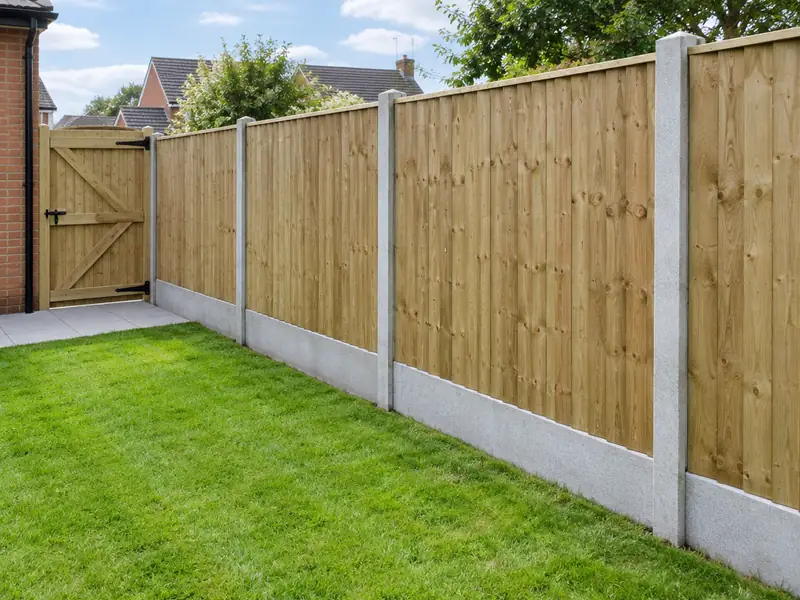
Fencing installation is setting fence posts into the ground, usually in concrete, and fixing panels or boards between them to mark a boundary, add privacy or keep children and pets in, with gates fitted where access is needed.
Perth and Kinross is part of our UK-wide coverage for new fencing and gates. Places we cover include Perth, Blairgowrie, Crieff and Auchterarder, and we travel to smaller communities across the area as well. Since your property is in Scotland, the relevant planning and building rules are the ones set there. In Scotland, budget around £1,150–£2,900 with VAT; the figure is confirmed after a survey that costs you nothing.
- Guide price
- £1,150–£2,900 inc VAT
- Time on site
- 1–3 days for a typical garden
- Planning rules
- Scotland
- Price level
- About 4% below the national guide
- Towns listed
- 4
- Survey
- Free, with a written quote
How much do new fencing and gates cost in Perth and Kinross?
To help you plan, we show what new fencing and gates typically costs in Perth and Kinross instead of holding figures back for a sales call. The range is £1,150–£2,900 with VAT, using rates in Scotland that are about 4% below the national guide. A free survey then fixes your actual price.
| Type of job | What it usually involves | Guide in Perth and Kinross |
|---|---|---|
| Repairs or a short run | Replacing a few panels and posts, or a short run of up to about 6m. | £300–£850 |
| Typical garden boundary | About 20m of panel or closeboard fencing with concrete posts and gravel boards. | £1,150–£2,900 |
| Composite or long runs with gates | Composite or premium fencing, longer runs, or a driveway gate. | £2,900–£6,700 |
The main things that change the figure:
- Fence style and material: panels, closeboard or composite
- Post type: concrete, timber or aluminium
- Ground conditions, slopes and removal of the old fence
- Number, size and type of gates
Scope of the work
- Measured survey of each fence run, levels and slopes
- Removal and disposal of the old fence and posts
- Concrete or timber posts set in concrete
- Concrete or timber gravel boards to keep panels off the soil
- Post caps and capping rails where specified
- Site cleared and waste removed
Homes in Perth and Kinross
Perth has Georgian terraces and Victorian sandstone villas, Highland Perthshire towns such as Pitlochry and Aberfeldy have stone villas and cottages, and Kinross and Crieff mix older stone housing with post-war and modern estates. Slate roofs and harled finishes are common in rural areas.
Sandstone villas in Perth and Highland Perthshire often need repointing and slate roof repairs, and many sit in conservation areas. Semis and newer homes commonly take extensions, garage conversions and garden landscaping.
Inland areas get hard frosts and snow on higher ground, and the Tay and its tributaries have a history of flooding.
Do you need permission in Perth and Kinross?
Perth and Kinross is in Scotland, so the planning and building rules set out below are the ones that apply. We confirm the details with the council before we quote.
In Scotland, gates, fences and walls up to 2 m high are usually permitted development, with a 1 m limit in front of the house or next to a road.
A building warrant is not needed for ordinary garden fences.
Rules change and every property is different, so we check the planning history and constraints for your address before we quote.
From survey to handover
We look at the job
We arrange a free site survey on a date convenient to you. We measure up, look at the existing structure and access, and discuss your plans for new fencing and gates so the price reflects your home.
Written quote
Next you receive a written quote with a fixed price for the agreed specification. It lists what is included, what is not, and how payments are staged, so you can compare it properly.
Getting ready
Once you accept, we agree start dates, order materials and deal with any planning, building control or neighbour notices the job needs. You'll know who is coming and when before work begins.
The work itself
The work is carried out to the agreed specification, with floors and furniture protected and the site kept tidy. At the end we clean up, walk through the finished job with you and hand over any certificates.
How we work
Questions about new fencing and gates in Perth and Kinross
Is the price fixed?
Yes, for the specification we agree. Your written quote sets out exactly what is included at a fixed price. It only changes if you ask for something different, or if a problem the survey could not reasonably reveal later needs extra work. In either case we explain the change and confirm it in writing before going ahead.
How do I make my fence last longer?
A fence lasts longer when timber is kept off the soil and protected from moisture. Gravel boards beneath the panels, concrete posts and keeping plants and soil away from the fence all help. Treat timber with a preservative or stain every few years, and replace damaged boards promptly. Composite fencing needs only occasional washing.
How long will new fencing and gates take?
On a typical home, allow 1–3 days for a typical garden. Larger projects, older buildings and extra work found once things are opened up can extend that, while simpler jobs may be shorter. Your quote includes an estimate of time on site, and your point of contact keeps you updated on the programme as the work progresses.
Are concrete posts better than timber?
Concrete posts do not rot and are the most durable choice for panel fences, especially on exposed sites. They are heavier and more utilitarian in appearance. Timber posts look more natural and suit closeboard and featheredge fences, but they eventually rot at ground level, even when treated. Aluminium posts suit composite systems. We recommend posts based on your fence style and exposure.
How long does it take to replace a fence?
Replacing a typical 20m garden fence usually takes one to two days, including taking down the old fence, setting posts in concrete and fitting panels or boards. Longer runs, slopes, hard ground and gates take longer. Post concrete needs time to set before panels are fully loaded. We give you an expected timeline with your quote.
Towns in Perth and Kinross
Below is our list of Perth and Kinross towns for new fencing and gates. If yours isn't shown, we may still cover it, so it is worth asking us directly.