
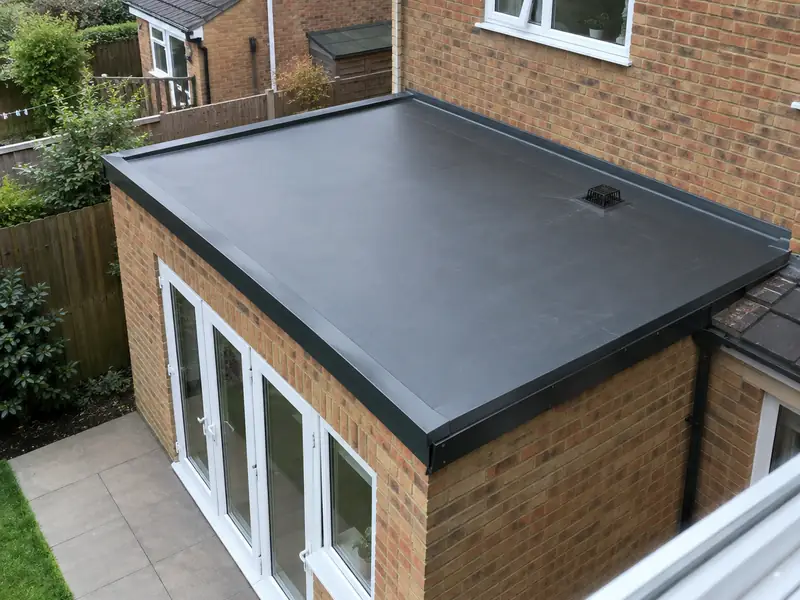
A flat roof replacement strips the old covering from a low-pitched roof and lays a new waterproof system, usually EPDM rubber, GRP fibreglass or torch-on felt, over a sound deck with correct falls, upstands, trims and outlets so rainwater drains away.
Anyone planning a new flat roof in Chelsea wants three things: a clear price, a realistic timetable and a tidy job. We publish a guide of £2,600–£5,800 including VAT for London up front, explain that work normally takes 1–3 days for most roofs, and confirm both in writing after a free survey of your property.
- Guide price
- £2,600–£5,800 inc VAT
- Time on site
- 1–3 days for most roofs
- Postcodes
- SW3, SW5, SW7, SW10 and SW1W
- Planning rules
- England
- Local area
- Greater London
- Survey
- Free, with a written quote
Flat roofs prices in Chelsea
Every figure below is a guide for a new flat roof in Chelsea, inclusive of VAT. Regional pricing for London works out about 30% above the national guide, and the overall span is £2,600–£5,800. The survey costs you nothing, and after it we commit to a firm price for your specification in writing.
| Type of job | What it usually involves | Guide in Chelsea |
|---|---|---|
| Small roof (up to 8m²) | A dormer, bay, porch or small garage roof re-covered in EPDM or GRP. | £1,050–£2,600 |
| Extension or garage (15–25m²) | A typical extension or single garage roof stripped and re-covered. | £2,600–£5,800 |
| Large or new warm roof | Larger roofs, or roofs needing a new deck and insulation build-up. | £5,200–£11,500 |
The main things that change the figure:
- Roof area and access to the roof
- Covering system: EPDM, GRP or torch-on felt
- Condition of the deck and joists underneath
- Insulation upgrades and changes to roof height at edges
What’s included?
- Survey of the covering, deck, falls, upstands and drainage
- Stripping and disposal of the old roof covering
- New EPDM, GRP or torch-on felt membrane laid to falls
- Upstands, flashings and drip edges finished neatly
- New trims, outlets and gutter connections
- Rooflights refitted or replaced where required
What are homes like around Chelsea?
London's housing is dominated by Victorian and Edwardian terraces, often in yellow London stock brick, with Georgian terraces in central districts and mansion blocks across many inner areas. Outer boroughs have large belts of interwar semis, and there are extensive post-war council estates. Many houses have been split into flats, and conservation areas are widespread.
London Clay shrinks and swells with the seasons, and street trees close to houses can contribute to movement, which affects foundation design.
Whatever era your Chelsea home dates from, we plan a new flat roof around how it is actually built rather than a one-size-fits-all specification.
Planning and building rules in Chelsea
The notes below cover England, which is where Chelsea sits. Rules change and every property is different, so we speak to the council before pricing your job.
Re-roofing a house with similar materials does not usually need planning permission in England. Listed buildings and conservation areas may need consent if the covering changes.
Replacing more than a quarter of a roof’s covering counts as renovation under Building Regulations, so the work is notified and the roof insulation may need upgrading. Bats are protected across the UK; if they roost under roof tiles, soffits or fascias, work stops and a licensed ecologist advises before it restarts.
Rules change and every property is different, so we check the planning history and constraints for your address before we quote.
From survey to handover
Survey and measure
We arrange a free site survey on a date convenient to you. We measure up, look at the existing structure and access, and discuss your plans for a new flat roof so the price reflects your home.
Price and scope agreed
We turn the survey notes into a written quote. The price is fixed for the specification we agree, and the document sets out materials, scope and payment stages in plain language.
Getting ready
We handle the paperwork side: checking whether planning permission or building control approval is needed, submitting applications where they are, and scheduling the trades and materials around your dates.
On site to finish
The job proceeds in the order set out in the programme, with dust and debris kept under control. Finally we tidy away, inspect the work together and pass the finished project over to you with its paperwork.
What you can expect from us
Frequently asked questions
Is a flat roof suitable for a roof terrace?
A flat roof can only be used as a terrace if it is designed for it, with joists strong enough for people and furniture, a hard-wearing surface, safe edge protection and correct drainage. Using a standard extension roof as a terrace can damage it and may need planning permission and building regulations approval. We can advise on what a conversion would involve.
Should I insulate my flat roof when it is replaced?
Replacing a flat roof is the most cost-effective time to add insulation, because the covering is already off. A warm roof, with insulation laid above the deck, keeps the structure warm and reduces condensation risk. Building regulations may require insulation when a large part of the roof is renewed. It raises the roof height slightly, which affects trims and upstands.
Who do I deal with during the job?
One point of contact manages your project from survey to handover. They schedule the trades working under our contract, keep you updated on progress, and are the person to call with any question. You don't need to coordinate builders, electricians or decorators separately, because that is part of what we do.
How long will a new flat roof take?
On a typical home, allow 1–3 days for most roofs. Larger projects, older buildings and extra work found once things are opened up can extend that, while simpler jobs may be shorter. Your quote includes an estimate of time on site, and your point of contact keeps you updated on the programme as the work progresses.
How long does a flat roof last?
A well-installed EPDM or GRP flat roof can last 25 years or more, while torch-on felt systems typically last around 15–25 years, depending on quality and exposure. Lifespan depends on correct falls, good detailing at edges and upstands, and keeping outlets clear. Foot traffic, ponding and poor ventilation shorten it. Annual checks help catch small problems early.
Near Chelsea
From SW3, SW5, SW7 and SW10 to the edges of Chelsea and on into Battersea, Fulham and Pimlico, we can arrange a site visit and a written quote for your project, planned around dates that work for you.