
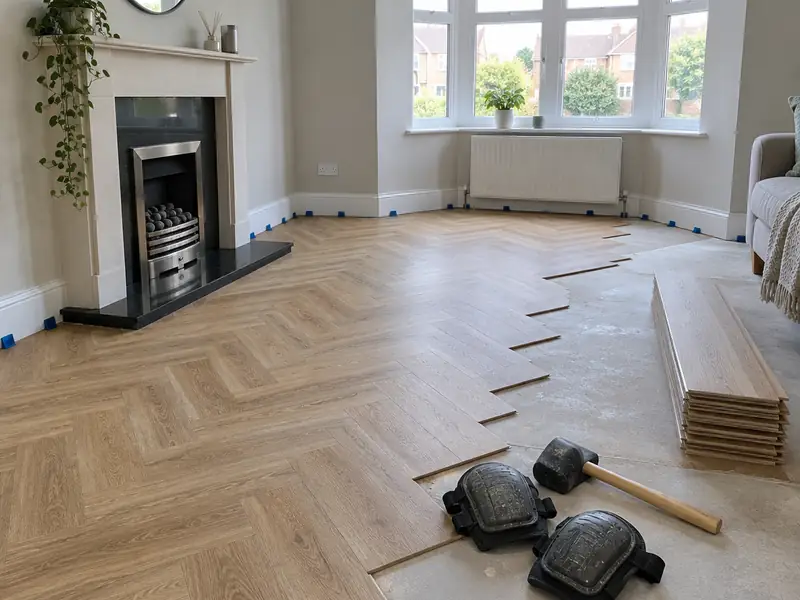
Flooring installation is the supply and fitting of a new floor finish, such as laminate, luxury vinyl tile, engineered wood or solid wood, over a properly levelled and prepared subfloor, with underlay, trims and thresholds finished neatly.
Homeowners in Exeter usually consider new flooring for one of a few reasons: something has worn out, the house no longer suits the way they live, or they are getting it ready to sell. We visit, agree a specification and put a fixed price in writing. Most jobs like this take 1–2 days per room, longer if levelling is needed, and we work across Devon, including Heavitree, Exmouth and Tiverton.
- Guide price
- £1,200–£4,100 inc VAT
- Time on site
- 1–2 days per room, longer if levelling is needed
- Postcodes
- EX1, EX2, EX3 and EX4
- Planning rules
- England
- Local area
- Devon
- Survey
- Free, with a written quote
How much does new flooring cost in Exeter?
What will new flooring cost in Exeter? Our guide range is £1,200–£4,100 including VAT. That figure is adjusted for the South West, about 2% above the national guide, and is intended for planning a budget. A firm written price for your chosen specification follows a free survey at your home.
| Type of job | What it usually involves | Guide in Exeter |
|---|---|---|
| Laminate in one room | Around 15–20m² of laminate with underlay, trims and door trimming. | £600–£1,850 |
| LVT or engineered wood | Around 20–25m² of LVT or engineered wood, with levelling and moisture protection. | £1,200–£3,600 |
| Whole floor or solid wood | An open-plan ground floor, solid wood or herringbone, with extensive preparation. | £3,600–£9,200 |
Expect these to shape the final quote:
- Floor area and the number of rooms, stairs and doorways
- Flooring type, plank size and laying pattern
- Condition of the subfloor and any levelling needed
- Underfloor heating, moisture barriers and acoustic underlay
What’s included?
- Measured survey of each room and checks on the subfloor
- Subfloor repairs, levelling compound or plywood overlay where needed
- Damp-proof membrane and suitable underlay for your floor type
- Supply and fitting of your chosen flooring
- Threshold strips, scotia or skirting finished neatly
- Furniture moved within the room where agreed
Local housing and new flooring
Devon is known for cob and thatch cottages, especially in mid and east Devon, alongside granite on Dartmoor and red sandstone around Exeter. Exeter and Plymouth have Georgian and Victorian terraces, Plymouth's centre was largely rebuilt after the war, and seaside towns such as Torquay and Exmouth have rendered villas and newer estates.
Cob and stone homes need breathable lime plaster and render rather than cement. Victorian terraces suit loft rooms and window replacement, while post-war and newer homes often take extensions, rendering and roofline renewal.
Knowing the typical building types in Devon helps, but a survey of your own home in Exeter is what decides the right approach to new flooring.
Permissions for new flooring in Exeter
As Exeter is in England, read the following with that system of planning and building control in mind. We check what applies to your house with the council before you receive a quote.
Internal work such as a new kitchen, bathroom, flooring, plastering or decorating does not need planning permission in England, unless the house is listed, when listed building consent may be needed even for internal changes.
Some internal work is covered by Building Regulations: new electrical circuits and work in bathrooms (Part P), new drainage, structural changes, extractor ventilation and any new window. Notifiable work is certified by a registered installer or by building control.
Rules change and every property is different, so we check the planning history and constraints for your address before we quote.
How does the job run?
Survey and measure
First, someone visits your home in Exeter to see the space, take measurements and note anything that could affect the work, such as access or the condition of what is there. There is no charge for this visit.
Your fixed price
We turn the survey notes into a written quote. The price is fixed for the specification we agree, and the document sets out materials, scope and payment stages in plain language.
Dates and permissions
Next comes planning the work itself. We set a start date that suits you, line up the right trades, and make sure any approvals for new flooring are in place before the first day on site.
Build and hand over
On site, the agreed plan is followed and any change is put in writing first. At completion we do a final clean, go through the snagging list with you and leave you with the relevant documents.
What you can expect from us
Frequently asked questions
How long will new flooring take?
On a typical home, allow 1–2 days per room, longer if levelling is needed. Larger projects, older buildings and extra work found once things are opened up can extend that, while simpler jobs may be shorter. Your quote includes an estimate of time on site, and your point of contact keeps you updated on the programme as the work progresses.
Can I stay at home during the work?
In most cases, yes. Most people can live at home throughout, and we plan the work to keep disruption down by protecting floors, agreeing working hours and keeping access routes clear. Bigger jobs affecting kitchens, bathrooms or heating may mean a short spell with reduced facilities, and we talk this through with you at the survey.
How long does it take to lay a floor?
Laying a floor in an average room usually takes one to two days. Open-plan spaces, herringbone patterns and floors needing levelling compound take longer, because the compound must dry before the floor goes down. Some products also need to acclimatise in the room for a day or two before fitting. We confirm timings for your rooms with the written quote.
Can I have wood flooring with underfloor heating?
Engineered wood and LVT both work well with underfloor heating, because they are stable and transfer heat efficiently. Solid wood is less suitable, as it can move and gap as temperatures change. The flooring and underlay must be approved for use with the heating system, and floor temperatures need limiting. We check the manufacturer's guidance before recommending a product.
How much does new flooring cost?
New flooring for a typical 20–25m² room costs £1,200–£4,100 supplied and fitted, depending on the material and the state of the subfloor. As a guide, allow roughly £45–£140 per square metre including underlay and fitting, with laminate at the lower end and engineered or solid wood at the top. Herringbone patterns, levelling and stairs add cost. We confirm a fixed price after measuring each room.
Nearby towns
Homes across EX1, EX2, EX3 and EX4 in Exeter are within our coverage, as are those in Heavitree, Exmouth and Tiverton. If you are just outside these areas, ask anyway, because we work right across the UK.