
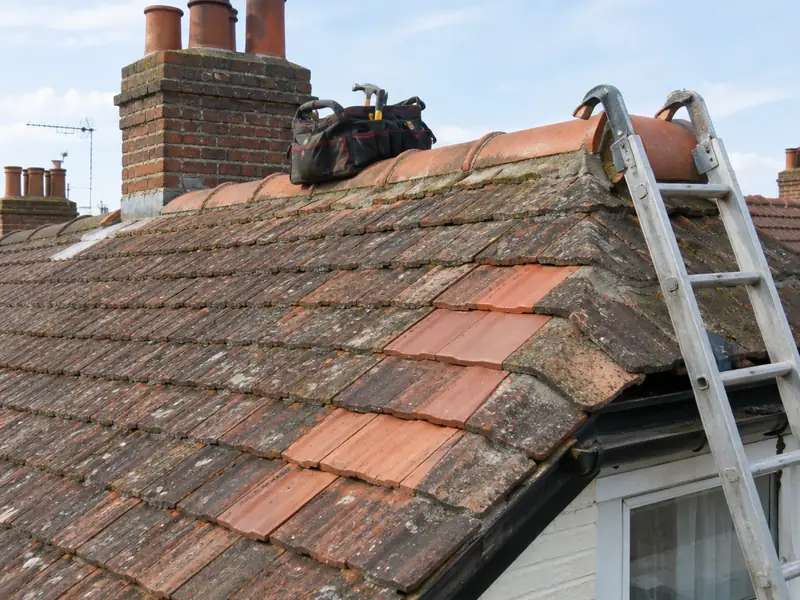
Roof repairs fix specific faults in a pitched or flat roof, such as slipped or cracked tiles, loose ridges, failed flashing, leaking valleys or chimney defects, to stop water getting in without replacing the whole roof.
Exeter sits within our coverage for roof repairs, as do neighbouring Heavitree, Exmouth and Tiverton. Before giving a price we want to see the property: the condition of what's there now, the access, and anything that might need extra work. The guide range for the South West is £300–£1,550 including VAT, and your written quote will spell out exactly what that covers.
- Guide price
- £300–£1,550 inc VAT
- Time on site
- Half a day to 3 days for most repairs
- Postcodes
- EX1, EX2, EX3 and EX4
- Planning rules
- England
- Local area
- Devon
- Survey
- Free, with a written quote
Roof repairs prices in Exeter
What will roof repairs cost in Exeter? Our guide range is £300–£1,550 including VAT. That figure is adjusted for the South West, about 2% above the national guide, and is intended for planning a budget. A firm written price for your chosen specification follows a free survey at your home.
| Type of job | What it usually involves | Guide in Exeter |
|---|---|---|
| Minor repair | Replacing a handful of slipped or broken tiles from ladders or a roof ladder. | £200–£500 |
| Ridge, flashing or valley repair | Rebedding a ridge run, renewing flashing or relining a short valley. | £400–£1,200 |
| Larger repair with scaffolding | Several faults, chimney work or repairs on high roofs needing scaffolding. | £1,000–£3,100 |
What moves the price up or down:
- Number and type of faults to repair
- Access: ladders, roof ladders, towers or full scaffolding
- Roof height and steepness
- Matching tiles, slates or lead to the existing roof
Scope of the work
- Inspection to trace the source of leaks or damage
- Safe access by ladders, towers or scaffolding as needed
- Replacement of slipped, cracked or missing tiles and slates
- Ridge, hip and verge rebedding or dry-fix conversion
- Temporary weatherproofing where a full repair must wait
- Clearing debris from gutters and the work area
Homes in Devon
Devon is known for cob and thatch cottages, especially in mid and east Devon, alongside granite on Dartmoor and red sandstone around Exeter. Exeter and Plymouth have Georgian and Victorian terraces, Plymouth's centre was largely rebuilt after the war, and seaside towns such as Torquay and Exmouth have rendered villas and newer estates.
Cob and stone homes need breathable lime plaster and render rather than cement. Victorian terraces suit loft rooms and window replacement, while post-war and newer homes often take extensions, rendering and roofline renewal.
With that background in mind, here is how we typically handle roof repairs for homes in Exeter, from the first visit to the finished result.
Planning and building rules in Exeter
Homes in Exeter come under the regulations for England, summarised below. We don't rely on general rules alone: we confirm the position for your address with the council before a quote goes out.
Re-roofing a house with similar materials does not usually need planning permission in England. Listed buildings and conservation areas may need consent if the covering changes.
Replacing more than a quarter of a roof’s covering counts as renovation under Building Regulations, so the work is notified and the roof insulation may need upgrading. Bats are protected across the UK; if they roost under roof tiles, soffits or fascias, work stops and a licensed ecologist advises before it restarts.
Rules change and every property is different, so we check the planning history and constraints for your address before we quote.
How does the job run?
A visit to your home
We begin by looking at the job in person. During the free survey we discuss options, materials and budget for roof repairs, and photograph or measure anything the quote needs to reflect.
Your fixed price
The quote arrives in writing, not over the phone. It covers the full scope, the finishes you've chosen, any exclusions and the payment schedule, with a fixed price tied to that specification.
Plan and prepare
Preparation matters as much as the build. We agree access, parking and working hours with you, order materials in good time, and confirm any permissions so the job isn't held up once it starts.
The work itself
Our trades complete roof repairs while your point of contact keeps you updated. When everything is finished, we clear the site, take away waste and go through the result with you before handover.
Working with SK Home Improvements
Common questions
What happens at the survey?
We visit your home at a time that suits you, look at the area involved, take measurements and check access, condition and any services that might be affected. We talk through what you want from roof repairs, explain the options and answer questions. There is no charge and no obligation; afterwards we send a written quote.
Can I stay at home during the work?
In most cases, yes. Most people can live at home throughout, and we plan the work to keep disruption down by protecting floors, agreeing working hours and keeping access routes clear. Bigger jobs affecting kitchens, bathrooms or heating may mean a short spell with reduced facilities, and we talk this through with you at the survey.
Will my home insurance pay for the repair?
Home insurance policies often cover sudden storm damage but usually exclude wear and tear or gradual deterioration. If you think the damage is storm-related, contact your insurer before repairs, apart from urgent temporary work, and take photos. We can provide a written report and photographs describing the damage and cause to help with your claim. The insurer decides what is covered.
How can I spot roof problems early?
Spotting roof problems early saves money. Look from the ground after storms for slipped or missing tiles, cracked ridge mortar or debris in gutters. In the loft, check for daylight, damp patches, stained timbers or wet insulation. Inside, watch for ceiling stains and peeling paint near outside walls. Clearing gutters each autumn prevents overflow damage.
Can you do an emergency roof repair?
After storm damage, a temporary repair such as sheeting or refixing loose tiles can stop water getting in until a permanent repair can be made. We aim to attend as quickly as possible, but availability depends on weather and demand, especially after widespread storms. In the meantime, catch drips in containers, move valuables and switch off lights near any wet ceiling.
Also covering areas around Exeter
Whether you're in the centre of Exeter or on its outskirts, EX1, EX2, EX3 and EX4 addresses are covered. We extend the same service, and the same fixed-price approach, to Heavitree, Exmouth and Tiverton.