
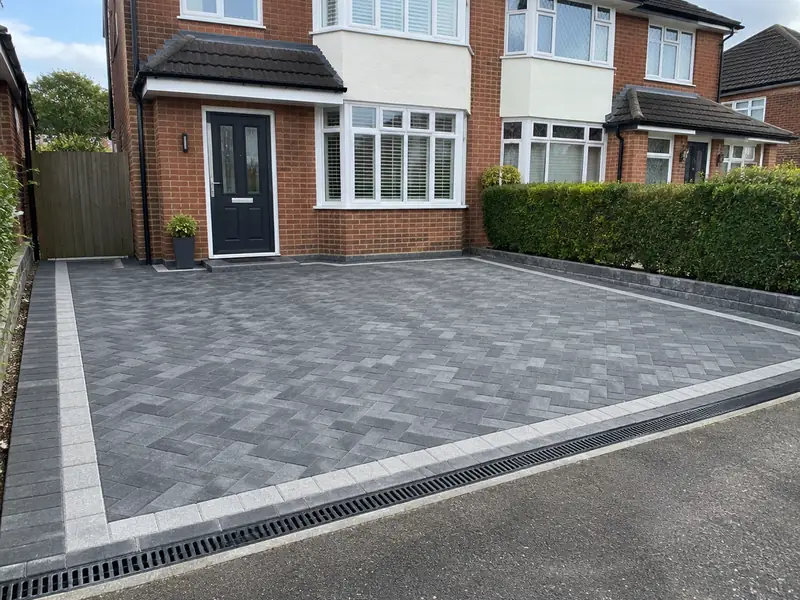
A new driveway is a hard-wearing surface for parking, such as block paving, resin bound gravel, tarmac or gravel, laid on an excavated and compacted sub-base with edging and drainage designed to carry vehicle loads and handle rainwater.
From a first conversation about a new driveway to the day the site is cleared, homeowners in Exeter deal with us directly. We come out to measure up at no cost, explain the choices in plain terms and send a written quote. For context, comparable work in the South West usually falls within £4,100–£9,200 including VAT, and it is available across EX1, EX2, EX3 and EX4.
- Guide price
- £4,100–£9,200 inc VAT
- Time on site
- 3–7 days on site
- Postcodes
- EX1, EX2, EX3 and EX4
- Planning rules
- England
- Local area
- Devon
- Survey
- Free, with a written quote
Driveways prices in Exeter
The table below shows guide prices for a new driveway in Exeter. They are based on rates in the South West, which run about 2% above the national guide, giving an overall range of £4,100–£9,200. All figures include VAT and are firmed up after a free site survey.
| Type of job | What it usually involves | Guide in Exeter |
|---|---|---|
| Gravel or tarmac | A typical 40–50m² drive in gravel on a grid, or tarmac with block edging. | £2,000–£5,100 |
| Block paving or resin bound | A typical 40–50m² drive with sub-base, edging and drainage. | £4,100–£9,200 |
| Large or premium driveway | Larger drives, natural stone, walls, steps or a new dropped kerb. | £8,200–£16,500 |
Your price depends mostly on:
- Surface: gravel, tarmac, block paving, resin or stone
- Drainage, soakaways and changes in level
- Edging, steps, walls and manhole adjustments
- Access for machinery and removal of spoil
What do you get?
- Survey of levels, drainage, manholes and access
- Excavation and removal of the old surface and soil
- Edging kerbs or restraints to hold the surface in place
- Drainage channels or soakaway where needed
- New surface laid, compacted and finished
- Site cleared and waste removed
Homes in Devon
Devon is known for cob and thatch cottages, especially in mid and east Devon, alongside granite on Dartmoor and red sandstone around Exeter. Exeter and Plymouth have Georgian and Victorian terraces, Plymouth's centre was largely rebuilt after the war, and seaside towns such as Torquay and Exmouth have rendered villas and newer estates.
Cob and stone homes need breathable lime plaster and render rather than cement. Victorian terraces suit loft rooms and window replacement, while post-war and newer homes often take extensions, rendering and roofline renewal.
So when we survey a Exeter property for a new driveway, the first step is working out how it was built and what has been changed since.
Do you need permission in Exeter?
Planning law differs across the UK. For a home in Exeter, it is the England rules below that count, and we check them with the council ahead of any quote.
In England, a new or replacement front-garden surface over 5 m² needs planning permission unless it is permeable or drains to a lawn or border within your property. A new dropped kerb needs consent from the council’s highways team, and access onto a classified road may need planning permission.
Building Regulations do not usually apply to driveways, but drainage must not discharge onto the road or a neighbour’s land.
Rules change and every property is different, so we check the planning history and constraints for your address before we quote.
How does the job run?
A visit to your home
We begin by looking at the job in person. During the free survey we discuss options, materials and budget for a new driveway, and photograph or measure anything the quote needs to reflect.
Price and scope agreed
After the survey we send a quote for a new driveway that fixes the price for the scope we've agreed. If you want to change materials or scope, we revise it in writing before anything is booked.
Dates and permissions
Next comes planning the work itself. We set a start date that suits you, line up the right trades, and make sure any approvals for a new driveway are in place before the first day on site.
Finish and handover
The work is carried out to the agreed specification, with floors and furniture protected and the site kept tidy. At the end we clean up, walk through the finished job with you and hand over any certificates.
How we work
Questions about a new driveway in Exeter
What happens at the survey?
We visit your home at a time that suits you, look at the area involved, take measurements and check access, condition and any services that might be affected. We talk through what you want from a new driveway, explain the options and answer questions. There is no charge and no obligation; afterwards we send a written quote.
Do I need planning permission for a driveway?
Whether a driveway needs planning permission depends on its size, surface and drainage, your home's location, whether it is listed or in a conservation area, and which UK nation you are in. In England, a new or replacement front driveway over 5m² needs permission unless it uses a permeable surface or drains to a lawn or border. We check the rules and design to suit.
How long does it take to lay a driveway?
Laying a typical driveway takes around three to seven days, depending on size, surface and ground conditions. Excavation and sub-base usually take the first few days, then edging, drainage and the surface. Resin needs dry weather and time to cure, and you will usually need to keep cars off for a short period afterwards. We confirm timings and access arrangements with your quote.
Which driveway surface is easiest to maintain?
Resin bound gravel is one of the easiest surfaces to maintain, because it is smooth, porous and resists weeds, needing only an occasional sweep and wash. Block paving needs re-sanding joints and occasional weed control. Tarmac needs little upkeep but can soften in heat. Gravel needs raking and topping up. We explain the upkeep of each surface before you choose.
Who do I deal with during the job?
One point of contact manages your project from survey to handover. They schedule the trades working under our contract, keep you updated on progress, and are the person to call with any question. You don't need to coordinate builders, electricians or decorators separately, because that is part of what we do.
Near Exeter
Our coverage in Exeter includes EX1, EX2, EX3 and EX4. We also travel to Heavitree, Exmouth and Tiverton, so neighbouring addresses are looked after on exactly the same terms as those in town.