
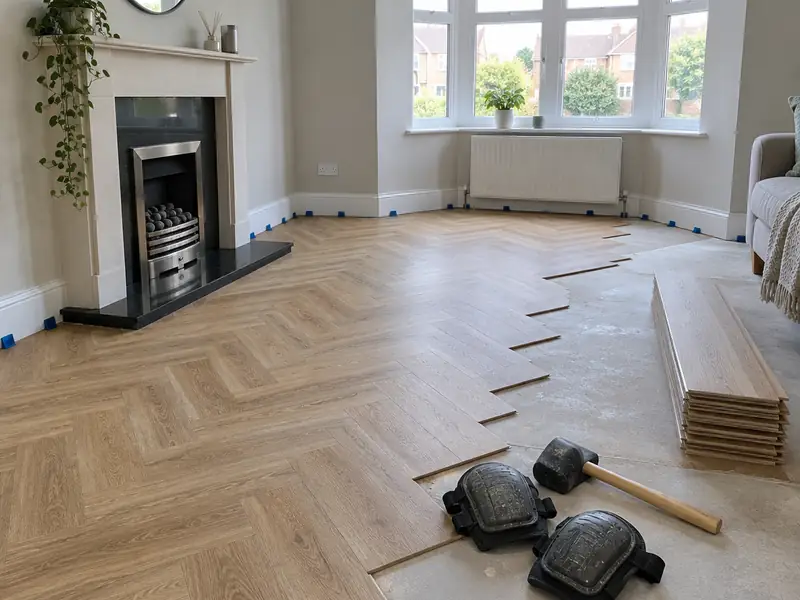
Flooring installation is the supply and fitting of a new floor finish, such as laminate, luxury vinyl tile, engineered wood or solid wood, over a properly levelled and prepared subfloor, with underlay, trims and thresholds finished neatly.
Looking for new flooring in Dorset? We organise the whole job, bringing in the trades it needs under one agreement, and you have a single contact. We cover Bournemouth, Poole, Weymouth and Christchurch, along with villages and suburbs nearby. The rules in England decide what consents are needed, and our guide range of £1,200–£4,100 including VAT gives you a realistic starting point for a budget.
- Guide price
- £1,200–£4,100 inc VAT
- Time on site
- 1–2 days per room, longer if levelling is needed
- Planning rules
- England
- Price level
- About 2% above the national guide
- Towns listed
- 4
- Survey
- Free, with a written quote
Flooring prices in Dorset
The table below shows guide prices for new flooring in Dorset. They are based on rates in the South West, which run about 2% above the national guide, giving an overall range of £1,200–£4,100. All figures include VAT and are firmed up after a free site survey.
| Type of job | What it usually involves | Guide in Dorset |
|---|---|---|
| Laminate in one room | Around 15–20m² of laminate with underlay, trims and door trimming. | £600–£1,850 |
| LVT or engineered wood | Around 20–25m² of LVT or engineered wood, with levelling and moisture protection. | £1,200–£3,600 |
| Whole floor or solid wood | An open-plan ground floor, solid wood or herringbone, with extensive preparation. | £3,600–£9,200 |
What moves the price up or down:
- Floor area and the number of rooms, stairs and doorways
- Condition of the subfloor and any levelling needed
- Lifting and disposing of existing floor coverings
- Underfloor heating, moisture barriers and acoustic underlay
Scope of the work
- Lifting and disposal of old carpet, laminate or vinyl
- Damp-proof membrane and suitable underlay for your floor type
- Supply and fitting of your chosen flooring
- Door trimming so doors clear the new floor
- Threshold strips, scotia or skirting finished neatly
- Furniture moved within the room where agreed
Housing across Dorset
Dorset's older villages use Purbeck and Portland stone, chalk and flint, and thatch on cob or brick cottages. Bournemouth and Poole have Victorian and Edwardian villas, large interwar suburbs and plenty of bungalows and flats, while Weymouth, Dorchester and Bridport mix Georgian and Victorian streets with newer estates.
Stone and thatched cottages may need lime repairs and conservation-area window choices. Bungalows around Bournemouth and Poole commonly suit loft conversions, and coastal homes often need roofline, rendering and window renewal.
Salt spray and south-westerly winds affect coastal homes, so external finishes and fixings need to cope with marine exposure.
Planning and building rules in Dorset
Which rules apply depends on where you live. For Dorset, the answer is England, and the points below reflect that; we verify them with the council before quoting.
Internal work such as a new kitchen, bathroom, flooring, plastering or decorating does not need planning permission in England, unless the house is listed, when listed building consent may be needed even for internal changes.
Some internal work is covered by Building Regulations: new electrical circuits and work in bathrooms (Part P), new drainage, structural changes, extractor ventilation and any new window. Notifiable work is certified by a registered installer or by building control.
Rules change and every property is different, so we check the planning history and constraints for your address before we quote.
From survey to handover
A visit to your home
Book a visit and we'll come to you. The survey covers measurements, the state of what's there now and any obvious constraints, so the price that follows is based on your actual home, not an average.
Quote in writing
We turn the survey notes into a written quote. The price is fixed for the specification we agree, and the document sets out materials, scope and payment stages in plain language.
Plan and prepare
With the quote agreed, we book the work in and handle preparation: permissions where needed, building control notifications, material orders and access arrangements for your Dorset property.
Build and hand over
Our trades complete new flooring while your point of contact keeps you updated. When everything is finished, we clear the site, take away waste and go through the result with you before handover.
How we work
Frequently asked questions
What preparation does the subfloor need?
A good floor starts with a flat, dry, sound subfloor. Concrete floors may need a damp-proof membrane and levelling compound, while timber floors may need loose boards fixing and a plywood overlay. Old adhesive, tiles or vinyl may have to be removed. Skipping preparation causes creaking, gaps and uneven wear. We check the subfloor at the survey and include preparation in the price.
How long does it take to lay a floor?
Laying a floor in an average room usually takes one to two days. Open-plan spaces, herringbone patterns and floors needing levelling compound take longer, because the compound must dry before the floor goes down. Some products also need to acclimatise in the room for a day or two before fitting. We confirm timings for your rooms with the written quote.
Is the price fixed?
Yes, for the specification we agree. Your written quote sets out exactly what is included at a fixed price. It only changes if you ask for something different, or if a problem the survey could not reasonably reveal later needs extra work. In either case we explain the change and confirm it in writing before going ahead.
Which flooring is right for a kitchen or bathroom?
Luxury vinyl tile, or LVT, is usually the most practical choice for kitchens and bathrooms, because it is water-resistant, warm underfoot and comfortable to stand on. Porcelain tiles also suit wet areas. Standard laminate and solid wood can swell if water sits on them, though some water-resistant laminates are available. We recommend a floor based on how the room is used.
Do I need planning permission in Dorset?
It depends on the work, the size of the project, your property type and whether the building is listed or in a conservation area. Dorset is in England, so England's rules apply. Many smaller jobs need no planning application, but some still need building control approval. We check what applies to your address before quoting.
Towns in Dorset
These are the towns in Dorset where you can book a free survey for new flooring. Each has its own page with guide prices and coverage details.