
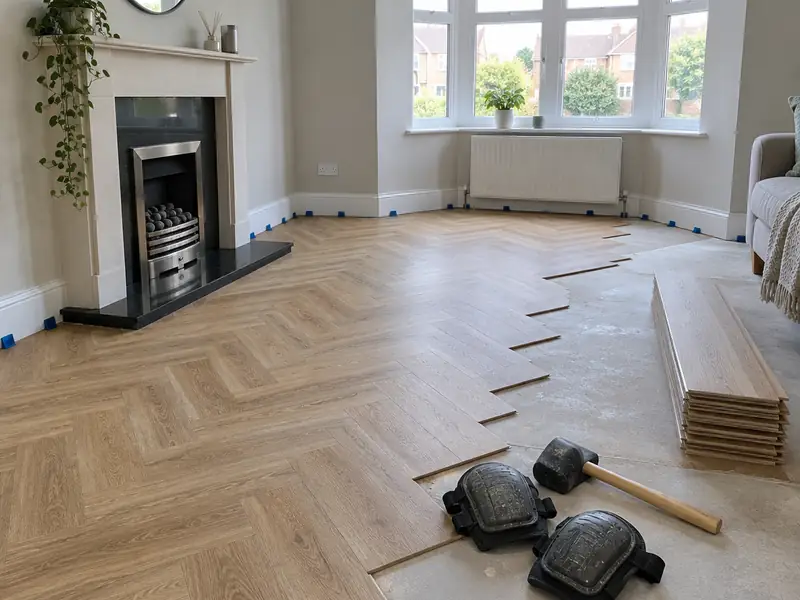
Flooring installation is the supply and fitting of a new floor finish, such as laminate, luxury vinyl tile, engineered wood or solid wood, over a properly levelled and prepared subfloor, with underlay, trims and thresholds finished neatly.
From Inverness, Isle of Lewis, Fort William and Nairn to the quieter corners of Highlands and Islands, homeowners can book a free survey for new flooring. We look at the building, agree the scope, then send a quote in writing that fixes the cost of that scope. Work follows the rules for Scotland, and our published range for Scotland, £1,150–£3,800 with VAT, gives you a sense of budget before we visit.
- Guide price
- £1,150–£3,800 inc VAT
- Time on site
- 1–2 days per room, longer if levelling is needed
- Planning rules
- Scotland
- Price level
- About 4% below the national guide
- Towns listed
- 4
- Survey
- Free, with a written quote
Flooring prices in Highlands and Islands
What will new flooring cost in Highlands and Islands? Our guide range is £1,150–£3,800 including VAT. That figure is adjusted for Scotland, about 4% below the national guide, and is intended for planning a budget. A firm written price for your chosen specification follows a free survey at your home.
| Type of job | What it usually involves | Guide in Highlands and Islands |
|---|---|---|
| Laminate in one room | Around 15–20m² of laminate with underlay, trims and door trimming. | £600–£1,750 |
| LVT or engineered wood | Around 20–25m² of LVT or engineered wood, with levelling and moisture protection. | £1,150–£3,400 |
| Whole floor or solid wood | An open-plan ground floor, solid wood or herringbone, with extensive preparation. | £3,400–£8,600 |
The main things that change the figure:
- Floor area and the number of rooms, stairs and doorways
- Flooring type, plank size and laying pattern
- Lifting and disposing of existing floor coverings
- Underfloor heating, moisture barriers and acoustic underlay
Scope of the work
- Measured survey of each room and checks on the subfloor
- Subfloor repairs, levelling compound or plywood overlay where needed
- Damp-proof membrane and suitable underlay for your floor type
- Door trimming so doors clear the new floor
- Threshold strips, scotia or skirting finished neatly
- Furniture moved within the room where agreed
Homes in Highlands and Islands
Inverness has Victorian villas and terraces and large modern estates, while rural Highland homes range from harled stone cottages and croft houses to modern timber-frame kit houses, which are common across the region. Orkney uses local flagstone, and island and coastal communities mix traditional stone homes with newer bungalows.
Croft houses and stone cottages often need lime harling, re-roofing and window renewal. Bungalows commonly take extensions and loft rooms, and remote projects need careful planning for materials and access.
Exposure to wind, rain and snow can be severe, especially on the west coast and islands, and remote sites need allowance for ferries and weather delays.
Do you need permission in Highlands and Islands?
Homes in Highlands and Islands come under the regulations for Scotland, summarised below. We don't rely on general rules alone: we confirm the position for your address with the council before a quote goes out.
Internal improvements do not need planning permission in Scotland unless the building is listed.
Like-for-like kitchen and bathroom replacements do not normally need a building warrant, but structural changes and some drainage or heating alterations do, and electrical work must meet the building standards.
Rules change and every property is different, so we check the planning history and constraints for your address before we quote.
How does the job run?
Free site survey
A free survey comes first. It gives us what we need to price new flooring properly, including dimensions, existing materials and access for deliveries, and gives you the chance to ask anything you like.
Written quote
You get the price in writing, itemised so you can see where the money goes. As long as the specification stays the same, that is the price you pay for new flooring.
Dates and permissions
Once you accept, we agree start dates, order materials and deal with any planning, building control or neighbour notices the job needs. You'll know who is coming and when before work begins.
Build and hand over
Our trades complete new flooring while your point of contact keeps you updated. When everything is finished, we clear the site, take away waste and go through the result with you before handover.
How we work
Frequently asked questions
What do I need to do before the fitters arrive?
Before fitting day, clear small items, ornaments and anything fragile from the room, and empty cupboards and wardrobes that stand on the floor. Let us know about heavy furniture so we can agree who moves it. Make sure the heating is set to a normal temperature so the flooring acclimatises properly. If you have pets, keep them out of the room while we work.
Which postcodes in Highlands and Islands do you cover?
We cover IV1, HS1, PH33 and IV12, along with the rest of Highlands and Islands. If your postcode is not listed, get in touch anyway: our coverage is UK-wide, and we can usually arrange a survey wherever you live. Enter your postcode in the guide-price tool or contact form and we will confirm.
Can I have wood flooring with underfloor heating?
Engineered wood and LVT both work well with underfloor heating, because they are stable and transfer heat efficiently. Solid wood is less suitable, as it can move and gap as temperatures change. The flooring and underlay must be approved for use with the heating system, and floor temperatures need limiting. We check the manufacturer's guidance before recommending a product.
Can I stay at home during the work?
In most cases, yes. Most people can live at home throughout, and we plan the work to keep disruption down by protecting floors, agreeing working hours and keeping access routes clear. Bigger jobs affecting kitchens, bathrooms or heating may mean a short spell with reduced facilities, and we talk this through with you at the survey.
Which flooring is right for a kitchen or bathroom?
Luxury vinyl tile, or LVT, is usually the most practical choice for kitchens and bathrooms, because it is water-resistant, warm underfoot and comfortable to stand on. Porcelain tiles also suit wet areas. Standard laminate and solid wood can swell if water sits on them, though some water-resistant laminates are available. We recommend a floor based on how the room is used.
Towns in Highlands and Islands
Our coverage for new flooring in Highlands and Islands includes the towns listed here. Each page explains guide costs, typical timings and the neighbouring places we also serve.