
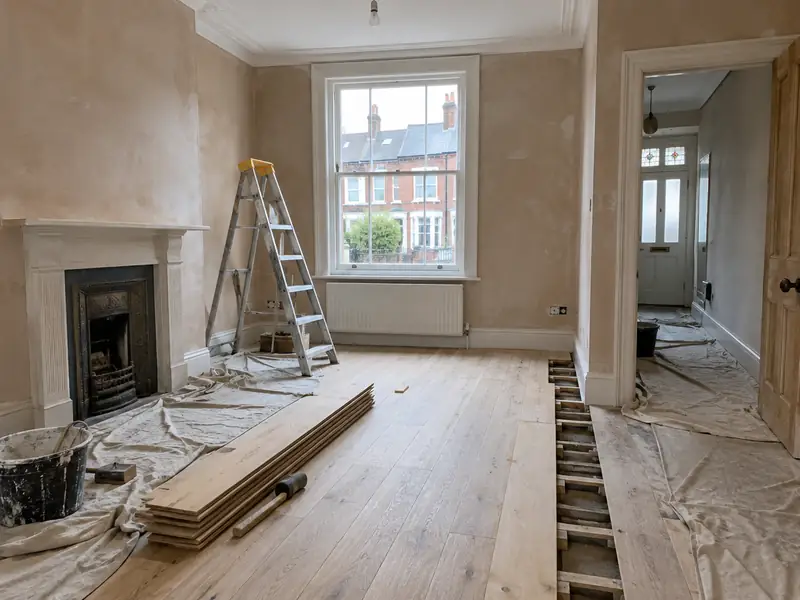
A whole-house renovation is a planned refurbishment of an entire home, typically combining rewiring, heating, plastering, new kitchen and bathroom, flooring and decoration, and sometimes layout changes, carried out in a logical order under one project.
In Highlands and Islands, we price a whole-house renovation against our guide for Scotland, £43,000–£115,000 including VAT, then adjust it once we have surveyed your home. We work across Inverness, Isle of Lewis, Fort William and Nairn and the rest of the county or region. Planning and building control requirements follow the rules for Scotland, and we look into your property's position before a written quote is sent.
- Guide price
- £43,000–£115,000 inc VAT
- Time on site
- 8–24 weeks on site, depending on scope
- Planning rules
- Scotland
- Price level
- About 4% below the national guide
- Towns listed
- 4
- Survey
- Free, with a written quote
How much does a whole-house renovation cost in Highlands and Islands?
What will a whole-house renovation cost in Highlands and Islands? Our guide range is £43,000–£115,000 including VAT. That figure is adjusted for Scotland, about 4% below the national guide, and is intended for planning a budget. A firm written price for your chosen specification follows a free survey at your home.
| Type of job | What it usually involves | Guide in Highlands and Islands |
|---|---|---|
| Light refurbishment | Decoration, flooring, minor repairs and perhaps one new kitchen or bathroom. | £14,500–£43,000 |
| Full refurbishment | Rewire, heating, plastering, new kitchen and bathroom, flooring and decoration throughout a 3-bed house. | £43,000–£115,000 |
| Renovation with structural changes | A full refurbishment plus wall removal, layout changes or extra bathrooms. | £96,000–£173,000 |
What moves the price up or down:
- Size of the house and number of rooms being renovated
- Kitchen and bathroom specification
- Structural or layout changes and associated approvals
- Hidden problems such as damp, rot or outdated drainage
What’s included?
- Strip-out of old kitchens, bathrooms, flooring and finishes
- Rewiring and new consumer unit by qualified electricians, with certificates
- Plastering, skimming and repairs to ceilings and walls
- New kitchen and bathroom fitted to your chosen specification
- Flooring, internal doors, skirting and joinery
- Decoration and a final clean before handover
Homes in Highlands and Islands
Inverness has Victorian villas and terraces and large modern estates, while rural Highland homes range from harled stone cottages and croft houses to modern timber-frame kit houses, which are common across the region. Orkney uses local flagstone, and island and coastal communities mix traditional stone homes with newer bungalows.
Croft houses and stone cottages often need lime harling, re-roofing and window renewal. Bungalows commonly take extensions and loft rooms, and remote projects need careful planning for materials and access.
Exposure to wind, rain and snow can be severe, especially on the west coast and islands, and remote sites need allowance for ferries and weather delays.
Planning and building rules in Highlands and Islands
The notes below cover Scotland, which is where Highlands and Islands sits. Rules change and every property is different, so we speak to the council before pricing your job.
Internal improvements do not need planning permission in Scotland unless the building is listed.
Like-for-like kitchen and bathroom replacements do not normally need a building warrant, but structural changes and some drainage or heating alterations do, and electrical work must meet the building standards.
Rules change and every property is different, so we check the planning history and constraints for your address before we quote.
The four stages
A visit to your home
First, someone visits your home in Highlands and Islands to see the space, take measurements and note anything that could affect the work, such as access or the condition of what is there. There is no charge for this visit.
Your fixed price
You get the price in writing, itemised so you can see where the money goes. As long as the specification stays the same, that is the price you pay for a whole-house renovation.
Booking the work
Preparation matters as much as the build. We agree access, parking and working hours with you, order materials in good time, and confirm any permissions so the job isn't held up once it starts.
Build and hand over
On site, the agreed plan is followed and any change is put in writing first. At completion we do a final clean, go through the snagging list with you and leave you with the relevant documents.
How we work
Frequently asked questions
How long does a full house renovation take?
A full renovation of a typical 3-bed house usually takes around 8–16 weeks on site, and longer if there are structural changes or extensive repairs. A light refresh may take only a few weeks. Material lead times for kitchens, windows and bathroom fittings also affect the programme. We give you a week-by-week plan with your quote and update it as the work progresses.
Do you cover Inverness, Isle of Lewis and Fort William?
Yes. As well as Highlands and Islands, we cover Inverness, Isle of Lewis and Fort William and the rest of Highlands and Islands. Our coverage is UK-wide, so the process is the same wherever you are: a free site survey, a quote in writing that fixes the price for the agreed scope, and one point of contact while the work is planned and carried out.
Do I need planning permission in Highlands and Islands?
It depends on the work, the size of the project, your property type and whether the building is listed or in a conservation area. Highlands and Islands is in Scotland, so Scotland's rules apply. Many smaller jobs need no planning application, but some still need building control approval. We check what applies to your address before quoting.
In what order should renovation work be done?
A renovation should follow a set order so finished work is never damaged by later trades. It usually runs from roof and structural repairs, through strip-out, first-fix electrics and plumbing, then plastering, second-fix electrics and plumbing, kitchen and bathroom fitting, flooring and finally decoration. Windows are usually fitted before plastering. We plan the programme around this sequence so each trade follows on smoothly.
What contingency should I allow?
A contingency is money set aside for problems found once work starts, such as rotten joists, hidden damp or wiring that is worse than expected. For older houses, setting aside at least 10–15% of the build cost is sensible. We look for warning signs during the survey and price known issues upfront. If something unexpected is found, we explain it and price it before carrying on.
Towns in Highlands and Islands
Homes in all of the following Highlands and Islands towns can get a written quote for a whole-house renovation. Open a town page to see prices and the postcodes we cover.