
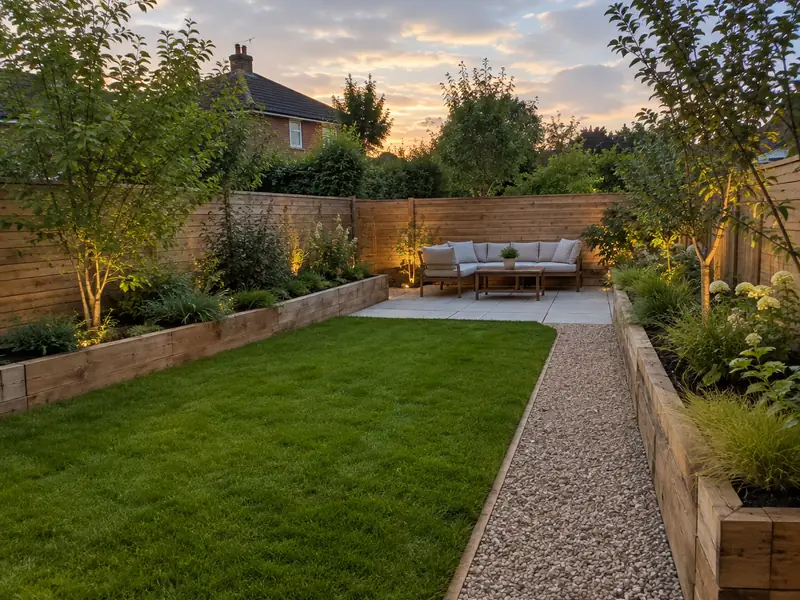
Garden landscaping is designing and building an outdoor space as a whole, combining hard landscaping such as patios, paths, walls and steps with soft landscaping such as lawns, planting and beds, plus drainage and lighting, so the garden works for how you live.
Thinking about garden landscaping in Cambridge? We take charge of the whole project, co-ordinating every trade involved, and one person keeps you updated. Guide prices for the East of England sit at £6,300–£16,000 including VAT, and a typical job takes 1–4 weeks on site, depending on scope. Your own figure depends on what the survey finds and the specification you settle on.
- Guide price
- £6,300–£16,000 inc VAT
- Time on site
- 1–4 weeks on site, depending on scope
- Postcodes
- CB2
- Planning rules
- England
- Local area
- Cambridgeshire
- Survey
- Free, with a written quote
Garden landscaping prices in Cambridge
Budgeting for garden landscaping in Cambridge? The numbers below include VAT and are adjusted for the East of England, where costs are about 5% above the national guide. The headline range is £6,300–£16,000. Nothing is final until we have measured up at a free survey and agreed the specification with you.
| Type of job | What it usually involves | Guide in Cambridge |
|---|---|---|
| Garden refresh | Clearance, new turf, edging, bark or gravel and some planting. | £1,600–£5,200 |
| Typical garden makeover | A new patio, lawn, borders, paths and planting in a typical rear garden. | £6,300–£16,000 |
| Full redesign | Levels, retaining walls, large patios, lighting and drainage for larger or sloping gardens. | £16,000–£37,000 |
What moves the price up or down:
- Garden size, access and the amount of clearance needed
- Levels, slopes, retaining walls and steps
- Drainage, soil quality and ground conditions
- Materials chosen for paving, walls and features
Scope of the work
- Survey of size, levels, soil, drainage and access
- Layout plan agreed with you before work starts
- Site clearance and removal of old features and waste
- Groundworks, levelling and drainage
- Turf or artificial grass laid on a prepared base
- Planting, bark or gravel finishing and outdoor lighting where included
What are homes like around Cambridge?
Cambridge has many Victorian terraces in pale gault brick, with Edwardian villas and modern estates around the city. Peterborough expanded as a new town from the 1970s, adding large planned estates, while Ely, Huntingdon, St Neots and the Fenland market towns keep Georgian and Victorian centres. Limestone appears in villages near the Northamptonshire border.
This is one of the driest parts of the UK, but open fenland is windy and peat or clay ground can shrink, affecting foundations.
For garden landscaping in Cambridge, this means checking things like wall construction, roof structure and existing services before we put a figure on paper.
Permissions for garden landscaping in Cambridge
Because Cambridge falls under England's rules, the guidance below is the version relevant to you. Before sending a price, we check your property's position with the council.
Most garden landscaping in England needs no planning permission. Trees protected by a Tree Preservation Order, or trees in a conservation area, need the council’s consent or notice before work; outbuildings and raised platforms have their own limits.
Building Regulations rarely apply to landscaping, though new drainage and garden electrics must comply.
Rules change and every property is different, so we check the planning history and constraints for your address before we quote.
How does the job run?
A visit to your home
It starts with a survey at the property, free of charge. We check condition, access and services, ask how you want the finished result to look, and answer any questions you have about garden landscaping.
Written quote
After the survey we send a quote for garden landscaping that fixes the price for the scope we've agreed. If you want to change materials or scope, we revise it in writing before anything is booked.
Dates and permissions
Once you accept, we agree start dates, order materials and deal with any planning, building control or neighbour notices the job needs. You'll know who is coming and when before work begins.
The work itself
Our trades complete garden landscaping while your point of contact keeps you updated. When everything is finished, we clear the site, take away waste and go through the result with you before handover.
Why homeowners choose us
Frequently asked questions
How can I make my garden low maintenance?
A low-maintenance garden reduces mowing, weeding and watering. Paving or porcelain patios, gravel areas on a weed membrane, artificial grass and raised beds with hardy, slow-growing plants all help. Mulching borders with bark suppresses weeds and holds moisture. Some planting keeps the space feeling green and supports wildlife. We balance hard and soft areas to suit the time you want to spend.
How long will garden landscaping take?
On a typical home, allow 1–4 weeks on site, depending on scope. Larger projects, older buildings and extra work found once things are opened up can extend that, while simpler jobs may be shorter. Your quote includes an estimate of time on site, and your point of contact keeps you updated on the programme as the work progresses.
Who do I deal with during the job?
One point of contact manages your project from survey to handover. They schedule the trades working under our contract, keep you updated on progress, and are the person to call with any question. You don't need to coordinate builders, electricians or decorators separately, because that is part of what we do.
What can be done about a waterlogged garden?
A waterlogged garden is usually caused by heavy clay soil, compacted ground or water running off from hard surfaces. Solutions include French drains, soakaways, improving soil with organic matter, and making new paving permeable or directing its run-off to drains. Raised beds help plants in wet areas. We look at the cause during the survey and include drainage in the design.
What time of year suits garden landscaping?
Hard landscaping such as patios, paths and walls can be built most of the year, though frost and heavy rain cause delays. Planting is usually most successful in autumn and spring, when plants can establish roots before summer. Turf can be laid in most months if the ground is not frozen or waterlogged. We plan the order of work around the season.
Nearby towns
From CB2 to the edges of Cambridge and on into Newmarket, Ely and Huntingdon, we can arrange a site visit and a written quote for your project, planned around dates that work for you.