
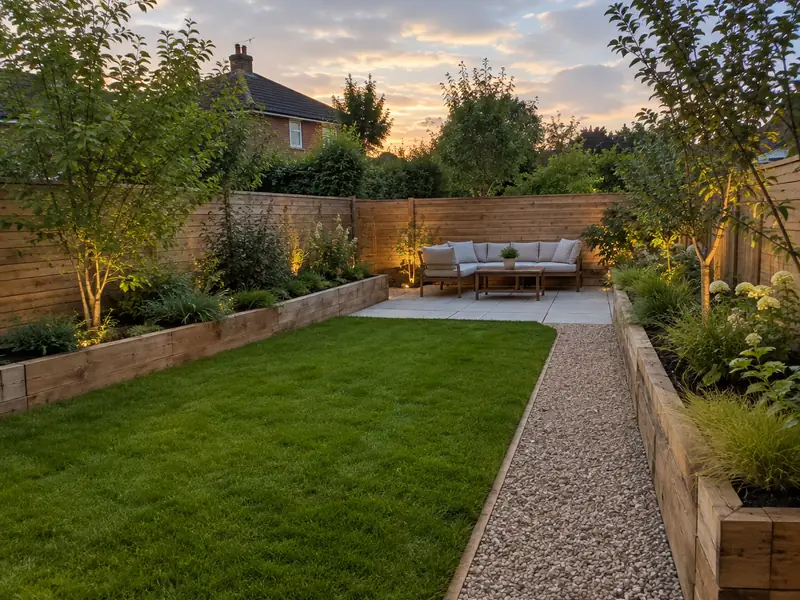
Garden landscaping is designing and building an outdoor space as a whole, combining hard landscaping such as patios, paths, walls and steps with soft landscaping such as lawns, planting and beds, plus drainage and lighting, so the garden works for how you live.
Homeowners in Bury St Edmunds usually consider garden landscaping for one of a few reasons: something has worn out, the house no longer suits the way they live, or they are getting it ready to sell. We visit, agree a specification and put a fixed price in writing. Most jobs like this take 1–4 weeks on site, depending on scope, and we work across Suffolk, including Thetford, Stowmarket and Newmarket.
- Guide price
- £6,300–£16,000 inc VAT
- Time on site
- 1–4 weeks on site, depending on scope
- Postcodes
- IP32 and IP33
- Planning rules
- England
- Local area
- Suffolk
- Survey
- Free, with a written quote
How much does garden landscaping cost in Bury St Edmunds?
These are guide costs, not quotes. For garden landscaping in Bury St Edmunds the range is £6,300–£16,000, VAT included, reflecting prices in the East of England that are about 5% above the national guide. Once we have visited for a free survey, you get a firm figure for the scope you approve.
| Type of job | What it usually involves | Guide in Bury St Edmunds |
|---|---|---|
| Garden refresh | Clearance, new turf, edging, bark or gravel and some planting. | £1,600–£5,200 |
| Typical garden makeover | A new patio, lawn, borders, paths and planting in a typical rear garden. | £6,300–£16,000 |
| Full redesign | Levels, retaining walls, large patios, lighting and drainage for larger or sloping gardens. | £16,000–£37,000 |
Expect these to shape the final quote:
- Garden size, access and the amount of clearance needed
- Ratio of hard landscaping to lawn and planting
- Levels, slopes, retaining walls and steps
- Materials chosen for paving, walls and features
What’s included?
- Survey of size, levels, soil, drainage and access
- Layout plan agreed with you before work starts
- Patios, paths, steps and edging laid on proper bases
- Raised beds, low walls or sleepers built to the agreed design
- Turf or artificial grass laid on a prepared base
- Planting, bark or gravel finishing and outdoor lighting where included
What are homes like around Bury St Edmunds?
Suffolk villages are full of timber-framed cottages, many limewashed in traditional colours such as Suffolk pink, with pargeting and thatch in places. Flint and pale gault brick are common too. Ipswich has Victorian terraces and interwar estates, Bury St Edmunds has Georgian streets, and Lowestoft and Felixstowe mix Victorian seaside housing with newer estates.
One of the driest counties, but the coast is eroding in places, and clay soils inland can shrink and crack in dry summers.
If your house in Bury St Edmunds fits one of these patterns, it helps us anticipate what garden landscaping will involve, though we always confirm the details on site.
Do you need permission in Bury St Edmunds?
Each UK nation sets its own consent rules, and Bury St Edmunds is in England. What follows is a plain summary; we check the specifics for your property with the council before pricing anything.
Most garden landscaping in England needs no planning permission. Trees protected by a Tree Preservation Order, or trees in a conservation area, need the council’s consent or notice before work; outbuildings and raised platforms have their own limits.
Building Regulations rarely apply to landscaping, though new drainage and garden electrics must comply.
Rules change and every property is different, so we check the planning history and constraints for your address before we quote.
The four stages
Free site survey
We begin by looking at the job in person. During the free survey we discuss options, materials and budget for garden landscaping, and photograph or measure anything the quote needs to reflect.
Your fixed price
After the survey we send a quote for garden landscaping that fixes the price for the scope we've agreed. If you want to change materials or scope, we revise it in writing before anything is booked.
Plan and prepare
We handle the paperwork side: checking whether planning permission or building control approval is needed, submitting applications where they are, and scheduling the trades and materials around your dates.
On site to finish
The work is carried out to the agreed specification, with floors and furniture protected and the site kept tidy. At the end we clean up, walk through the finished job with you and hand over any certificates.
Working with SK Home Improvements
Common questions
Do I need planning permission for landscaping?
Most garden landscaping does not need planning permission, but it depends on the work, your home's location, whether it is listed or in a conservation area, and which UK nation you are in. Raised decking or patios, high walls and front garden paving can need permission, as can work affecting protected trees. We check the rules for your garden before quoting.
Can you work around existing trees and plants?
We can design around trees and plants you want to keep, protecting their roots from digging and machinery and keeping levels unchanged near trunks. Some trees are protected by tree preservation orders or conservation area rules, which require permission before cutting or significant root work. We note any trees and plants you want to keep at the survey.
Do you cover Thetford, Stowmarket and Newmarket?
Yes. As well as Bury St Edmunds, we cover Thetford, Stowmarket and Newmarket and the rest of Suffolk. Our coverage is UK-wide, so the process is the same wherever you are: a free site survey, a quote in writing that fixes the price for the agreed scope, and one point of contact while the work is planned and carried out.
Is the price fixed?
Yes, for the specification we agree. Your written quote sets out exactly what is included at a fixed price. It only changes if you ask for something different, or if a problem the survey could not reasonably reveal later needs extra work. In either case we explain the change and confirm it in writing before going ahead.
What can be done about a waterlogged garden?
A waterlogged garden is usually caused by heavy clay soil, compacted ground or water running off from hard surfaces. Solutions include French drains, soakaways, improving soil with organic matter, and making new paving permeable or directing its run-off to drains. Raised beds help plants in wet areas. We look at the cause during the survey and include drainage in the design.
Nearby towns
Our coverage in Bury St Edmunds includes IP32 and IP33. We also travel to Thetford, Stowmarket and Newmarket, so neighbouring addresses are looked after on exactly the same terms as those in town.