
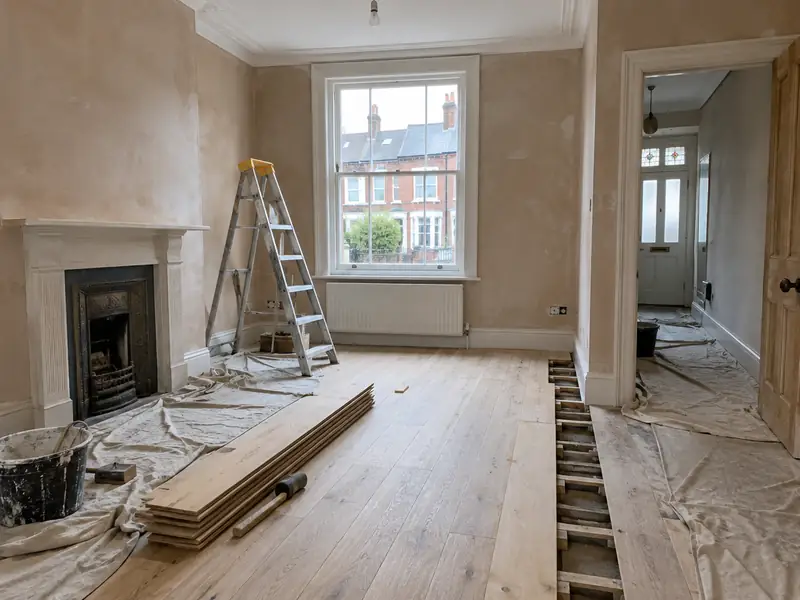
A whole-house renovation is a planned refurbishment of an entire home, typically combining rewiring, heating, plastering, new kitchen and bathroom, flooring and decoration, and sometimes layout changes, carried out in a logical order under one project.
We offer a whole-house renovation throughout Devon, from Plymouth, Exeter, Paignton and Torquay to the smaller places in between. Each project starts with a free survey at your home and ends with a written figure, fixed for the work you choose. Because Devon is in England, we work to the planning system and building standards used there, and guide prices for the South West run at £46,000–£122,000 including VAT.
- Guide price
- £46,000–£122,000 inc VAT
- Time on site
- 8–24 weeks on site, depending on scope
- Planning rules
- England
- Price level
- About 2% above the national guide
- Towns listed
- 11
- Survey
- Free, with a written quote
Whole-house renovations prices in Devon
In Devon, guide figures for a whole-house renovation sit at £46,000–£122,000, VAT included. We set them using rates for the South West, currently about 2% above the national guide. The table shows what pushes a project towards either end of the range; your own price is set after a free survey.
| Type of job | What it usually involves | Guide in Devon |
|---|---|---|
| Light refurbishment | Decoration, flooring, minor repairs and perhaps one new kitchen or bathroom. | £15,500–£46,000 |
| Full refurbishment | Rewire, heating, plastering, new kitchen and bathroom, flooring and decoration throughout a 3-bed house. | £46,000–£122,000 |
| Renovation with structural changes | A full refurbishment plus wall removal, layout changes or extra bathrooms. | £102,000–£184,000 |
The main things that change the figure:
- Size of the house and number of rooms being renovated
- Whether rewiring, new heating and full replastering are needed
- Kitchen and bathroom specification
- Structural or layout changes and associated approvals
What do you get?
- Strip-out of old kitchens, bathrooms, flooring and finishes
- Rewiring and new consumer unit by qualified electricians, with certificates
- Plastering, skimming and repairs to ceilings and walls
- New kitchen and bathroom fitted to your chosen specification
- Flooring, internal doors, skirting and joinery
- Decoration and a final clean before handover
Homes in Devon
Devon is known for cob and thatch cottages, especially in mid and east Devon, alongside granite on Dartmoor and red sandstone around Exeter. Exeter and Plymouth have Georgian and Victorian terraces, Plymouth's centre was largely rebuilt after the war, and seaside towns such as Torquay and Exmouth have rendered villas and newer estates.
Cob and stone homes need breathable lime plaster and render rather than cement. Victorian terraces suit loft rooms and window replacement, while post-war and newer homes often take extensions, rendering and roofline renewal.
Mild but wet, with strong coastal winds; exposed elevations need render and pointing specified for driving rain, and cob walls must be kept dry at the base.
Do you need permission in Devon?
For anyone in Devon, the relevant framework is England's. The summary below is general, so we always contact the council about your address before putting a price in writing.
Internal work such as a new kitchen, bathroom, flooring, plastering or decorating does not need planning permission in England, unless the house is listed, when listed building consent may be needed even for internal changes.
Some internal work is covered by Building Regulations: new electrical circuits and work in bathrooms (Part P), new drainage, structural changes, extractor ventilation and any new window. Notifiable work is certified by a registered installer or by building control.
Rules change and every property is different, so we check the planning history and constraints for your address before we quote.
The four stages
Survey and measure
Book a visit and we'll come to you. The survey covers measurements, the state of what's there now and any obvious constraints, so the price that follows is based on your actual home, not an average.
Written quote
We turn the survey notes into a written quote. The price is fixed for the specification we agree, and the document sets out materials, scope and payment stages in plain language.
Dates and permissions
Next comes planning the work itself. We set a start date that suits you, line up the right trades, and make sure any approvals for a whole-house renovation are in place before the first day on site.
The work itself
The job proceeds in the order set out in the programme, with dust and debris kept under control. Finally we tidy away, inspect the work together and pass the finished project over to you with its paperwork.
What you can expect from us
Frequently asked questions
How long will a whole-house renovation take?
On a typical home, allow 8–24 weeks on site, depending on scope. Larger projects, older buildings and extra work found once things are opened up can extend that, while simpler jobs may be shorter. Your quote includes an estimate of time on site, and your point of contact keeps you updated on the programme as the work progresses.
In what order should renovation work be done?
A renovation should follow a set order so finished work is never damaged by later trades. It usually runs from roof and structural repairs, through strip-out, first-fix electrics and plumbing, then plastering, second-fix electrics and plumbing, kitchen and bathroom fitting, flooring and finally decoration. Windows are usually fitted before plastering. We plan the programme around this sequence so each trade follows on smoothly.
Is the price fixed?
Yes, for the specification we agree. Your written quote sets out exactly what is included at a fixed price. It only changes if you ask for something different, or if a problem the survey could not reasonably reveal later needs extra work. In either case we explain the change and confirm it in writing before going ahead.
Do I need planning permission to renovate?
Most internal renovation work does not need planning permission, but it depends on what changes, your home's location, whether it is listed or in a conservation area, and which UK nation you are in. Listed buildings usually need consent for internal and external changes. Altering windows, adding dormers or changing the outside appearance in a conservation area may also need permission. We check before quoting.
What happens if you find damp or rot?
If we find damp or rot during a renovation, we stop that area, show you the problem and explain the likely cause, such as a leaking gutter, bridged damp-proof course or poor ventilation. We then give you a written price to fix the cause and repair the damage before carrying on. Treating the cause matters more than treating the symptom, so we focus on that first.
Towns in Devon
We offer a whole-house renovation in each of the towns below, all within Devon. Select yours for guide prices, postcodes covered and nearby places.