
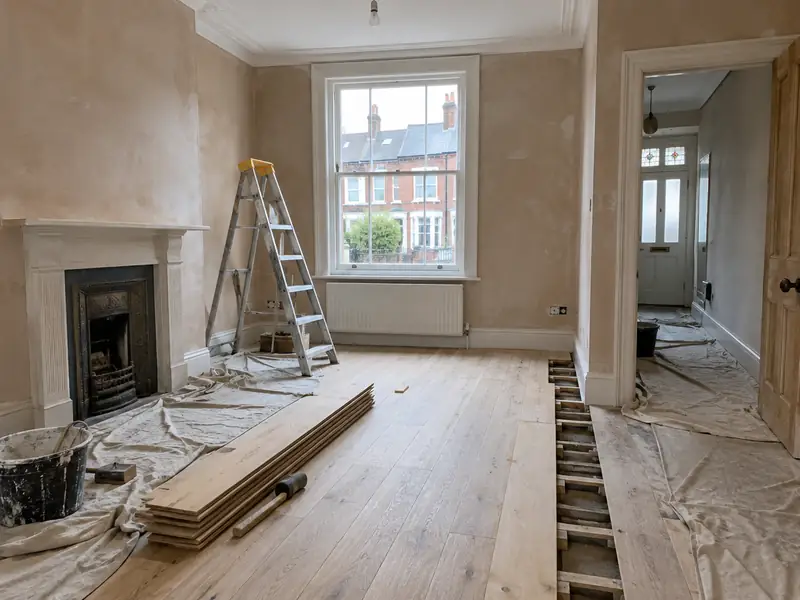
A whole-house renovation is a planned refurbishment of an entire home, typically combining rewiring, heating, plastering, new kitchen and bathroom, flooring and decoration, and sometimes layout changes, carried out in a logical order under one project.
Across Dyfed, people look into a whole-house renovation to replace something worn out, to make the house work better for them, or to get it ready for a sale. We cover Llanelli, Ammanford, Aberystwyth and Carmarthen and the smaller towns around them, working to the rules that apply in Wales. Expect a guide of £41,500–£110,000, VAT included, in Wales, and every quote follows a free visit.
- Guide price
- £41,500–£110,000 inc VAT
- Time on site
- 8–24 weeks on site, depending on scope
- Planning rules
- Wales
- Price level
- About 8% below the national guide
- Towns listed
- 4
- Survey
- Free, with a written quote
How much does a whole-house renovation cost in Dyfed?
Use the table to gauge the cost of a whole-house renovation in Dyfed before we visit. Figures include VAT and are scaled for Wales, coming out about 8% below the national guide, which gives £41,500–£110,000 overall. After a free survey, you receive a fixed written price.
| Type of job | What it usually involves | Guide in Dyfed |
|---|---|---|
| Light refurbishment | Decoration, flooring, minor repairs and perhaps one new kitchen or bathroom. | £14,000–£41,500 |
| Full refurbishment | Rewire, heating, plastering, new kitchen and bathroom, flooring and decoration throughout a 3-bed house. | £41,500–£110,000 |
| Renovation with structural changes | A full refurbishment plus wall removal, layout changes or extra bathrooms. | £92,000–£166,000 |
The main things that change the figure:
- Size of the house and number of rooms being renovated
- Kitchen and bathroom specification
- Structural or layout changes and associated approvals
- Hidden problems such as damp, rot or outdated drainage
Scope of the work
- Room-by-room survey and a planned order of works
- Strip-out of old kitchens, bathrooms, flooring and finishes
- Rewiring and new consumer unit by qualified electricians, with certificates
- New kitchen and bathroom fitted to your chosen specification
- Flooring, internal doors, skirting and joinery
- Decoration and a final clean before handover
Housing across Dyfed
Dyfed covers Carmarthenshire, Ceredigion and Pembrokeshire. Stone cottages and farmhouses under slate roofs are common, often rendered or colour-washed, as in Tenby's brightly painted terraces. Llanelli has Victorian industrial terraces, Aberystwyth and Carmarthen have Georgian and Victorian centres, and bungalows and newer estates surround most towns.
Stone homes often need lime render, repointing and roof slating repairs. Terraces suit loft conversions and extensions, and rural bungalows commonly take extensions, porches and driveways.
Atlantic weather brings strong winds, driving rain and salt to the coast, so exposure ratings matter when specifying render and pointing.
Do you need permission in Dyfed?
For anyone in Dyfed, the relevant framework is Wales's. The summary below is general, so we always contact the council about your address before putting a price in writing.
Internal improvements do not need planning permission in Wales unless the building is listed.
Building Regulations in Wales cover notifiable electrical work, drainage, ventilation and any structural change.
Rules change and every property is different, so we check the planning history and constraints for your address before we quote.
From survey to handover
Survey and measure
A free survey comes first. It gives us what we need to price a whole-house renovation properly, including dimensions, existing materials and access for deliveries, and gives you the chance to ask anything you like.
Price and scope agreed
The quote arrives in writing, not over the phone. It covers the full scope, the finishes you've chosen, any exclusions and the payment schedule, with a fixed price tied to that specification.
Plan and prepare
Preparation matters as much as the build. We agree access, parking and working hours with you, order materials in good time, and confirm any permissions so the job isn't held up once it starts.
The work itself
The work is carried out to the agreed specification, with floors and furniture protected and the site kept tidy. At the end we clean up, walk through the finished job with you and hand over any certificates.
How we work
Frequently asked questions
Can I stay at home during the work?
In most cases, yes. Most people can live at home throughout, and we plan the work to keep disruption down by protecting floors, agreeing working hours and keeping access routes clear. Bigger jobs affecting kitchens, bathrooms or heating may mean a short spell with reduced facilities, and we talk this through with you at the survey.
How long will a whole-house renovation take?
On a typical home, allow 8–24 weeks on site, depending on scope. Larger projects, older buildings and extra work found once things are opened up can extend that, while simpler jobs may be shorter. Your quote includes an estimate of time on site, and your point of contact keeps you updated on the programme as the work progresses.
In what order should renovation work be done?
A renovation should follow a set order so finished work is never damaged by later trades. It usually runs from roof and structural repairs, through strip-out, first-fix electrics and plumbing, then plastering, second-fix electrics and plumbing, kitchen and bathroom fitting, flooring and finally decoration. Windows are usually fitted before plastering. We plan the programme around this sequence so each trade follows on smoothly.
What contingency should I allow?
A contingency is money set aside for problems found once work starts, such as rotten joists, hidden damp or wiring that is worse than expected. For older houses, setting aside at least 10–15% of the build cost is sensible. We look for warning signs during the survey and price known issues upfront. If something unexpected is found, we explain it and price it before carrying on.
How much does it cost to renovate a whole house?
A full refurbishment of a typical 3-bed house costs £41,500–£110,000, covering rewiring, heating, plastering, a new kitchen and bathroom, flooring and decoration. A light refresh costs much less, while renovations with structural changes cost more. The biggest variables are the condition of the house and the kitchen and bathroom specification. We survey every room and give you a written price for the agreed scope.
Towns in Dyfed
Choose your town from the list to see how we price and plan a whole-house renovation in your part of Dyfed, including typical time on site.