
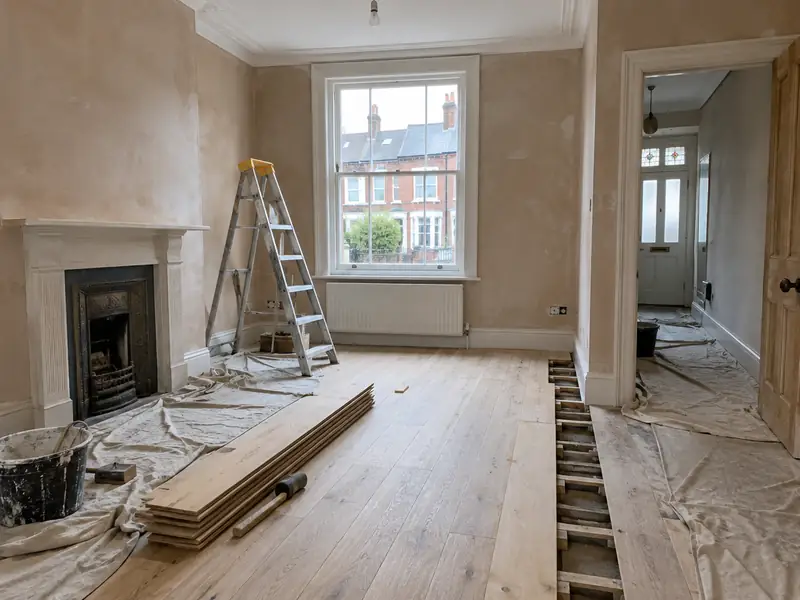
A whole-house renovation is a planned refurbishment of an entire home, typically combining rewiring, heating, plastering, new kitchen and bathroom, flooring and decoration, and sometimes layout changes, carried out in a logical order under one project.
Addresses across HU15 fall within our coverage for a whole-house renovation, so if your home is in Brough we can arrange a survey on a day that works for you. We inspect the existing building, discuss materials and layout, and then price the agreed specification in writing. Expect a guide range of £42,500–£113,000 including VAT before that visit.
- Guide price
- £42,500–£113,000 inc VAT
- Time on site
- 8–24 weeks on site, depending on scope
- Postcodes
- HU15
- Planning rules
- England
- Local area
- East Riding of Yorkshire
- Survey
- Free, with a written quote
Whole-house renovations prices in Brough
These are guide costs, not quotes. For a whole-house renovation in Brough the range is £42,500–£113,000, VAT included, reflecting prices in Yorkshire and the Humber that are about 6% below the national guide. Once we have visited for a free survey, you get a firm figure for the scope you approve.
| Type of job | What it usually involves | Guide in Brough |
|---|---|---|
| Light refurbishment | Decoration, flooring, minor repairs and perhaps one new kitchen or bathroom. | £14,000–£42,500 |
| Full refurbishment | Rewire, heating, plastering, new kitchen and bathroom, flooring and decoration throughout a 3-bed house. | £42,500–£113,000 |
| Renovation with structural changes | A full refurbishment plus wall removal, layout changes or extra bathrooms. | £94,000–£169,000 |
Your price depends mostly on:
- Whether rewiring, new heating and full replastering are needed
- Kitchen and bathroom specification
- Structural or layout changes and associated approvals
- Hidden problems such as damp, rot or outdated drainage
What do you get?
- Room-by-room survey and a planned order of works
- Rewiring and new consumer unit by qualified electricians, with certificates
- Heating and plumbing upgrades by qualified engineers
- Plastering, skimming and repairs to ceilings and walls
- Flooring, internal doors, skirting and joinery
- Decoration and a final clean before handover
What are homes like around Brough?
Hull has large areas of Victorian and Edwardian terraces, many arranged in the city's distinctive short cul-de-sac terraces running off the main streets, plus extensive interwar and post-war estates. Beverley keeps Georgian brick houses, Wolds villages use chalk and brick, and red clay pantile roofs are common across the area. Coastal towns such as Bridlington mix guest-house terraces with bungalows.
Terraced homes often suit loft rooms and rear extensions; pantile roofs may need re-roofing with matching tiles. Bungalows commonly benefit from loft conversions, and older brick houses need repointing with a suitable mortar.
So when we survey a Brough property for a whole-house renovation, the first step is working out how it was built and what has been changed since.
Planning and building rules in Brough
Which rules apply depends on where you live. For Brough, the answer is England, and the points below reflect that; we verify them with the council before quoting.
Internal work such as a new kitchen, bathroom, flooring, plastering or decorating does not need planning permission in England, unless the house is listed, when listed building consent may be needed even for internal changes.
Some internal work is covered by Building Regulations: new electrical circuits and work in bathrooms (Part P), new drainage, structural changes, extractor ventilation and any new window. Notifiable work is certified by a registered installer or by building control.
Rules change and every property is different, so we check the planning history and constraints for your address before we quote.
What happens after you get in touch?
Survey and measure
First, someone visits your home in Brough to see the space, take measurements and note anything that could affect the work, such as access or the condition of what is there. There is no charge for this visit.
Your fixed price
Next you receive a written quote with a fixed price for the agreed specification. It lists what is included, what is not, and how payments are staged, so you can compare it properly.
Getting ready
Before anyone starts, we confirm the programme in writing, check whether consents are required and arrange deliveries. If a skip or scaffolding on the road needs a permit, we apply for it.
Finish and handover
Our trades complete a whole-house renovation while your point of contact keeps you updated. When everything is finished, we clear the site, take away waste and go through the result with you before handover.
How we work
Frequently asked questions
Can I stay at home during the work?
In most cases, yes. Most people can live at home throughout, and we plan the work to keep disruption down by protecting floors, agreeing working hours and keeping access routes clear. Bigger jobs affecting kitchens, bathrooms or heating may mean a short spell with reduced facilities, and we talk this through with you at the survey.
What happens at the survey?
We visit your home at a time that suits you, look at the area involved, take measurements and check access, condition and any services that might be affected. We talk through what you want from a whole-house renovation, explain the options and answer questions. There is no charge and no obligation; afterwards we send a written quote.
In what order should renovation work be done?
A renovation should follow a set order so finished work is never damaged by later trades. It usually runs from roof and structural repairs, through strip-out, first-fix electrics and plumbing, then plastering, second-fix electrics and plumbing, kitchen and bathroom fitting, flooring and finally decoration. Windows are usually fitted before plastering. We plan the programme around this sequence so each trade follows on smoothly.
Which parts of a renovation need building regulations approval?
Several parts of a renovation fall under building regulations, including rewiring and new circuits, new boilers and heating systems, structural changes such as removing walls, replacement windows and changes to drainage. Some of this is self-certified by suitably registered trades, and some needs building control approval. In Scotland a building warrant may be needed for certain works. We arrange the right approvals and certificates.
What happens if you find damp or rot?
If we find damp or rot during a renovation, we stop that area, show you the problem and explain the likely cause, such as a leaking gutter, bridged damp-proof course or poor ventilation. We then give you a written price to fix the cause and repair the damage before carrying on. Treating the cause matters more than treating the symptom, so we focus on that first.
Also covering areas around Brough
Coverage for Brough spans HU15. Close by, Hull, Beverley and Scunthorpe are covered too, and the rest of our UK-wide area follows the same survey-then-quote process from start to finish.