
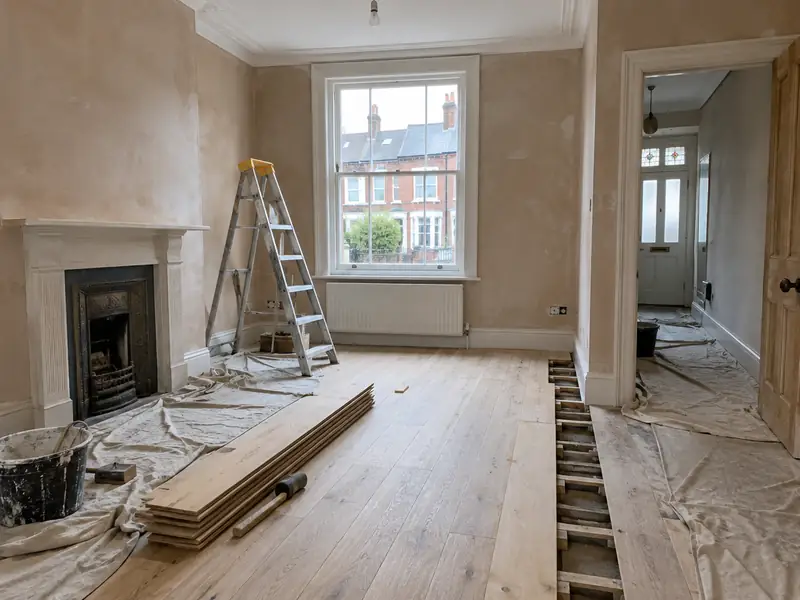
A whole-house renovation is a planned refurbishment of an entire home, typically combining rewiring, heating, plastering, new kitchen and bathroom, flooring and decoration, and sometimes layout changes, carried out in a logical order under one project.
Whatever prompted you to look into a whole-house renovation, whether wear and tear, a growing family or plans to move, we can survey your Hull home and give you a price in writing. Homes in Yorkshire and the Humber typically come in at £42,500–£113,000, VAT included, for this kind of work. We also cover Beverley, Brough and Grimsby, and the same steps apply wherever you are in East Riding of Yorkshire.
- Guide price
- £42,500–£113,000 inc VAT
- Time on site
- 8–24 weeks on site, depending on scope
- Postcodes
- HU1, HU2, HU3, HU5 and HU8
- Planning rules
- England
- Local area
- City of Kingston-upon-Hull
- Survey
- Free, with a written quote
How much does a whole-house renovation cost in Hull?
Below is a breakdown of typical costs for a whole-house renovation in Hull. Because rates in Yorkshire and the Humber are about 6% below the national guide, the overall guide comes to £42,500–£113,000, including VAT. Size, materials and access move the figure, and a free-of-charge survey settles it.
| Type of job | What it usually involves | Guide in Hull |
|---|---|---|
| Light refurbishment | Decoration, flooring, minor repairs and perhaps one new kitchen or bathroom. | £14,000–£42,500 |
| Full refurbishment | Rewire, heating, plastering, new kitchen and bathroom, flooring and decoration throughout a 3-bed house. | £42,500–£113,000 |
| Renovation with structural changes | A full refurbishment plus wall removal, layout changes or extra bathrooms. | £94,000–£169,000 |
Expect these to shape the final quote:
- Size of the house and number of rooms being renovated
- Whether rewiring, new heating and full replastering are needed
- Structural or layout changes and associated approvals
- Hidden problems such as damp, rot or outdated drainage
Scope of the work
- Strip-out of old kitchens, bathrooms, flooring and finishes
- Rewiring and new consumer unit by qualified electricians, with certificates
- Heating and plumbing upgrades by qualified engineers
- Plastering, skimming and repairs to ceilings and walls
- New kitchen and bathroom fitted to your chosen specification
- Decoration and a final clean before handover
Building in Hull
Hull has large areas of Victorian and Edwardian terraces, many arranged in the city's distinctive short cul-de-sac terraces running off the main streets, plus extensive interwar and post-war estates. Beverley keeps Georgian brick houses, Wolds villages use chalk and brick, and red clay pantile roofs are common across the area. Coastal towns such as Bridlington mix guest-house terraces with bungalows.
Much of the area is low-lying near the Humber and coast, with flood risk, cold easterly winds and an eroding Holderness coastline.
Knowing the typical building types in East Riding of Yorkshire helps, but a survey of your own home in Hull is what decides the right approach to a whole-house renovation.
Do you need permission in Hull?
Because Hull falls under England's rules, the guidance below is the version relevant to you. Before sending a price, we check your property's position with the council.
Internal work such as a new kitchen, bathroom, flooring, plastering or decorating does not need planning permission in England, unless the house is listed, when listed building consent may be needed even for internal changes.
Some internal work is covered by Building Regulations: new electrical circuits and work in bathrooms (Part P), new drainage, structural changes, extractor ventilation and any new window. Notifiable work is certified by a registered installer or by building control.
Rules change and every property is different, so we check the planning history and constraints for your address before we quote.
What happens after you get in touch?
A visit to your home
We begin by looking at the job in person. During the free survey we discuss options, materials and budget for a whole-house renovation, and photograph or measure anything the quote needs to reflect.
Written quote
After the survey we send a quote for a whole-house renovation that fixes the price for the scope we've agreed. If you want to change materials or scope, we revise it in writing before anything is booked.
Booking the work
Before anyone starts, we confirm the programme in writing, check whether consents are required and arrange deliveries. If a skip or scaffolding on the road needs a permit, we apply for it.
The work itself
Work goes ahead as scheduled and you deal with one contact throughout. When the last trade leaves, we clear and clean the site, talk you through what has been done and pass on any certificates and care instructions.
How we work
Common questions
What happens at the survey?
We visit your home at a time that suits you, look at the area involved, take measurements and check access, condition and any services that might be affected. We talk through what you want from a whole-house renovation, explain the options and answer questions. There is no charge and no obligation; afterwards we send a written quote.
What happens if you find damp or rot?
If we find damp or rot during a renovation, we stop that area, show you the problem and explain the likely cause, such as a leaking gutter, bridged damp-proof course or poor ventilation. We then give you a written price to fix the cause and repair the damage before carrying on. Treating the cause matters more than treating the symptom, so we focus on that first.
Which parts of a renovation need building regulations approval?
Several parts of a renovation fall under building regulations, including rewiring and new circuits, new boilers and heating systems, structural changes such as removing walls, replacement windows and changes to drainage. Some of this is self-certified by suitably registered trades, and some needs building control approval. In Scotland a building warrant may be needed for certain works. We arrange the right approvals and certificates.
Can we live in the house while it is renovated?
Living in a house during a full renovation is possible but hard, especially while rewiring, plastering and the kitchen and bathroom are being done. Many people move out for the noisiest weeks or stay elsewhere for the whole project. If you stay, we can phase the work room by room and keep one bathroom and a basic kitchen working for as long as possible. We discuss this at the survey.
Can I stay at home during the work?
In most cases, yes. Most people can live at home throughout, and we plan the work to keep disruption down by protecting floors, agreeing working hours and keeping access routes clear. Bigger jobs affecting kitchens, bathrooms or heating may mean a short spell with reduced facilities, and we talk this through with you at the survey.
Nearby towns
Our coverage in Hull includes HU1, HU2, HU3 and HU5. We also travel to Beverley, Brough and Grimsby, so neighbouring addresses are looked after on exactly the same terms as those in town.