
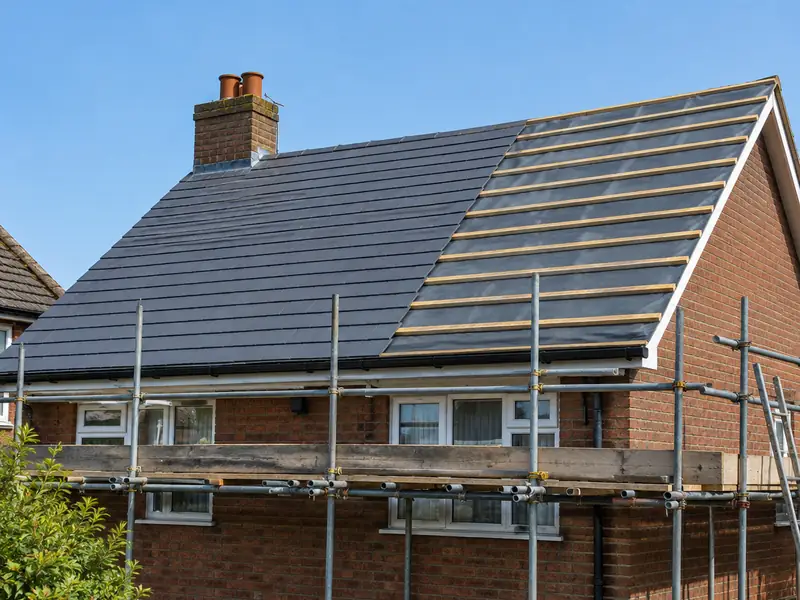
A roof replacement, or re-roof, strips the old tiles or slates, battens and felt from a pitched roof and replaces them with a new breathable membrane, battens and covering, repairing timbers and renewing ridges, valleys and flashings at the same time.
Addresses across HU1, HU2, HU3 and HU5 fall within our coverage for a new roof, so if your home is in Hull we can arrange a survey on a day that works for you. We inspect the existing building, discuss materials and layout, and then price the agreed specification in writing. Expect a guide range of £6,600–£14,000 including VAT before that visit.
- Guide price
- £6,600–£14,000 inc VAT
- Time on site
- 1–2 weeks on site, plus scaffolding time
- Postcodes
- HU1, HU2, HU3, HU5 and HU8
- Planning rules
- England
- Local area
- City of Kingston-upon-Hull
- Survey
- Free, with a written quote
What should you budget for a new roof in Hull?
To help you plan, we show what a new roof typically costs in Hull instead of holding figures back for a sales call. The range is £6,600–£14,000 with VAT, using rates in Yorkshire and the Humber that are about 6% below the national guide. A free survey then fixes your actual price.
| Type of job | What it usually involves | Guide in Hull |
|---|---|---|
| Terraced house or bungalow | A smaller pitched roof re-covered in concrete or clay tiles, including scaffolding. | £4,700–£9,400 |
| Typical semi-detached | A 3-bed semi re-roofed in concrete or clay tiles with new membrane, battens and leadwork. | £6,600–£14,000 |
| Detached or natural slate | Larger or more complex roofs, or any roof finished in natural slate. | £11,500–£23,500 |
Expect these to shape the final quote:
- Roof area, pitch and the number of hips, valleys and dormers
- Condition of rafters, fascias and other timbers
- Chimneys, leadwork and roof windows to rework
- Scaffolding, access and the height of the house
Scope of the work
- Survey of the covering, timbers, chimneys and loft ventilation
- Scaffolding with edge protection, erected and removed
- Repairs or replacement of damaged rafters and fascia boards
- Breathable membrane and new treated battens
- Ridges, hips and verges dry-fixed or bedded, with new leadwork
- Waste removal by skip and a clean site on completion
Homes in East Riding of Yorkshire
Hull has large areas of Victorian and Edwardian terraces, many arranged in the city's distinctive short cul-de-sac terraces running off the main streets, plus extensive interwar and post-war estates. Beverley keeps Georgian brick houses, Wolds villages use chalk and brick, and red clay pantile roofs are common across the area. Coastal towns such as Bridlington mix guest-house terraces with bungalows.
Terraced homes often suit loft rooms and rear extensions; pantile roofs may need re-roofing with matching tiles. Bungalows commonly benefit from loft conversions, and older brick houses need repointing with a suitable mortar.
In Hull, as elsewhere in East Riding of Yorkshire, we take the building's age and construction into account before recommending anything, because both can change what is involved in a new roof.
Planning and building rules in Hull
As Hull is in England, read the following with that system of planning and building control in mind. We check what applies to your house with the council before you receive a quote.
Re-roofing a house with similar materials does not usually need planning permission in England. Listed buildings and conservation areas may need consent if the covering changes.
Replacing more than a quarter of a roof’s covering counts as renovation under Building Regulations, so the work is notified and the roof insulation may need upgrading. Bats are protected across the UK; if they roost under roof tiles, soffits or fascias, work stops and a licensed ecologist advises before it restarts.
Rules change and every property is different, so we check the planning history and constraints for your address before we quote.
From survey to handover
Survey and measure
First, someone visits your home in Hull to see the space, take measurements and note anything that could affect the work, such as access or the condition of what is there. There is no charge for this visit.
Price and scope agreed
The quote arrives in writing, not over the phone. It covers the full scope, the finishes you've chosen, any exclusions and the payment schedule, with a fixed price tied to that specification.
Plan and prepare
Once you accept, we agree start dates, order materials and deal with any planning, building control or neighbour notices the job needs. You'll know who is coming and when before work begins.
The work itself
Work goes ahead as scheduled and you deal with one contact throughout. When the last trade leaves, we clear and clean the site, talk you through what has been done and pass on any certificates and care instructions.
Why homeowners choose us
Frequently asked questions
Can I stay at home during the work?
In most cases, yes. Most people can live at home throughout, and we plan the work to keep disruption down by protecting floors, agreeing working hours and keeping access routes clear. Bigger jobs affecting kitchens, bathrooms or heating may mean a short spell with reduced facilities, and we talk this through with you at the survey.
Do I need planning permission to replace my roof?
Planning permission is not usually needed to re-roof in similar materials, but it depends on the change, your home's location, whether it is listed or in a conservation area, and which UK nation you live in. Changing the roof shape, height or covering material can need permission. Listed buildings need consent for re-roofing. We check the position for your home before quoting.
How much does a new roof cost?
Re-roofing a typical 3-bed semi costs £6,600–£14,000, including scaffolding, new membrane and battens. As a guide, allow roughly £70–£160 per square metre of roof plus fixed costs for scaffolding and waste. Concrete tiles sit at the lower end and natural slate at the top. Hips, valleys, chimneys and timber repairs add to the price. We confirm a fixed figure after inspecting the roof and loft.
What happens at the survey?
We visit your home at a time that suits you, look at the area involved, take measurements and check access, condition and any services that might be affected. We talk through what you want from a new roof, explain the options and answer questions. There is no charge and no obligation; afterwards we send a written quote.
How do I know if I need a new roof or just repairs?
A roof needs replacing when problems are widespread, not isolated. Signs include many slipped, cracked or porous tiles, sagging between rafters, daylight or damp in the loft, perished felt that crumbles to the touch and repeated leaks in different places. A few slipped tiles or a loose ridge can usually be repaired. We inspect from outside and inside the loft and tell you honestly which is needed.
Nearby towns
If your address falls within HU1, HU2, HU3 and HU5, we cover it. The same goes for neighbouring Beverley, Brough and Grimsby, which we include alongside Hull when arranging surveys and quotes.