
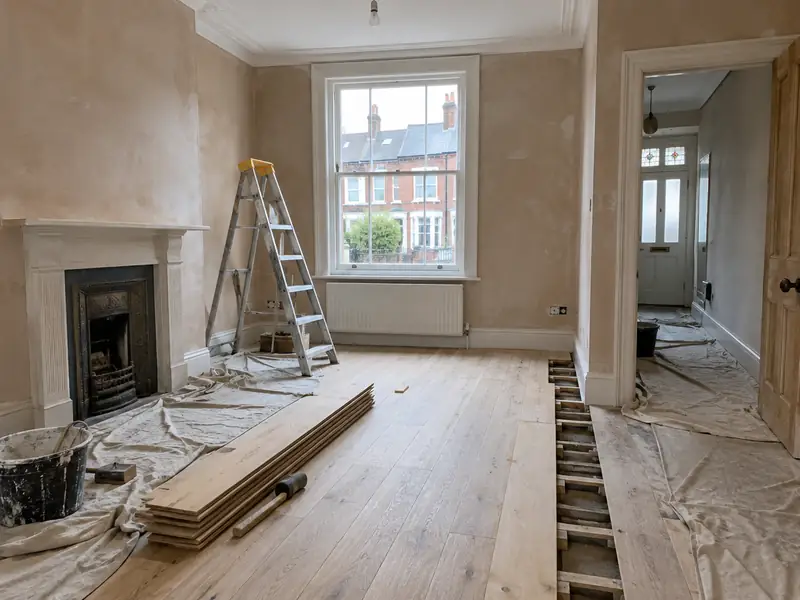
A whole-house renovation is a planned refurbishment of an entire home, typically combining rewiring, heating, plastering, new kitchen and bathroom, flooring and decoration, and sometimes layout changes, carried out in a logical order under one project.
Homeowners in Stroud usually consider a whole-house renovation for one of a few reasons: something has worn out, the house no longer suits the way they live, or they are getting it ready to sell. We visit, agree a specification and put a fixed price in writing. Most jobs like this take 8–24 weeks on site, depending on scope, and we work across Gloucestershire, including Gloucester, Cirencester and Cheltenham.
- Guide price
- £46,000–£122,000 inc VAT
- Time on site
- 8–24 weeks on site, depending on scope
- Postcodes
- GL5 and GL6
- Planning rules
- England
- Local area
- Gloucestershire
- Survey
- Free, with a written quote
What should you budget for a whole-house renovation in Stroud?
Budgeting for a whole-house renovation in Stroud? The numbers below include VAT and are adjusted for the South West, where costs are about 2% above the national guide. The headline range is £46,000–£122,000. Nothing is final until we have measured up at a free survey and agreed the specification with you.
| Type of job | What it usually involves | Guide in Stroud |
|---|---|---|
| Light refurbishment | Decoration, flooring, minor repairs and perhaps one new kitchen or bathroom. | £15,500–£46,000 |
| Full refurbishment | Rewire, heating, plastering, new kitchen and bathroom, flooring and decoration throughout a 3-bed house. | £46,000–£122,000 |
| Renovation with structural changes | A full refurbishment plus wall removal, layout changes or extra bathrooms. | £102,000–£184,000 |
What moves the price up or down:
- Size of the house and number of rooms being renovated
- Whether rewiring, new heating and full replastering are needed
- Structural or layout changes and associated approvals
- Hidden problems such as damp, rot or outdated drainage
What does the job include in Stroud?
- Strip-out of old kitchens, bathrooms, flooring and finishes
- Rewiring and new consumer unit by qualified electricians, with certificates
- Heating and plumbing upgrades by qualified engineers
- Plastering, skimming and repairs to ceilings and walls
- New kitchen and bathroom fitted to your chosen specification
- Decoration and a final clean before handover
Homes in Gloucestershire
Golden Cotswold limestone defines towns and villages such as Cirencester, Stow and Tetbury, often with stone-slate roofs. Cheltenham is known for Regency stucco terraces and villas, Gloucester has Victorian brick terraces and interwar estates, the Stroud valleys have mill-era stone cottages, and the Forest of Dean uses its own sandstone.
The Cotswold escarpment is exposed to wind and rain, while low ground along the Severn has a well-known flood risk.
Knowing the typical building types in Gloucestershire helps, but a survey of your own home in Stroud is what decides the right approach to a whole-house renovation.
Do you need permission in Stroud?
Homes in Stroud come under the regulations for England, summarised below. We don't rely on general rules alone: we confirm the position for your address with the council before a quote goes out.
Internal work such as a new kitchen, bathroom, flooring, plastering or decorating does not need planning permission in England, unless the house is listed, when listed building consent may be needed even for internal changes.
Some internal work is covered by Building Regulations: new electrical circuits and work in bathrooms (Part P), new drainage, structural changes, extractor ventilation and any new window. Notifiable work is certified by a registered installer or by building control.
Rules change and every property is different, so we check the planning history and constraints for your address before we quote.
From survey to handover
Survey and measure
It starts with a survey at the property, free of charge. We check condition, access and services, ask how you want the finished result to look, and answer any questions you have about a whole-house renovation.
Quote in writing
We put everything into a written, fixed-price quote: the specification, what's excluded, staged payments and the expected time on site. Take whatever time you need to decide; there's no pressure to commit.
Getting ready
Next comes planning the work itself. We set a start date that suits you, line up the right trades, and make sure any approvals for a whole-house renovation are in place before the first day on site.
Build and hand over
Our trades complete a whole-house renovation while your point of contact keeps you updated. When everything is finished, we clear the site, take away waste and go through the result with you before handover.
Working with SK Home Improvements
Frequently asked questions
How long does a full house renovation take?
A full renovation of a typical 3-bed house usually takes around 8–16 weeks on site, and longer if there are structural changes or extensive repairs. A light refresh may take only a few weeks. Material lead times for kitchens, windows and bathroom fittings also affect the programme. We give you a week-by-week plan with your quote and update it as the work progresses.
Which parts of a renovation need building regulations approval?
Several parts of a renovation fall under building regulations, including rewiring and new circuits, new boilers and heating systems, structural changes such as removing walls, replacement windows and changes to drainage. Some of this is self-certified by suitably registered trades, and some needs building control approval. In Scotland a building warrant may be needed for certain works. We arrange the right approvals and certificates.
Can you combine a whole-house renovation with other work?
Yes. Because we manage several trades under one contract, we can plan a whole-house renovation alongside other work on your Stroud home, such as new windows with rendering, or a kitchen refit with an extension. Combining jobs can reduce repeat set-up such as scaffolding, skips and access, and every element is listed and priced in the same written quote.
What contingency should I allow?
A contingency is money set aside for problems found once work starts, such as rotten joists, hidden damp or wiring that is worse than expected. For older houses, setting aside at least 10–15% of the build cost is sensible. We look for warning signs during the survey and price known issues upfront. If something unexpected is found, we explain it and price it before carrying on.
Which postcodes in Stroud do you cover?
We cover GL5 and GL6, along with the rest of Gloucestershire. If your postcode is not listed, get in touch anyway: our coverage is UK-wide, and we can usually arrange a survey wherever you live. Enter your postcode in the guide-price tool or contact form and we will confirm.
Near Stroud
We welcome enquiries from all GL5 and GL6 postcodes in Stroud, plus Gloucester, Cirencester and Cheltenham. Each one gets the same survey at no charge and a written price fixed for the work described.