
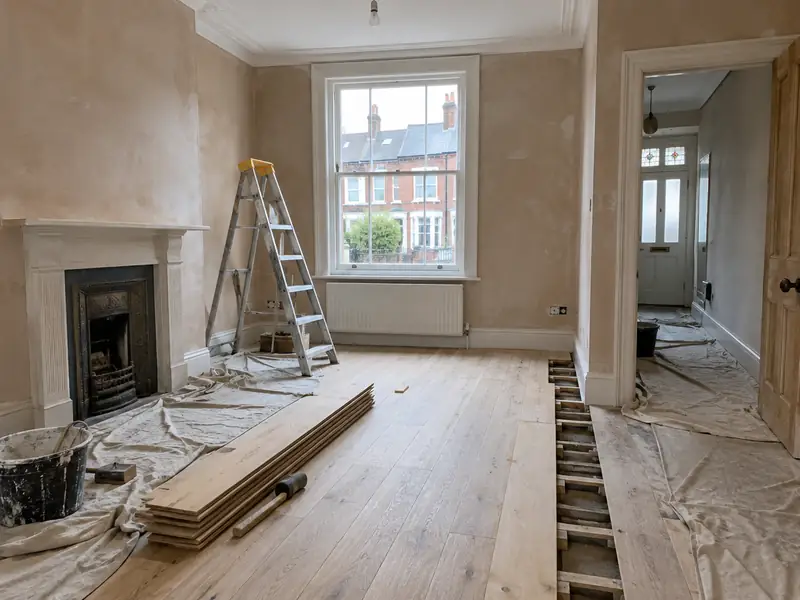
A whole-house renovation is a planned refurbishment of an entire home, typically combining rewiring, heating, plastering, new kitchen and bathroom, flooring and decoration, and sometimes layout changes, carried out in a logical order under one project.
Cost is usually the first question about a whole-house renovation, so here is the guide for Wales: £41,500–£110,000 including VAT. We cover the whole of West Glamorgan, with Swansea, Neath, Briton Ferry and Gorseinon among the main centres. Because each UK nation sets its own rules, we check the requirements in Wales for your property, then put a firm price on paper following a free survey.
- Guide price
- £41,500–£110,000 inc VAT
- Time on site
- 8–24 weeks on site, depending on scope
- Planning rules
- Wales
- Price level
- About 8% below the national guide
- Towns listed
- 5
- Survey
- Free, with a written quote
How much does a whole-house renovation cost in West Glamorgan?
What will a whole-house renovation cost in West Glamorgan? Our guide range is £41,500–£110,000 including VAT. That figure is adjusted for Wales, about 8% below the national guide, and is intended for planning a budget. A firm written price for your chosen specification follows a free survey at your home.
| Type of job | What it usually involves | Guide in West Glamorgan |
|---|---|---|
| Light refurbishment | Decoration, flooring, minor repairs and perhaps one new kitchen or bathroom. | £14,000–£41,500 |
| Full refurbishment | Rewire, heating, plastering, new kitchen and bathroom, flooring and decoration throughout a 3-bed house. | £41,500–£110,000 |
| Renovation with structural changes | A full refurbishment plus wall removal, layout changes or extra bathrooms. | £92,000–£166,000 |
Your price depends mostly on:
- Size of the house and number of rooms being renovated
- Whether rewiring, new heating and full replastering are needed
- Structural or layout changes and associated approvals
- Hidden problems such as damp, rot or outdated drainage
What’s included?
- Room-by-room survey and a planned order of works
- Rewiring and new consumer unit by qualified electricians, with certificates
- Heating and plumbing upgrades by qualified engineers
- New kitchen and bathroom fitted to your chosen specification
- Flooring, internal doors, skirting and joinery
- Decoration and a final clean before handover
Homes in West Glamorgan
Swansea's Victorian terraces climb its hillsides, its centre was largely rebuilt after wartime bombing, and Neath and Port Talbot have industrial terraces and post-war estates. Gower villages have stone cottages, and Pennant sandstone is common in older walls. Newer estates have grown on the edges of the main towns.
Hillside terraces often need repointing, rendering, roof repairs and window replacement, and loft conversions can work well. Gower stone cottages call for lime-based repairs, and estate homes commonly take extensions and driveways.
Swansea Bay and Gower face wet westerly weather and salt, and steep streets can affect access and scaffolding.
Do you need permission in West Glamorgan?
For anyone in West Glamorgan, the relevant framework is Wales's. The summary below is general, so we always contact the council about your address before putting a price in writing.
Internal improvements do not need planning permission in Wales unless the building is listed.
Building Regulations in Wales cover notifiable electrical work, drainage, ventilation and any structural change.
Rules change and every property is different, so we check the planning history and constraints for your address before we quote.
From survey to handover
Free site survey
It starts with a survey at the property, free of charge. We check condition, access and services, ask how you want the finished result to look, and answer any questions you have about a whole-house renovation.
Quote in writing
Next you receive a written quote with a fixed price for the agreed specification. It lists what is included, what is not, and how payments are staged, so you can compare it properly.
Getting ready
Preparation matters as much as the build. We agree access, parking and working hours with you, order materials in good time, and confirm any permissions so the job isn't held up once it starts.
On site to finish
During the work we protect the areas around it and tidy up at the end of each day. Once complete, we check the finish, remove our materials and hand over paperwork such as building control sign-off where it applies.
How we work
Frequently asked questions
Do I need planning permission to renovate?
Most internal renovation work does not need planning permission, but it depends on what changes, your home's location, whether it is listed or in a conservation area, and which UK nation you are in. Listed buildings usually need consent for internal and external changes. Altering windows, adding dormers or changing the outside appearance in a conservation area may also need permission. We check before quoting.
Can I stay at home during the work?
In most cases, yes. Most people can live at home throughout, and we plan the work to keep disruption down by protecting floors, agreeing working hours and keeping access routes clear. Bigger jobs affecting kitchens, bathrooms or heating may mean a short spell with reduced facilities, and we talk this through with you at the survey.
Can we live in the house while it is renovated?
Living in a house during a full renovation is possible but hard, especially while rewiring, plastering and the kitchen and bathroom are being done. Many people move out for the noisiest weeks or stay elsewhere for the whole project. If you stay, we can phase the work room by room and keep one bathroom and a basic kitchen working for as long as possible. We discuss this at the survey.
Can you combine a whole-house renovation with other work?
Yes. Because we manage several trades under one contract, we can plan a whole-house renovation alongside other work on your West Glamorgan home, such as new windows with rendering, or a kitchen refit with an extension. Combining jobs can reduce repeat set-up such as scaffolding, skips and access, and every element is listed and priced in the same written quote.
What contingency should I allow?
A contingency is money set aside for problems found once work starts, such as rotten joists, hidden damp or wiring that is worse than expected. For older houses, setting aside at least 10–15% of the build cost is sensible. We look for warning signs during the survey and price known issues upfront. If something unexpected is found, we explain it and price it before carrying on.
Towns in West Glamorgan
These are the towns in West Glamorgan where you can book a free survey for a whole-house renovation. Each has its own page with guide prices and coverage details.