
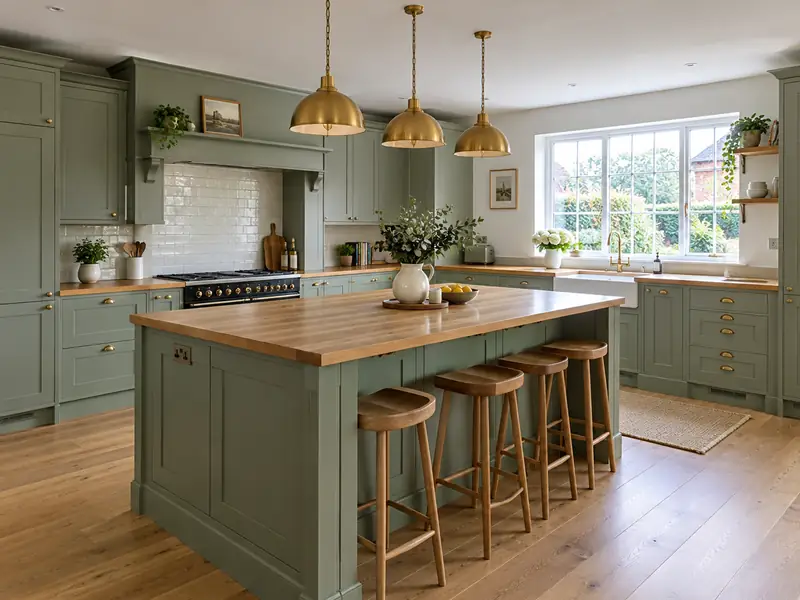
A new kitchen installation replaces your old units, worktops and appliances with a new layout fitted to your room, including the plumbing, electrics, tiling and finishing needed to leave a complete, working kitchen.
Cost is usually the first question about a new kitchen, so here is the guide for the North West: £7,600–£21,000 including VAT. We cover the whole of Cumbria, with Carlisle, Barrow-in-Furness, Kendal and Whitehaven among the main centres. Because each UK nation sets its own rules, we check the requirements in England for your property, then put a firm price on paper following a free survey.
- Guide price
- £7,600–£21,000 inc VAT
- Time on site
- 1–3 weeks on site
- Planning rules
- England
- Price level
- About 5% below the national guide
- Towns listed
- 5
- Survey
- Free, with a written quote
How much does a new kitchen cost in Cumbria?
What will a new kitchen cost in Cumbria? Our guide range is £7,600–£21,000 including VAT. That figure is adjusted for the North West, about 5% below the national guide, and is intended for planning a budget. A firm written price for your chosen specification follows a free survey at your home.
| Type of job | What it usually involves | Guide in Cumbria |
|---|---|---|
| Value kitchen | Standard units and laminate worktops in a small or medium room, keeping the existing layout. | £4,800–£8,600 |
| Mid-range kitchen | Better units, some layout changes, built-in appliances and a choice of worktops. | £8,600–£19,000 |
| Premium kitchen | High-end units, stone worktops, an island and premium appliances in a larger room. | £19,000–£38,000 |
The main things that change the figure:
- Unit range, door finish and worktop material
- Moving the sink, hob or other services to a new position
- Appliances, including built-in and premium models
- Tiling, flooring and any wall removal or replastering
Scope of the work
- Measured survey and layout planning for your room
- Electrics and new circuits by qualified electricians, with certificates
- Gas connections by a suitably registered engineer where needed
- Units, worktops and appliances fitted, levelled and adjusted
- Splashbacks or wall tiling to your chosen design
- Making good, extractor ducting and a final clean
Homes in Cumbria
Lake District villages are built largely of slate and rubble stone, often finished in roughcast or limewash, under slate roofs. Kendal is known for grey limestone and Penrith for red sandstone, Carlisle has sandstone and brick terraces, and west coast towns such as Barrow, Workington and Whitehaven have Victorian industrial terraces and post-war estates.
Stone cottages often need lime pointing, roof slating and breathable render. Industrial terraces can gain space through attic conversions and rear extensions, while rural homes commonly add porches, driveways and window upgrades.
Cumbria is among the wettest parts of England, and high ground and west-facing coasts see severe wind-driven rain, so exposure ratings matter for render and pointing.
Do you need permission in Cumbria?
For anyone in Cumbria, the relevant framework is England's. The summary below is general, so we always contact the council about your address before putting a price in writing.
Internal work such as a new kitchen, bathroom, flooring, plastering or decorating does not need planning permission in England, unless the house is listed, when listed building consent may be needed even for internal changes.
Some internal work is covered by Building Regulations: new electrical circuits and work in bathrooms (Part P), new drainage, structural changes, extractor ventilation and any new window. Notifiable work is certified by a registered installer or by building control.
Rules change and every property is different, so we check the planning history and constraints for your address before we quote.
The four stages
A visit to your home
It starts with a survey at the property, free of charge. We check condition, access and services, ask how you want the finished result to look, and answer any questions you have about a new kitchen.
Written quote
You get the price in writing, itemised so you can see where the money goes. As long as the specification stays the same, that is the price you pay for a new kitchen.
Plan and prepare
With the quote agreed, we book the work in and handle preparation: permissions where needed, building control notifications, material orders and access arrangements for your Cumbria property.
Build and hand over
The job proceeds in the order set out in the programme, with dust and debris kept under control. Finally we tidy away, inspect the work together and pass the finished project over to you with its paperwork.
What you can expect from us
Questions about a new kitchen in Cumbria
Do you cover Carlisle, Barrow-in-Furness and Kendal?
Yes. As well as Cumbria, we cover Carlisle, Barrow-in-Furness and Kendal and the rest of Cumbria. Our coverage is UK-wide, so the process is the same wherever you are: a free site survey, a quote in writing that fixes the price for the agreed scope, and one point of contact while the work is planned and carried out.
How long does it take to fit a kitchen?
Fitting a kitchen typically takes one to three weeks on site, depending on its size and how much the layout changes. Strip-out, first-fix plumbing and electrics, and any plastering come first, then units, worktops, appliances and tiling. Stone worktops are templated once the base units are in and usually fitted a week or two later. We give you a day-by-day plan before we start.
Is the price fixed?
Yes, for the specification we agree. Your written quote sets out exactly what is included at a fixed price. It only changes if you ask for something different, or if a problem the survey could not reasonably reveal later needs extra work. In either case we explain the change and confirm it in writing before going ahead.
Can a new kitchen be part of a knock-through?
A new kitchen often goes hand in hand with removing a wall to create an open-plan kitchen-diner. The wall removal, steel beam and building control approval are done first, then the plastering, and finally the kitchen is fitted into the new space. Doing both under one plan avoids fitting a kitchen twice and lets you design the layout for the larger room.
Which worktop material should I choose?
Laminate worktops are the most affordable and come in many stone and wood effects, though they can be damaged by hot pans. Solid wood is warm and repairable but needs regular oiling. Quartz is very hard-wearing, stain-resistant and needs little maintenance, but it costs more and is made to template after the units are fitted. We bring samples and explain the care each one needs.
Towns in Cumbria
Our coverage for a new kitchen in Cumbria includes the towns listed here. Each page explains guide costs, typical timings and the neighbouring places we also serve.