
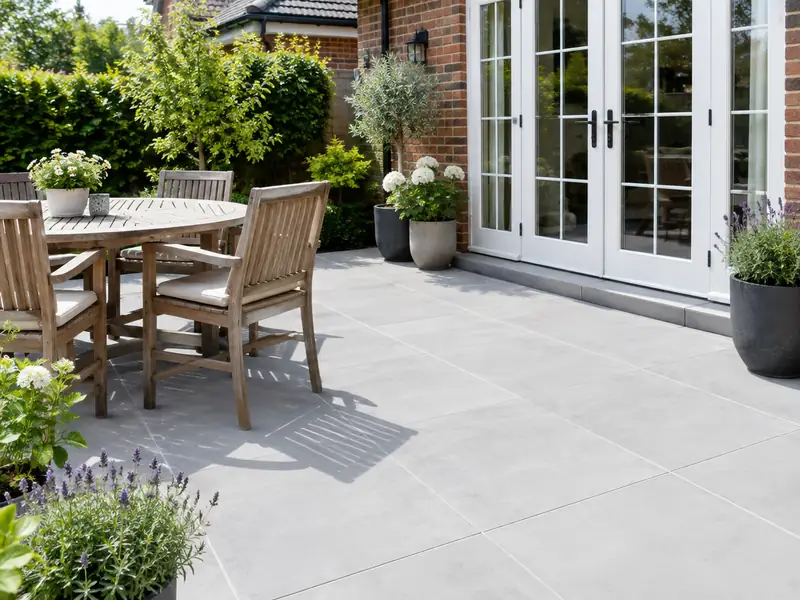
A patio is a paved outdoor area next to the house or in the garden, laid in porcelain, natural stone or concrete slabs on a compacted sub-base and mortar bed, with falls that direct rainwater away from the house.
Every house in Carnoustie is a little different, so we never price a new patio from a brochure. We look at the structure, access and existing finishes first, then put in writing a fixed figure for the scope we settle on. As a rough steer, homeowners in Scotland should budget £2,400–£5,300 including VAT, with work typically taking 3–7 days on site.
- Guide price
- £2,400–£5,300 inc VAT
- Time on site
- 3–7 days on site
- Postcodes
- DD7
- Planning rules
- Scotland
- Local area
- Angus
- Survey
- Free, with a written quote
Patios and paving prices in Carnoustie
These are guide costs, not quotes. For a new patio in Carnoustie the range is £2,400–£5,300, VAT included, reflecting prices in Scotland that are about 4% below the national guide. Once we have visited for a free survey, you get a firm figure for the scope you approve.
| Type of job | What it usually involves | Guide in Carnoustie |
|---|---|---|
| Small patio or path | Around 10m² of concrete slabs or a garden path. | £950–£2,400 |
| Typical 20m² patio | Sandstone or porcelain on a full sub-base with jointing and edging. | £2,400–£5,300 |
| Large or multi-level patio | Bigger areas, steps, retaining walls or premium stone. | £5,300–£11,500 |
What moves the price up or down:
- Patio area and the amount of excavation
- Slab material, size and laying pattern
- Drainage needed to keep water away from the house
- Access for materials and removing spoil
What do you get?
- Survey of levels, damp-proof course, drainage and access
- Excavation and removal of turf, soil or old paving
- Compacted MOT Type 1 sub-base
- Jointing with mortar or a brush-in compound
- Edging and neat cuts around drains and walls
- Site cleared, waste removed and paving cleaned
Building in Carnoustie
Dundee has sandstone tenements and terraces, Victorian villas in Broughty Ferry and the West End, and extensive post-war housing. Angus towns such as Arbroath, Forfar, Montrose and Brechin use local red sandstone, and harled cottages and farmhouses are common in the countryside.
Tenement flats often need window replacement and internal refits, and houses commonly take extensions and loft conversions. Sandstone buildings need careful repointing and stone repairs, and harled cottages need breathable render.
These patterns matter for a new patio: older walls, roofs and floors in Carnoustie can need different materials or extra preparation compared with newer homes.
Permissions for a new patio in Carnoustie
Carnoustie is in Scotland, so the planning and building rules set out below are the ones that apply. We confirm the details with the council before we quote.
A ground-level patio does not usually need planning permission in Scotland; raised decking is limited in height under permitted development.
A building warrant is not normally needed for a patio.
Rules change and every property is different, so we check the planning history and constraints for your address before we quote.
How does the job run?
Free site survey
Book a visit and we'll come to you. The survey covers measurements, the state of what's there now and any obvious constraints, so the price that follows is based on your actual home, not an average.
Price and scope agreed
Next you receive a written quote with a fixed price for the agreed specification. It lists what is included, what is not, and how payments are staged, so you can compare it properly.
Booking the work
Before anyone starts, we confirm the programme in writing, check whether consents are required and arrange deliveries. If a skip or scaffolding on the road needs a permit, we apply for it.
The work itself
On site, the agreed plan is followed and any change is put in writing first. At completion we do a final clean, go through the snagging list with you and leave you with the relevant documents.
Working with SK Home Improvements
Frequently asked questions
Who do I deal with during the job?
One point of contact manages your project from survey to handover. They schedule the trades working under our contract, keep you updated on progress, and are the person to call with any question. You don't need to coordinate builders, electricians or decorators separately, because that is part of what we do.
Is porcelain or sandstone better for a patio?
Porcelain is dense, stain-resistant and stays looking clean with little care, making it a good choice if you want a modern, low-maintenance patio. Indian sandstone has natural colour variation and a softer, traditional look, and costs a little less, but it can stain and weather over time and benefits from sealing. Both make durable patios when properly laid. We bring samples to the survey.
How long does it take to lay a patio?
Laying a typical 20m² patio takes around three to five days, from excavation and sub-base to laying, jointing and cleaning. Larger or multi-level patios with steps and walls take longer. The mortar bed needs time to set, so light foot traffic is usually fine after a day or two and furniture can go on after about a week. We confirm timings with your quote.
How long will a new patio take?
On a typical home, allow 3–7 days on site. Larger projects, older buildings and extra work found once things are opened up can extend that, while simpler jobs may be shorter. Your quote includes an estimate of time on site, and your point of contact keeps you updated on the programme as the work progresses.
How do you make sure water drains away from the house?
A patio needs a gentle fall, usually a little over 1 in 80, so rainwater runs away from the house towards the garden, a drain or a soakaway. The surface should also sit well below the damp-proof course. If the patio meets a door threshold, a channel drain may be needed. We set levels with string lines and check falls as we lay each section.
Near Carnoustie
Live in Carnoustie? Our coverage takes in the DD7 postcode areas and reaches out to Arbroath, Dundee and St Andrews, so homes on the outskirts and in the next town along are included.