
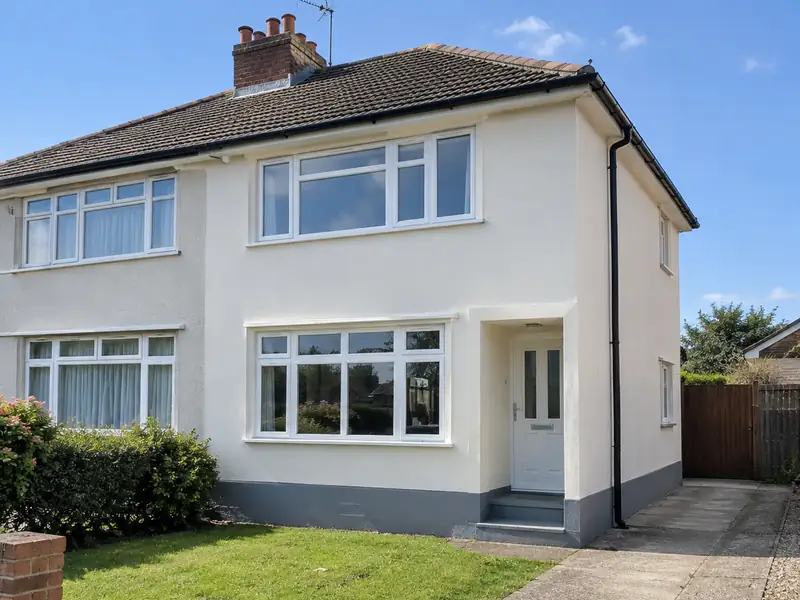
External rendering is applying a protective, weather-resistant coating to the outside walls of a house, using sand and cement, monocouche or thin-coat silicone render, to give a smooth or textured finish that protects the masonry and improves appearance.
We take on external rendering throughout Dunoon and the surrounding PA23 postcodes, as well as in Greenock, Helensburgh and Isle of Bute. The guide range for this work in Scotland is £6,700–£15,500 including VAT; where your project falls depends on its size, the materials you pick and how easy the site is to reach. A free survey turns that range into a fixed figure.
- Guide price
- £6,700–£15,500 inc VAT
- Time on site
- 1–3 weeks on site, depending on weather
- Postcodes
- PA23
- Planning rules
- Scotland
- Local area
- Argyll and Bute
- Survey
- Free, with a written quote
How much does external rendering cost in Dunoon?
No two jobs cost exactly the same, but the ranges below give a fair picture of external rendering in Dunoon. Pricing for Scotland runs about 4% below the national guide, and the overall guide is £6,700–£15,500 with VAT included. We'll confirm your figure after surveying the property for free.
| Type of job | What it usually involves | Guide in Dunoon |
|---|---|---|
| Front elevation or small terrace | One elevation or a small terraced house, including scaffolding and preparation. | £2,900–£6,700 |
| Typical semi-detached | All rendered walls of a 3-bed semi in monocouche or silicone, with scaffolding. | £6,700–£15,500 |
| Detached or full strip and re-render | Larger houses, or homes needing old render removed and walls repaired first. | £14,500–£29,000 |
Your price depends mostly on:
- Wall area to be rendered and the height of the house
- Removing old render or pebbledash and repairing the walls
- Scaffolding, access and protection of neighbouring property
- Detailing around windows, bays, sills and pipes
What does the job include in Dunoon?
- Removal of loose or failed render and pebbledash where needed
- Windows, doors and surfaces masked and protected
- Beads at corners, edges and above the damp-proof course
- Mesh reinforcement and base coats to suit the chosen system
- Finish coat in your chosen colour and texture
- Making good around pipes, vents and fixings, and a site clean-up
Building in Dunoon
Much of Argyll and Bute is rural and coastal, with whitewashed or harled stone cottages, slate roofs and island homes. Helensburgh has Victorian villas, Oban, Dunoon and Rothesay have Victorian seaside terraces, and post-war and newer housing surrounds the main towns.
Stone cottages need lime harling, repointing and slate roof repairs; villas may need roof and window renewal. Island and remote properties need the programme planned around ferries, deliveries and weather.
Whatever era your Dunoon home dates from, we plan external rendering around how it is actually built rather than a one-size-fits-all specification.
Permissions for external rendering in Dunoon
Each UK nation sets its own consent rules, and Dunoon is in Scotland. What follows is a plain summary; we check the specifics for your property with the council before pricing anything.
In Scotland, changing the external finish of a house in a conservation area or on a listed building needs consent; elsewhere, like-for-like re-rendering is usually treated as repair.
Large-scale re-cladding or external insulation can need a building warrant; like-for-like render repairs normally do not.
Rules change and every property is different, so we check the planning history and constraints for your address before we quote.
From survey to handover
Free site survey
We arrange a free site survey on a date convenient to you. We measure up, look at the existing structure and access, and discuss your plans for external rendering so the price reflects your home.
Price and scope agreed
We put everything into a written, fixed-price quote: the specification, what's excluded, staged payments and the expected time on site. Take whatever time you need to decide; there's no pressure to commit.
Booking the work
Once you accept, we agree start dates, order materials and deal with any planning, building control or neighbour notices the job needs. You'll know who is coming and when before work begins.
On site to finish
Work goes ahead as scheduled and you deal with one contact throughout. When the last trade leaves, we clear and clean the site, talk you through what has been done and pass on any certificates and care instructions.
Why homeowners choose us
Questions about external rendering in Dunoon
Will rendering stop damp?
Render protects walls from driving rain, so it can help where rain penetration is the cause of damp. It will not cure rising damp, condensation or leaks from gutters, and on older solid walls the wrong render can trap moisture and make damp worse. We look for the cause of any damp at the survey and recommend fixing that first.
What time of year should rendering be done?
Render needs mild, dry conditions to cure properly, so spring to early autumn is ideal. Most render systems should not be applied when frost is likely, in heavy rain or in strong direct sun, which can dry it too quickly and cause cracking. We plan the programme around the forecast and may pause work if the weather turns, which protects the finish.
Who do I deal with during the job?
One point of contact manages your project from survey to handover. They schedule the trades working under our contract, keep you updated on progress, and are the person to call with any question. You don't need to coordinate builders, electricians or decorators separately, because that is part of what we do.
Do I need planning permission in Dunoon?
It depends on the work, the size of the project, your property type and whether the building is listed or in a conservation area. Dunoon is in Scotland, so Scotland's rules apply. Many smaller jobs need no planning application, but some still need building control approval. We check what applies to your address before quoting.
How much does it cost to render a house?
Rendering a typical 3-bed semi costs £6,700–£15,500, including scaffolding and preparation. As a guide, allow around £60–£120 per square metre of wall plus fixed costs for scaffolding and set-up. Sand and cement is the lowest-cost system, while silicone thin-coat costs more but needs no painting. Removing old render or pebbledash first adds noticeably to the price. We confirm a fixed figure after the survey.
Nearby towns
We welcome enquiries from all PA23 postcodes in Dunoon, plus Greenock, Helensburgh and Isle of Bute. Each one gets the same survey at no charge and a written price fixed for the work described.