
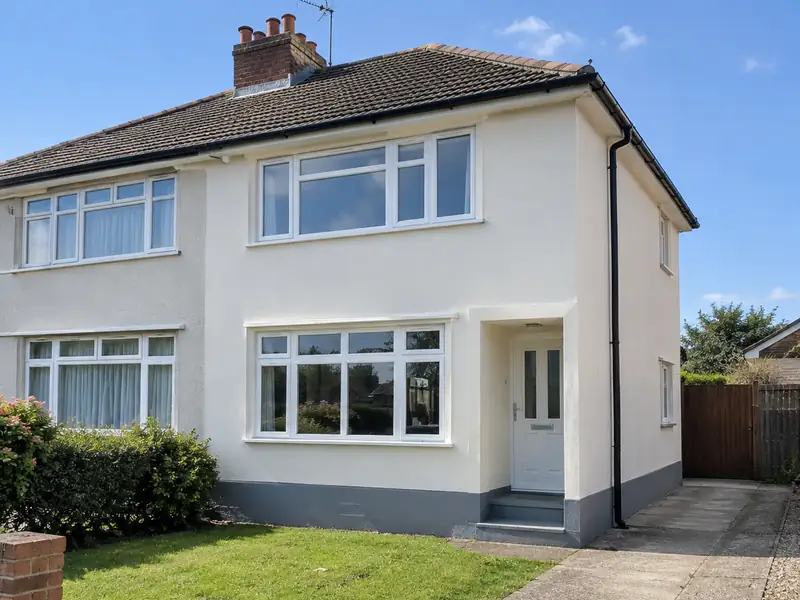
External rendering is applying a protective, weather-resistant coating to the outside walls of a house, using sand and cement, monocouche or thin-coat silicone render, to give a smooth or textured finish that protects the masonry and improves appearance.
We offer external rendering across Argyll and Bute, and Isle of Bute is one of the places we cover, along with nearby Dunoon, Greenock and Helensburgh. Before anything is agreed we visit, check the existing structure and talk through your options. You then receive a written quote setting out the full scope; for most homes in Scotland it sits within £6,700–£15,500 including VAT.
- Guide price
- £6,700–£15,500 inc VAT
- Time on site
- 1–3 weeks on site, depending on weather
- Postcodes
- PA20
- Planning rules
- Scotland
- Local area
- Argyll and Bute
- Survey
- Free, with a written quote
External rendering prices in Isle of Bute
Budgeting for external rendering in Isle of Bute? The numbers below include VAT and are adjusted for Scotland, where costs are about 4% below the national guide. The headline range is £6,700–£15,500. Nothing is final until we have measured up at a free survey and agreed the specification with you.
| Type of job | What it usually involves | Guide in Isle of Bute |
|---|---|---|
| Front elevation or small terrace | One elevation or a small terraced house, including scaffolding and preparation. | £2,900–£6,700 |
| Typical semi-detached | All rendered walls of a 3-bed semi in monocouche or silicone, with scaffolding. | £6,700–£15,500 |
| Detached or full strip and re-render | Larger houses, or homes needing old render removed and walls repaired first. | £14,500–£29,000 |
Your price depends mostly on:
- Wall area to be rendered and the height of the house
- Render system: sand and cement, monocouche or silicone
- Scaffolding, access and protection of neighbouring property
- Detailing around windows, bays, sills and pipes
What’s included?
- Survey of walls, existing render, cracks and damp-proof course
- Scaffolding erected and removed, with neighbours' access agreed
- Removal of loose or failed render and pebbledash where needed
- Windows, doors and surfaces masked and protected
- Finish coat in your chosen colour and texture
- Making good around pipes, vents and fixings, and a site clean-up
Local housing and external rendering
Much of Argyll and Bute is rural and coastal, with whitewashed or harled stone cottages, slate roofs and island homes. Helensburgh has Victorian villas, Oban, Dunoon and Rothesay have Victorian seaside terraces, and post-war and newer housing surrounds the main towns.
Stone cottages need lime harling, repointing and slate roof repairs; villas may need roof and window renewal. Island and remote properties need the programme planned around ferries, deliveries and weather.
With that background in mind, here is how we typically handle external rendering for homes in Isle of Bute, from the first visit to the finished result.
Planning and building rules in Isle of Bute
As Isle of Bute is in Scotland, read the following with that system of planning and building control in mind. We check what applies to your house with the council before you receive a quote.
In Scotland, changing the external finish of a house in a conservation area or on a listed building needs consent; elsewhere, like-for-like re-rendering is usually treated as repair.
Large-scale re-cladding or external insulation can need a building warrant; like-for-like render repairs normally do not.
Rules change and every property is different, so we check the planning history and constraints for your address before we quote.
The four stages
A visit to your home
We arrange a free site survey on a date convenient to you. We measure up, look at the existing structure and access, and discuss your plans for external rendering so the price reflects your home.
Written quote
Next you receive a written quote with a fixed price for the agreed specification. It lists what is included, what is not, and how payments are staged, so you can compare it properly.
Dates and permissions
Next comes planning the work itself. We set a start date that suits you, line up the right trades, and make sure any approvals for external rendering are in place before the first day on site.
On site to finish
During the work we protect the areas around it and tidy up at the end of each day. Once complete, we check the finish, remove our materials and hand over paperwork such as building control sign-off where it applies.
Working with SK Home Improvements
Questions about external rendering in Isle of Bute
Can you combine external rendering with other work?
Yes. Because we manage several trades under one contract, we can plan external rendering alongside other work on your Isle of Bute home, such as new windows with rendering, or a kitchen refit with an extension. Combining jobs can reduce repeat set-up such as scaffolding, skips and access, and every element is listed and priced in the same written quote.
How long does rendering take?
Rendering a typical semi-detached house takes around one to three weeks. Scaffolding goes up first, then removal of old render, repairs, beads and mesh. Base coats need time to cure before the finish coat. Weather has a big effect, because render should not be applied in rain, frost or strong heat. We give you an expected programme with the quote.
Is the price fixed?
Yes, for the specification we agree. Your written quote sets out exactly what is included at a fixed price. It only changes if you ask for something different, or if a problem the survey could not reasonably reveal later needs extra work. In either case we explain the change and confirm it in writing before going ahead.
Will rendering stop damp?
Render protects walls from driving rain, so it can help where rain penetration is the cause of damp. It will not cure rising damp, condensation or leaks from gutters, and on older solid walls the wrong render can trap moisture and make damp worse. We look for the cause of any damp at the survey and recommend fixing that first.
How much does it cost to render a house?
Rendering a typical 3-bed semi costs £6,700–£15,500, including scaffolding and preparation. As a guide, allow around £60–£120 per square metre of wall plus fixed costs for scaffolding and set-up. Sand and cement is the lowest-cost system, while silicone thin-coat costs more but needs no painting. Removing old render or pebbledash first adds noticeably to the price. We confirm a fixed figure after the survey.
Nearby towns
Addresses in PA20 are all covered for Isle of Bute, along with Dunoon, Greenock and Helensburgh close by. Give us your postcode when you get in touch and we will confirm the details.