
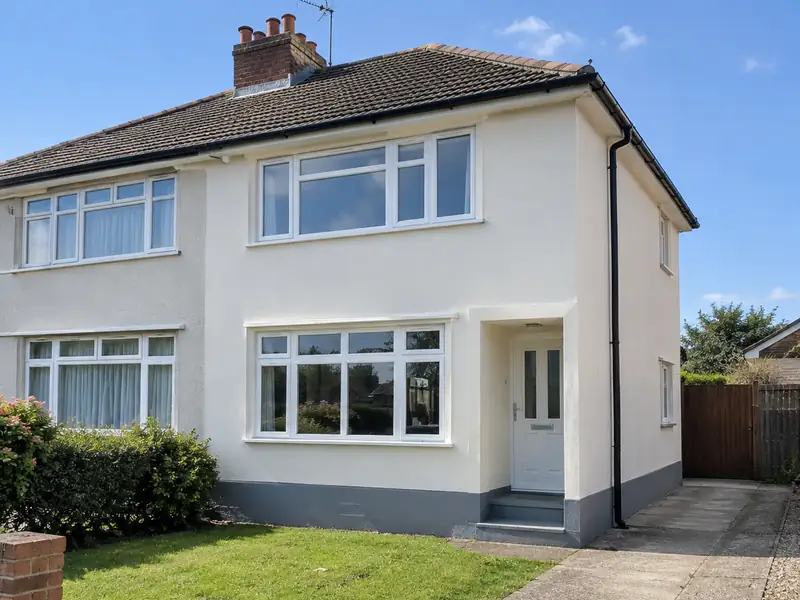
External rendering is applying a protective, weather-resistant coating to the outside walls of a house, using sand and cement, monocouche or thin-coat silicone render, to give a smooth or textured finish that protects the masonry and improves appearance.
Homeowners in Larne usually consider external rendering for one of a few reasons: something has worn out, the house no longer suits the way they live, or they are getting it ready to sell. We visit, agree a specification and put a fixed price in writing. Most jobs like this take 1–3 weeks on site, depending on weather, and we work across County Antrim, including Carrickfergus, Newtownabbey and Bangor, County Down.
- Guide price
- £6,000–£14,000 inc VAT
- Time on site
- 1–3 weeks on site, depending on weather
- Postcodes
- BT40
- Planning rules
- Northern Ireland
- Local area
- County Antrim
- Survey
- Free, with a written quote
External rendering prices in Larne
What will external rendering cost in Larne? Our guide range is £6,000–£14,000 including VAT. That figure is adjusted for Northern Ireland, about 14% below the national guide, and is intended for planning a budget. A firm written price for your chosen specification follows a free survey at your home.
| Type of job | What it usually involves | Guide in Larne |
|---|---|---|
| Front elevation or small terrace | One elevation or a small terraced house, including scaffolding and preparation. | £2,600–£6,000 |
| Typical semi-detached | All rendered walls of a 3-bed semi in monocouche or silicone, with scaffolding. | £6,000–£14,000 |
| Detached or full strip and re-render | Larger houses, or homes needing old render removed and walls repaired first. | £13,000–£26,000 |
Your price depends mostly on:
- Wall area to be rendered and the height of the house
- Removing old render or pebbledash and repairing the walls
- Scaffolding, access and protection of neighbouring property
- Detailing around windows, bays, sills and pipes
What does the job include in Larne?
- Survey of walls, existing render, cracks and damp-proof course
- Scaffolding erected and removed, with neighbours' access agreed
- Windows, doors and surfaces masked and protected
- Mesh reinforcement and base coats to suit the chosen system
- Finish coat in your chosen colour and texture
- Making good around pipes, vents and fixings, and a site clean-up
What are homes like around Larne?
Belfast has long rows of red-brick Victorian terraces, Edwardian villas in the north and south of the city and large post-war estates, while towns such as Ballymena, Antrim, Larne and Carrickfergus mix terraces, semis and newer developments. Dark basalt appears in older rural buildings, and pebbledash or roughcast is a very common finish.
The north coast and glens are exposed to strong winds, salt and frequent rain, which affects render, roofline and outdoor work.
In Larne, as elsewhere in County Antrim, we take the building's age and construction into account before recommending anything, because both can change what is involved in external rendering.
Permissions for external rendering in Larne
The notes below cover Northern Ireland, which is where Larne sits. Rules change and every property is different, so we speak to the council before pricing your job.
In Northern Ireland, re-rendering is usually treated as repair, but conservation areas and listed buildings are controlled.
Significant re-cladding or external insulation should be checked with building control under the Building Regulations (Northern Ireland).
Rules change and every property is different, so we check the planning history and constraints for your address before we quote.
The four stages
Survey and measure
First, someone visits your home in Larne to see the space, take measurements and note anything that could affect the work, such as access or the condition of what is there. There is no charge for this visit.
Price and scope agreed
The quote arrives in writing, not over the phone. It covers the full scope, the finishes you've chosen, any exclusions and the payment schedule, with a fixed price tied to that specification.
Booking the work
Before anyone starts, we confirm the programme in writing, check whether consents are required and arrange deliveries. If a skip or scaffolding on the road needs a permit, we apply for it.
The work itself
Work goes ahead as scheduled and you deal with one contact throughout. When the last trade leaves, we clear and clean the site, talk you through what has been done and pass on any certificates and care instructions.
How we work
Frequently asked questions
Do you cover Carrickfergus, Newtownabbey and Bangor, County Down?
Yes. As well as Larne, we cover Carrickfergus, Newtownabbey and Bangor, County Down and the rest of County Antrim. Our coverage is UK-wide, so the process is the same wherever you are: a free site survey, a quote in writing that fixes the price for the agreed scope, and one point of contact while the work is planned and carried out.
Which render system should I choose?
The right render depends on your walls and how much upkeep you want. Sand and cement is the lowest-cost option but needs repainting every few years. Monocouche is coloured through, so it needs no painting, and suits block and brick walls. Silicone thin-coat is flexible, water-repellent and stays cleaner, but costs more. Lime render suits older solid walls. We recommend a system after inspecting your walls.
Do I need planning permission to render my house?
Whether rendering needs planning permission depends on how it changes the appearance, your home's location, whether it is listed or in a conservation area, and which UK nation you are in. Rendering over brick may need permission in some places, while replacing existing render like for like often does not. Listed buildings need consent. We check the position before quoting.
How long does rendering take?
Rendering a typical semi-detached house takes around one to three weeks. Scaffolding goes up first, then removal of old render, repairs, beads and mesh. Base coats need time to cure before the finish coat. Weather has a big effect, because render should not be applied in rain, frost or strong heat. We give you an expected programme with the quote.
How long will external rendering take?
On a typical home, allow 1–3 weeks on site, depending on weather. Larger projects, older buildings and extra work found once things are opened up can extend that, while simpler jobs may be shorter. Your quote includes an estimate of time on site, and your point of contact keeps you updated on the programme as the work progresses.
Near Larne
Homes across BT40 in Larne are within our coverage, as are those in Carrickfergus, Newtownabbey and Bangor, County Down. If you are just outside these areas, ask anyway, because we work right across the UK.