
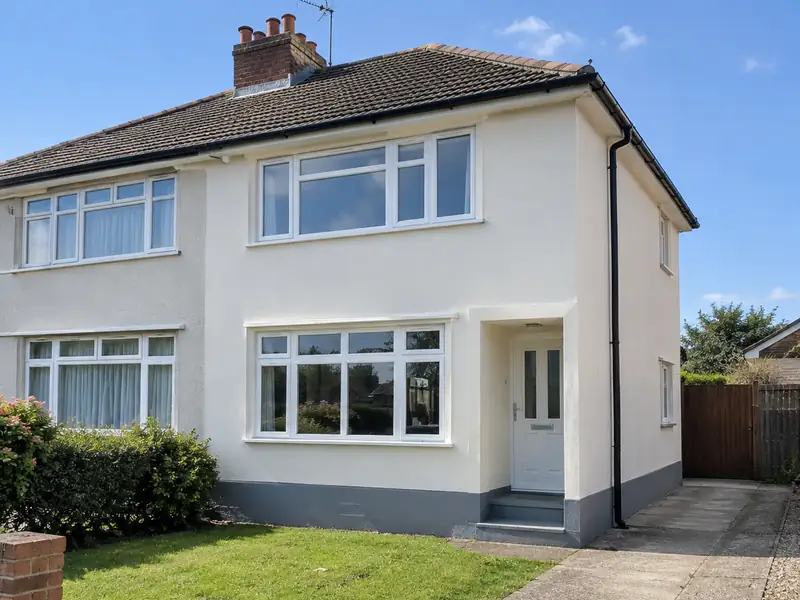
External rendering is applying a protective, weather-resistant coating to the outside walls of a house, using sand and cement, monocouche or thin-coat silicone render, to give a smooth or textured finish that protects the masonry and improves appearance.
Thinking about external rendering in Banbridge? We take charge of the whole project, co-ordinating every trade involved, and one person keeps you updated. Guide prices for Northern Ireland sit at £6,000–£14,000 including VAT, and a typical job takes 1–3 weeks on site, depending on weather. Your own figure depends on what the survey finds and the specification you settle on.
- Guide price
- £6,000–£14,000 inc VAT
- Time on site
- 1–3 weeks on site, depending on weather
- Postcodes
- BT32
- Planning rules
- Northern Ireland
- Local area
- County Down
- Survey
- Free, with a written quote
External rendering prices in Banbridge
To help you plan, we show what external rendering typically costs in Banbridge instead of holding figures back for a sales call. The range is £6,000–£14,000 with VAT, using rates in Northern Ireland that are about 14% below the national guide. A free survey then fixes your actual price.
| Type of job | What it usually involves | Guide in Banbridge |
|---|---|---|
| Front elevation or small terrace | One elevation or a small terraced house, including scaffolding and preparation. | £2,600–£6,000 |
| Typical semi-detached | All rendered walls of a 3-bed semi in monocouche or silicone, with scaffolding. | £6,000–£14,000 |
| Detached or full strip and re-render | Larger houses, or homes needing old render removed and walls repaired first. | £13,000–£26,000 |
What moves the price up or down:
- Wall area to be rendered and the height of the house
- Render system: sand and cement, monocouche or silicone
- Scaffolding, access and protection of neighbouring property
- Detailing around windows, bays, sills and pipes
What does the job include in Banbridge?
- Survey of walls, existing render, cracks and damp-proof course
- Scaffolding erected and removed, with neighbours' access agreed
- Windows, doors and surfaces masked and protected
- Beads at corners, edges and above the damp-proof course
- Finish coat in your chosen colour and texture
- Making good around pipes, vents and fixings, and a site clean-up
Homes in County Down
County Down takes in suburbs of Belfast, Bangor and Holywood with Victorian and Edwardian villas, and Newry, Downpatrick and Banbridge with older town centres and newer estates. Mourne granite appears in buildings around the mountains, and detached rural homes and bungalows are common across the county, often rendered or pebbledashed.
Villas and semis suit kitchen extensions, loft conversions and garden landscaping. Rural detached homes commonly take extensions and driveways, and rendered houses often need re-rendering, roofline renewal and window replacement.
Knowing the typical building types in County Down helps, but a survey of your own home in Banbridge is what decides the right approach to external rendering.
Permissions for external rendering in Banbridge
For anyone in Banbridge, the relevant framework is Northern Ireland's. The summary below is general, so we always contact the council about your address before putting a price in writing.
In Northern Ireland, re-rendering is usually treated as repair, but conservation areas and listed buildings are controlled.
Significant re-cladding or external insulation should be checked with building control under the Building Regulations (Northern Ireland).
Rules change and every property is different, so we check the planning history and constraints for your address before we quote.
How does the job run?
Free site survey
We begin by looking at the job in person. During the free survey we discuss options, materials and budget for external rendering, and photograph or measure anything the quote needs to reflect.
Price and scope agreed
After the survey we send a quote for external rendering that fixes the price for the scope we've agreed. If you want to change materials or scope, we revise it in writing before anything is booked.
Getting ready
We handle the paperwork side: checking whether planning permission or building control approval is needed, submitting applications where they are, and scheduling the trades and materials around your dates.
On site to finish
On site, the agreed plan is followed and any change is put in writing first. At completion we do a final clean, go through the snagging list with you and leave you with the relevant documents.
What you can expect from us
Common questions
How long does rendering take?
Rendering a typical semi-detached house takes around one to three weeks. Scaffolding goes up first, then removal of old render, repairs, beads and mesh. Base coats need time to cure before the finish coat. Weather has a big effect, because render should not be applied in rain, frost or strong heat. We give you an expected programme with the quote.
Is the price fixed?
Yes, for the specification we agree. Your written quote sets out exactly what is included at a fixed price. It only changes if you ask for something different, or if a problem the survey could not reasonably reveal later needs extra work. In either case we explain the change and confirm it in writing before going ahead.
Do I need planning permission in Banbridge?
It depends on the work, the size of the project, your property type and whether the building is listed or in a conservation area. Banbridge is in Northern Ireland, so Northern Ireland's rules apply. Many smaller jobs need no planning application, but some still need building control approval. We check what applies to your address before quoting.
What time of year should rendering be done?
Render needs mild, dry conditions to cure properly, so spring to early autumn is ideal. Most render systems should not be applied when frost is likely, in heavy rain or in strong direct sun, which can dry it too quickly and cause cracking. We plan the programme around the forecast and may pause work if the weather turns, which protects the finish.
Can you render over pebbledash or old render?
Rendering over existing pebbledash or render is sometimes possible if it is firmly bonded, but if it sounds hollow, is cracked or is coming away, it must be removed first. Covering failing render simply hides the problem until the new coat fails too. We tap-test the walls and explain whether removal is needed. Removal adds time and cost but gives a sound base.
Near Banbridge
If your address falls within BT32, we cover it. The same goes for neighbouring Craigavon, Portadown and Newry, which we include alongside Banbridge when arranging surveys and quotes.