
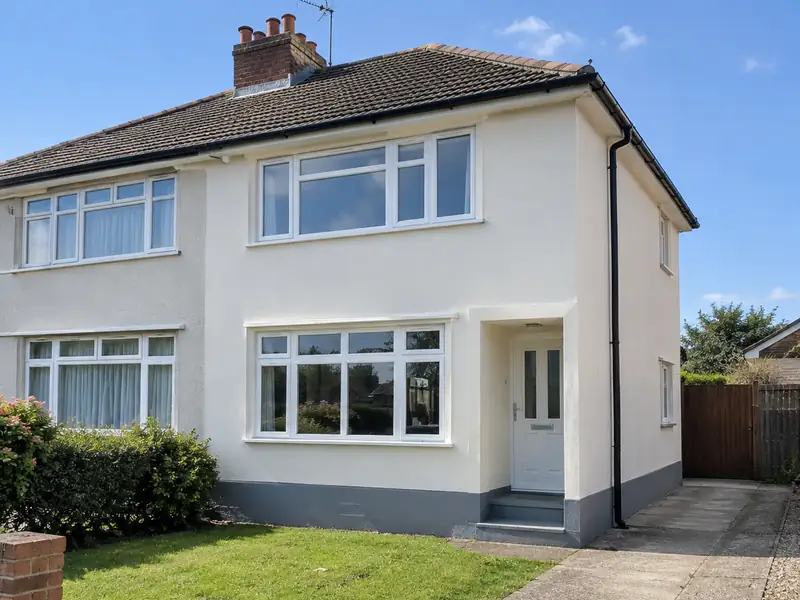
External rendering is applying a protective, weather-resistant coating to the outside walls of a house, using sand and cement, monocouche or thin-coat silicone render, to give a smooth or textured finish that protects the masonry and improves appearance.
Planning external rendering for a home in Lossiemouth means making a handful of decisions about materials, layout, finish and timing. We help you work through them at a free survey, then confirm in writing what it will cost for the options you pick. Most projects of this type need 1–3 weeks on site, depending on weather, and we cover every IV31 address as well as the rest of Moray.
- Guide price
- £6,700–£15,500 inc VAT
- Time on site
- 1–3 weeks on site, depending on weather
- Postcodes
- IV31
- Planning rules
- Scotland
- Local area
- Moray
- Survey
- Free, with a written quote
What should you budget for external rendering in Lossiemouth?
The table below shows guide prices for external rendering in Lossiemouth. They are based on rates in Scotland, which run about 4% below the national guide, giving an overall range of £6,700–£15,500. All figures include VAT and are firmed up after a free site survey.
| Type of job | What it usually involves | Guide in Lossiemouth |
|---|---|---|
| Front elevation or small terrace | One elevation or a small terraced house, including scaffolding and preparation. | £2,900–£6,700 |
| Typical semi-detached | All rendered walls of a 3-bed semi in monocouche or silicone, with scaffolding. | £6,700–£15,500 |
| Detached or full strip and re-render | Larger houses, or homes needing old render removed and walls repaired first. | £14,500–£29,000 |
Expect these to shape the final quote:
- Render system: sand and cement, monocouche or silicone
- Removing old render or pebbledash and repairing the walls
- Scaffolding, access and protection of neighbouring property
- Detailing around windows, bays, sills and pipes
Scope of the work
- Scaffolding erected and removed, with neighbours' access agreed
- Removal of loose or failed render and pebbledash where needed
- Windows, doors and surfaces masked and protected
- Beads at corners, edges and above the damp-proof course
- Mesh reinforcement and base coats to suit the chosen system
- Finish coat in your chosen colour and texture
Homes in Moray
Elgin and Forres have historic sandstone centres, fishing towns such as Buckie and Lossiemouth have stone cottages and terraces, and Speyside villages have grown around their distilleries. Harled cottages, farmhouses and modern estates on the edges of the main towns make up much of the remaining housing.
Stone and harled homes need breathable repairs, repointing and slate roof work. Bungalows commonly suit loft conversions and extensions, and rural properties often add porches, fencing and driveways.
With that background in mind, here is how we typically handle external rendering for homes in Lossiemouth, from the first visit to the finished result.
Planning and building rules in Lossiemouth
The notes below cover Scotland, which is where Lossiemouth sits. Rules change and every property is different, so we speak to the council before pricing your job.
In Scotland, changing the external finish of a house in a conservation area or on a listed building needs consent; elsewhere, like-for-like re-rendering is usually treated as repair.
Large-scale re-cladding or external insulation can need a building warrant; like-for-like render repairs normally do not.
Rules change and every property is different, so we check the planning history and constraints for your address before we quote.
How does the job run?
We look at the job
Book a visit and we'll come to you. The survey covers measurements, the state of what's there now and any obvious constraints, so the price that follows is based on your actual home, not an average.
Your fixed price
The quote arrives in writing, not over the phone. It covers the full scope, the finishes you've chosen, any exclusions and the payment schedule, with a fixed price tied to that specification.
Getting ready
Preparation matters as much as the build. We agree access, parking and working hours with you, order materials in good time, and confirm any permissions so the job isn't held up once it starts.
Build and hand over
Work goes ahead as scheduled and you deal with one contact throughout. When the last trade leaves, we clear and clean the site, talk you through what has been done and pass on any certificates and care instructions.
Why homeowners choose us
Frequently asked questions
What happens at the survey?
We visit your home at a time that suits you, look at the area involved, take measurements and check access, condition and any services that might be affected. We talk through what you want from external rendering, explain the options and answer questions. There is no charge and no obligation; afterwards we send a written quote.
Which render system should I choose?
The right render depends on your walls and how much upkeep you want. Sand and cement is the lowest-cost option but needs repainting every few years. Monocouche is coloured through, so it needs no painting, and suits block and brick walls. Silicone thin-coat is flexible, water-repellent and stays cleaner, but costs more. Lime render suits older solid walls. We recommend a system after inspecting your walls.
Is the price fixed?
Yes, for the specification we agree. Your written quote sets out exactly what is included at a fixed price. It only changes if you ask for something different, or if a problem the survey could not reasonably reveal later needs extra work. In either case we explain the change and confirm it in writing before going ahead.
Do I need planning permission to render my house?
Whether rendering needs planning permission depends on how it changes the appearance, your home's location, whether it is listed or in a conservation area, and which UK nation you are in. Rendering over brick may need permission in some places, while replacing existing render like for like often does not. Listed buildings need consent. We check the position before quoting.
Can you render over pebbledash or old render?
Rendering over existing pebbledash or render is sometimes possible if it is firmly bonded, but if it sounds hollow, is cracked or is coming away, it must be removed first. Covering failing render simply hides the problem until the new coat fails too. We tap-test the walls and explain whether removal is needed. Removal adds time and cost but gives a sound base.
Near Lossiemouth
We welcome enquiries from all IV31 postcodes in Lossiemouth, plus Elgin, Buckie and Forres. Each one gets the same survey at no charge and a written price fixed for the work described.