
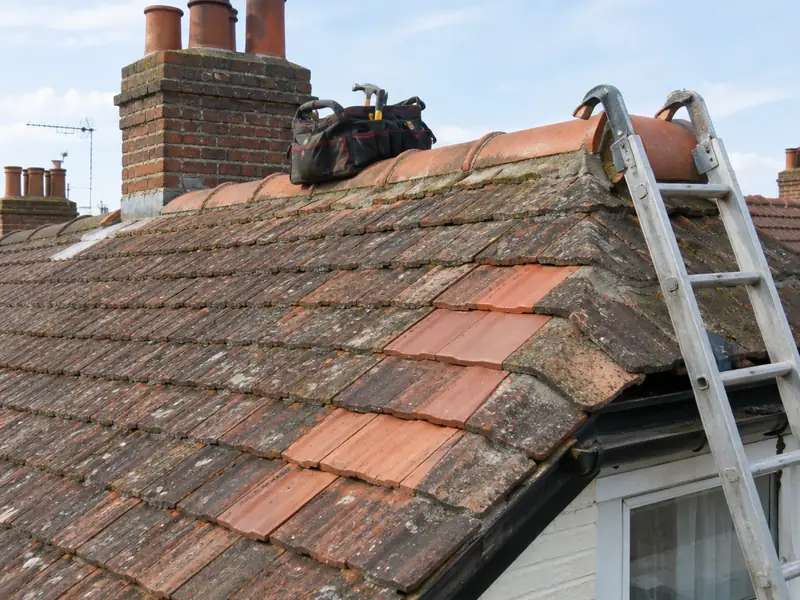
Roof repairs fix specific faults in a pitched or flat roof, such as slipped or cracked tiles, loose ridges, failed flashing, leaking valleys or chimney defects, to stop water getting in without replacing the whole roof.
Getting roof repairs right in Lossiemouth starts with understanding the house you already have: its age, how it was built and what has been altered over the years. We survey first, then commit on paper to a price that holds as long as the scope stays the same. Across Scotland, guide prices run at £300–£1,450 including VAT, and homes in Elgin, Buckie and Forres are covered too.
- Guide price
- £300–£1,450 inc VAT
- Time on site
- Half a day to 3 days for most repairs
- Postcodes
- IV31
- Planning rules
- Scotland
- Local area
- Moray
- Survey
- Free, with a written quote
What should you budget for roof repairs in Lossiemouth?
Budgeting for roof repairs in Lossiemouth? The numbers below include VAT and are adjusted for Scotland, where costs are about 4% below the national guide. The headline range is £300–£1,450. Nothing is final until we have measured up at a free survey and agreed the specification with you.
| Type of job | What it usually involves | Guide in Lossiemouth |
|---|---|---|
| Minor repair | Replacing a handful of slipped or broken tiles from ladders or a roof ladder. | £200–£500 |
| Ridge, flashing or valley repair | Rebedding a ridge run, renewing flashing or relining a short valley. | £400–£1,150 |
| Larger repair with scaffolding | Several faults, chimney work or repairs on high roofs needing scaffolding. | £950–£2,900 |
The main things that change the figure:
- Number and type of faults to repair
- Access: ladders, roof ladders, towers or full scaffolding
- Roof height and steepness
- Hidden damage to battens, felt or timbers found during repair
What’s included?
- Inspection to trace the source of leaks or damage
- Photos of the problem areas and a clear written explanation
- Safe access by ladders, towers or scaffolding as needed
- Replacement of slipped, cracked or missing tiles and slates
- Temporary weatherproofing where a full repair must wait
- Clearing debris from gutters and the work area
Building in Lossiemouth
Elgin and Forres have historic sandstone centres, fishing towns such as Buckie and Lossiemouth have stone cottages and terraces, and Speyside villages have grown around their distilleries. Harled cottages, farmhouses and modern estates on the edges of the main towns make up much of the remaining housing.
Moray is sunnier and drier than much of Scotland, but winters are cold and the Moray Firth coast is exposed.
That mix of housing shapes how we approach roof repairs in Lossiemouth: the age and construction of your home affect the materials, the method and, in the end, the price.
Permissions for roof repairs in Lossiemouth
The notes below cover Scotland, which is where Lossiemouth sits. Rules change and every property is different, so we speak to the council before pricing your job.
In Scotland, like-for-like re-roofing does not usually need planning permission, except on listed buildings or in conservation areas.
Like-for-like re-covering does not usually need a building warrant, but structural changes or new roof windows can. Bats are protected across the UK; if they roost under roof tiles, soffits or fascias, work stops and a licensed ecologist advises before it restarts.
Rules change and every property is different, so we check the planning history and constraints for your address before we quote.
From survey to handover
We look at the job
A free survey comes first. It gives us what we need to price roof repairs properly, including dimensions, existing materials and access for deliveries, and gives you the chance to ask anything you like.
Written quote
After the survey we send a quote for roof repairs that fixes the price for the scope we've agreed. If you want to change materials or scope, we revise it in writing before anything is booked.
Booking the work
Before anyone starts, we confirm the programme in writing, check whether consents are required and arrange deliveries. If a skip or scaffolding on the road needs a permit, we apply for it.
On site to finish
Work goes ahead as scheduled and you deal with one contact throughout. When the last trade leaves, we clear and clean the site, talk you through what has been done and pass on any certificates and care instructions.
Why homeowners choose us
Roof repairs in Lossiemouth: questions
How long will roof repairs take?
On a typical home, allow Half a day to 3 days for most repairs. Larger projects, older buildings and extra work found once things are opened up can extend that, while simpler jobs may be shorter. Your quote includes an estimate of time on site, and your point of contact keeps you updated on the programme as the work progresses.
How much does a roof repair cost?
A typical roof repair, such as replacing slipped tiles, rebedding a ridge or renewing flashing, costs £300–£1,450. Small repairs reachable by ladder sit at the lower end, while jobs needing scaffolding or several repairs cost more. Matching old tiles or slates and hidden damage to battens can also affect the price. We explain what we find and confirm a fixed price before starting.
What happens at the survey?
We visit your home at a time that suits you, look at the area involved, take measurements and check access, condition and any services that might be affected. We talk through what you want from roof repairs, explain the options and answer questions. There is no charge and no obligation; afterwards we send a written quote.
Can you do an emergency roof repair?
After storm damage, a temporary repair such as sheeting or refixing loose tiles can stop water getting in until a permanent repair can be made. We aim to attend as quickly as possible, but availability depends on weather and demand, especially after widespread storms. In the meantime, catch drips in containers, move valuables and switch off lights near any wet ceiling.
What is dry-fix ridge and is it better than mortar?
Dry-fix ridge systems use screws, clips and weather seals instead of mortar to hold ridge and hip tiles in place. They avoid the cracking and loosening that mortar suffers over time, need less upkeep and are now common on new roofs. Mortar-bedded ridges suit some period or conservation-area roofs. We recommend the method that suits your roof and its location.
Nearby towns
If your address falls within IV31, we cover it. The same goes for neighbouring Elgin, Buckie and Forres, which we include alongside Lossiemouth when arranging surveys and quotes.