
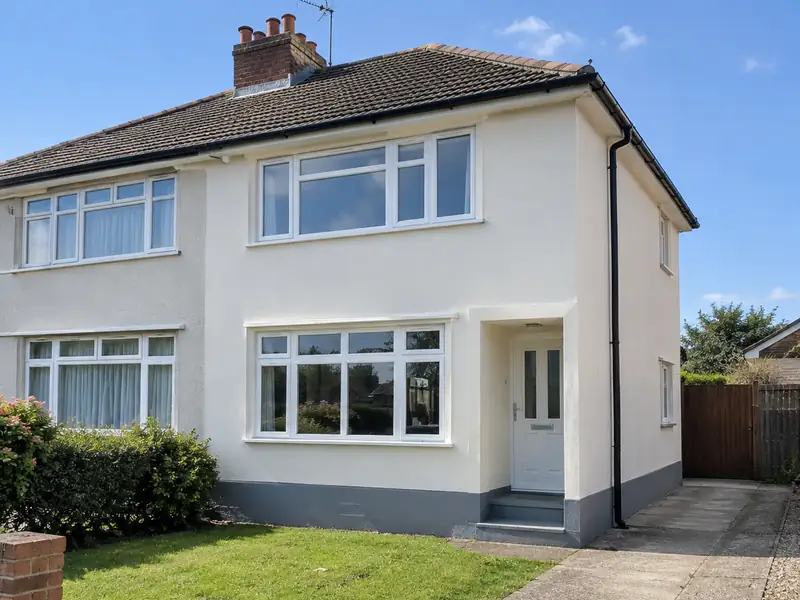
External rendering is applying a protective, weather-resistant coating to the outside walls of a house, using sand and cement, monocouche or thin-coat silicone render, to give a smooth or textured finish that protects the masonry and improves appearance.
Homeowners in Wallsend usually consider external rendering for one of a few reasons: something has worn out, the house no longer suits the way they live, or they are getting it ready to sell. We visit, agree a specification and put a fixed price in writing. Most jobs like this take 1–3 weeks on site, depending on weather, and we work across Tyne and Wear, including Hebburn, Jarrow and Felling.
- Guide price
- £6,300–£14,500 inc VAT
- Time on site
- 1–3 weeks on site, depending on weather
- Postcodes
- NE6, NE7, NE28 and NE31
- Planning rules
- England
- Local area
- North Tyneside
- Survey
- Free, with a written quote
How much does external rendering cost in Wallsend?
The table below shows guide prices for external rendering in Wallsend. They are based on rates in the North East, which run about 10% below the national guide, giving an overall range of £6,300–£14,500. All figures include VAT and are firmed up after a free site survey.
| Type of job | What it usually involves | Guide in Wallsend |
|---|---|---|
| Front elevation or small terrace | One elevation or a small terraced house, including scaffolding and preparation. | £2,700–£6,300 |
| Typical semi-detached | All rendered walls of a 3-bed semi in monocouche or silicone, with scaffolding. | £6,300–£14,500 |
| Detached or full strip and re-render | Larger houses, or homes needing old render removed and walls repaired first. | £13,500–£27,000 |
Your price depends mostly on:
- Wall area to be rendered and the height of the house
- Removing old render or pebbledash and repairing the walls
- Scaffolding, access and protection of neighbouring property
- Detailing around windows, bays, sills and pipes
What does the job include in Wallsend?
- Survey of walls, existing render, cracks and damp-proof course
- Scaffolding erected and removed, with neighbours' access agreed
- Removal of loose or failed render and pebbledash where needed
- Windows, doors and surfaces masked and protected
- Beads at corners, edges and above the damp-proof course
- Finish coat in your chosen colour and texture
Homes in Tyne and Wear
Tyneside flats, pairs of upper and lower flats behind a terraced front, are a distinctive feature of Newcastle and Gateshead. Sunderland is known for its single-storey terraced 'Sunderland cottages', and both cities have Victorian brick and stone terraces, interwar estates and post-war housing. Washington was built as a new town from the 1960s.
Terraces and Tyneside flats commonly need repointing, roof work and window replacement. Houses suit loft rooms and rear extensions, and new-town homes often take garage conversions and cladding upgrades.
With that background in mind, here is how we typically handle external rendering for homes in Wallsend, from the first visit to the finished result.
Permissions for external rendering in Wallsend
For anyone in Wallsend, the relevant framework is England's. The summary below is general, so we always contact the council about your address before putting a price in writing.
In England, re-rendering or cladding a house is often allowed without planning permission, but stone, render, timber, plastic or tile cladding is not permitted development in conservation areas, and listed buildings need consent.
If you render or re-clad more than 25% of an external wall, Building Regulations usually require the wall’s insulation to be improved where that is practical, and building control should be notified.
Rules change and every property is different, so we check the planning history and constraints for your address before we quote.
What happens after you get in touch?
Free site survey
It starts with a survey at the property, free of charge. We check condition, access and services, ask how you want the finished result to look, and answer any questions you have about external rendering.
Quote in writing
We put everything into a written, fixed-price quote: the specification, what's excluded, staged payments and the expected time on site. Take whatever time you need to decide; there's no pressure to commit.
Booking the work
Once you accept, we agree start dates, order materials and deal with any planning, building control or neighbour notices the job needs. You'll know who is coming and when before work begins.
The work itself
Work goes ahead as scheduled and you deal with one contact throughout. When the last trade leaves, we clear and clean the site, talk you through what has been done and pass on any certificates and care instructions.
How we work
Frequently asked questions
Will rendering stop damp?
Render protects walls from driving rain, so it can help where rain penetration is the cause of damp. It will not cure rising damp, condensation or leaks from gutters, and on older solid walls the wrong render can trap moisture and make damp worse. We look for the cause of any damp at the survey and recommend fixing that first.
Can you render over pebbledash or old render?
Rendering over existing pebbledash or render is sometimes possible if it is firmly bonded, but if it sounds hollow, is cracked or is coming away, it must be removed first. Covering failing render simply hides the problem until the new coat fails too. We tap-test the walls and explain whether removal is needed. Removal adds time and cost but gives a sound base.
Do you cover Hebburn, Jarrow and Felling?
Yes. As well as Wallsend, we cover Hebburn, Jarrow and Felling and the rest of Tyne and Wear. Our coverage is UK-wide, so the process is the same wherever you are: a free site survey, a quote in writing that fixes the price for the agreed scope, and one point of contact while the work is planned and carried out.
Who do I deal with during the job?
One point of contact manages your project from survey to handover. They schedule the trades working under our contract, keep you updated on progress, and are the person to call with any question. You don't need to coordinate builders, electricians or decorators separately, because that is part of what we do.
What time of year should rendering be done?
Render needs mild, dry conditions to cure properly, so spring to early autumn is ideal. Most render systems should not be applied when frost is likely, in heavy rain or in strong direct sun, which can dry it too quickly and cause cracking. We plan the programme around the forecast and may pause work if the weather turns, which protects the finish.
Near Wallsend
Coverage for Wallsend spans NE6, NE7, NE28 and NE31. Close by, Hebburn, Jarrow and Felling are covered too, and the rest of our UK-wide area follows the same survey-then-quote process from start to finish.