
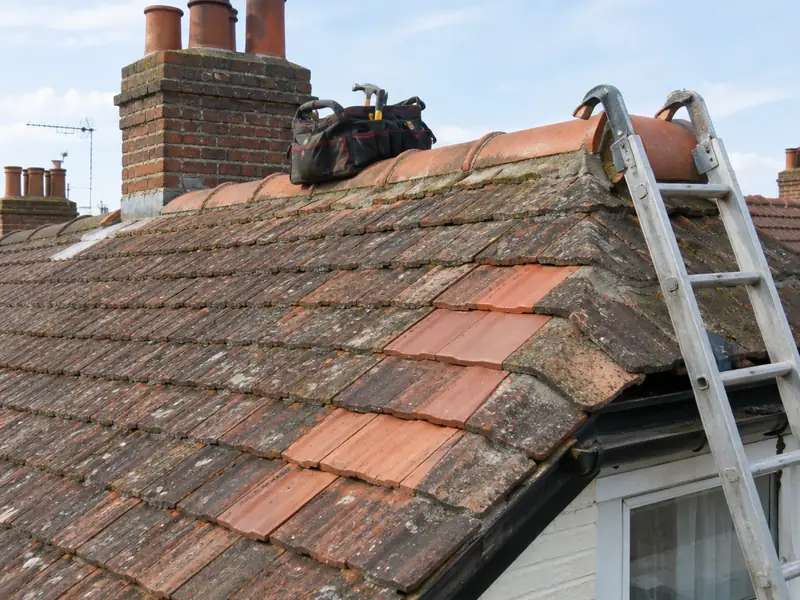
Roof repairs fix specific faults in a pitched or flat roof, such as slipped or cracked tiles, loose ridges, failed flashing, leaking valleys or chimney defects, to stop water getting in without replacing the whole roof.
We offer roof repairs across Devon, and Plymouth is one of the places we cover, along with nearby Plymstock, Paignton and Newton Abbot. Before anything is agreed we visit, check the existing structure and talk through your options. You then receive a written quote setting out the full scope; for most homes in the South West it sits within £300–£1,550 including VAT.
- Guide price
- £300–£1,550 inc VAT
- Time on site
- Half a day to 3 days for most repairs
- Postcodes
- PL1, PL2, PL3 and PL4
- Planning rules
- England
- Local area
- Devon
- Survey
- Free, with a written quote
What should you budget for roof repairs in Plymouth?
The table below shows guide prices for roof repairs in Plymouth. They are based on rates in the South West, which run about 2% above the national guide, giving an overall range of £300–£1,550. All figures include VAT and are firmed up after a free site survey.
| Type of job | What it usually involves | Guide in Plymouth |
|---|---|---|
| Minor repair | Replacing a handful of slipped or broken tiles from ladders or a roof ladder. | £200–£500 |
| Ridge, flashing or valley repair | Rebedding a ridge run, renewing flashing or relining a short valley. | £400–£1,200 |
| Larger repair with scaffolding | Several faults, chimney work or repairs on high roofs needing scaffolding. | £1,000–£3,100 |
The main things that change the figure:
- Number and type of faults to repair
- Access: ladders, roof ladders, towers or full scaffolding
- Matching tiles, slates or lead to the existing roof
- Hidden damage to battens, felt or timbers found during repair
What’s included?
- Inspection to trace the source of leaks or damage
- Safe access by ladders, towers or scaffolding as needed
- Replacement of slipped, cracked or missing tiles and slates
- Ridge, hip and verge rebedding or dry-fix conversion
- Temporary weatherproofing where a full repair must wait
- Clearing debris from gutters and the work area
Local housing and roof repairs
Devon is known for cob and thatch cottages, especially in mid and east Devon, alongside granite on Dartmoor and red sandstone around Exeter. Exeter and Plymouth have Georgian and Victorian terraces, Plymouth's centre was largely rebuilt after the war, and seaside towns such as Torquay and Exmouth have rendered villas and newer estates.
Cob and stone homes need breathable lime plaster and render rather than cement. Victorian terraces suit loft rooms and window replacement, while post-war and newer homes often take extensions, rendering and roofline renewal.
With that background in mind, here is how we typically handle roof repairs for homes in Plymouth, from the first visit to the finished result.
Planning and building rules in Plymouth
Which rules apply depends on where you live. For Plymouth, the answer is England, and the points below reflect that; we verify them with the council before quoting.
Re-roofing a house with similar materials does not usually need planning permission in England. Listed buildings and conservation areas may need consent if the covering changes.
Replacing more than a quarter of a roof’s covering counts as renovation under Building Regulations, so the work is notified and the roof insulation may need upgrading. Bats are protected across the UK; if they roost under roof tiles, soffits or fascias, work stops and a licensed ecologist advises before it restarts.
Rules change and every property is different, so we check the planning history and constraints for your address before we quote.
From survey to handover
Survey and measure
We begin by looking at the job in person. During the free survey we discuss options, materials and budget for roof repairs, and photograph or measure anything the quote needs to reflect.
Price and scope agreed
Next you receive a written quote with a fixed price for the agreed specification. It lists what is included, what is not, and how payments are staged, so you can compare it properly.
Booking the work
Next comes planning the work itself. We set a start date that suits you, line up the right trades, and make sure any approvals for roof repairs are in place before the first day on site.
On site to finish
The work is carried out to the agreed specification, with floors and furniture protected and the site kept tidy. At the end we clean up, walk through the finished job with you and hand over any certificates.
Why homeowners choose us
Questions about roof repairs in Plymouth
How long will roof repairs take?
On a typical home, allow Half a day to 3 days for most repairs. Larger projects, older buildings and extra work found once things are opened up can extend that, while simpler jobs may be shorter. Your quote includes an estimate of time on site, and your point of contact keeps you updated on the programme as the work progresses.
What is dry-fix ridge and is it better than mortar?
Dry-fix ridge systems use screws, clips and weather seals instead of mortar to hold ridge and hip tiles in place. They avoid the cracking and loosening that mortar suffers over time, need less upkeep and are now common on new roofs. Mortar-bedded ridges suit some period or conservation-area roofs. We recommend the method that suits your roof and its location.
Who do I deal with during the job?
One point of contact manages your project from survey to handover. They schedule the trades working under our contract, keep you updated on progress, and are the person to call with any question. You don't need to coordinate builders, electricians or decorators separately, because that is part of what we do.
How much does a roof repair cost?
A typical roof repair, such as replacing slipped tiles, rebedding a ridge or renewing flashing, costs £300–£1,550. Small repairs reachable by ladder sit at the lower end, while jobs needing scaffolding or several repairs cost more. Matching old tiles or slates and hidden damage to battens can also affect the price. We explain what we find and confirm a fixed price before starting.
Do I need scaffolding for a roof repair?
Not every roof repair needs scaffolding. Small repairs on low roofs can often be done safely from ladders and roof ladders, and towers suit some chimney and gable work. Repairs on two-storey roofs, steep slopes, chimneys or large areas usually need scaffolding for safe working, which adds cost. We choose the safest practical access and include it in the written quote.
Also covering areas around Plymouth
If your address falls within PL1, PL2, PL3 and PL4, we cover it. The same goes for neighbouring Plymstock, Paignton and Newton Abbot, which we include alongside Plymouth when arranging surveys and quotes.