
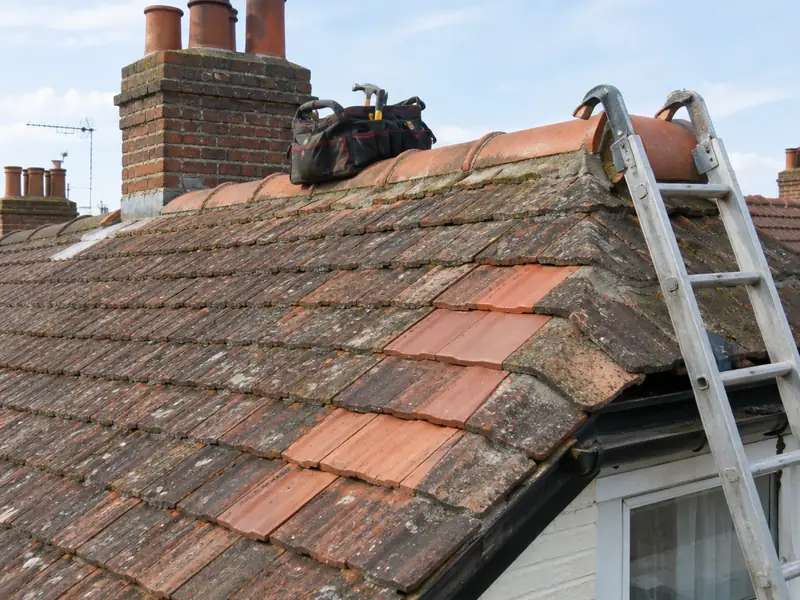
Roof repairs fix specific faults in a pitched or flat roof, such as slipped or cracked tiles, loose ridges, failed flashing, leaking valleys or chimney defects, to stop water getting in without replacing the whole roof.
We arrange roof repairs for homeowners in Ryde and the wider Isle of Wight. The job is planned, priced and managed by us and carried out by tradespeople engaged under our contract, so there is one agreement and one contact. On a typical home the work takes Half a day to 3 days for most repairs, and guide pricing in the South East is £350–£1,700, VAT included.
- Guide price
- £350–£1,700 inc VAT
- Time on site
- Half a day to 3 days for most repairs
- Postcodes
- PO33 and PO34
- Planning rules
- England
- Local area
- Isle of Wight
- Survey
- Free, with a written quote
What should you budget for roof repairs in Ryde?
Use the table to gauge the cost of roof repairs in Ryde before we visit. Figures include VAT and are scaled for the South East, coming out about 12% above the national guide, which gives £350–£1,700 overall. After a free survey, you receive a fixed written price.
| Type of job | What it usually involves | Guide in Ryde |
|---|---|---|
| Minor repair | Replacing a handful of slipped or broken tiles from ladders or a roof ladder. | £200–£550 |
| Ridge, flashing or valley repair | Rebedding a ridge run, renewing flashing or relining a short valley. | £450–£1,350 |
| Larger repair with scaffolding | Several faults, chimney work or repairs on high roofs needing scaffolding. | £1,100–£3,400 |
What moves the price up or down:
- Number and type of faults to repair
- Roof height and steepness
- Matching tiles, slates or lead to the existing roof
- Hidden damage to battens, felt or timbers found during repair
What’s included?
- Photos of the problem areas and a clear written explanation
- Safe access by ladders, towers or scaffolding as needed
- Replacement of slipped, cracked or missing tiles and slates
- Ridge, hip and verge rebedding or dry-fix conversion
- Temporary weatherproofing where a full repair must wait
- Clearing debris from gutters and the work area
Building in Ryde
The island has Victorian seaside villas and terraces in Ryde, Ventnor, Shanklin and Cowes, older cottages in island sandstone and limestone, and thatched roofs in some villages. Post-war bungalows, chalets and newer estates are common around Newport and the larger towns.
Victorian villas often need sash-style windows, render repairs and roof work. Bungalows suit loft conversions and extensions, while coastal properties commonly need roofline, fencing and external decorating renewed more often.
So when we survey a Ryde property for roof repairs, the first step is working out how it was built and what has been changed since.
Do you need permission in Ryde?
Which rules apply depends on where you live. For Ryde, the answer is England, and the points below reflect that; we verify them with the council before quoting.
Re-roofing a house with similar materials does not usually need planning permission in England. Listed buildings and conservation areas may need consent if the covering changes.
Replacing more than a quarter of a roof’s covering counts as renovation under Building Regulations, so the work is notified and the roof insulation may need upgrading. Bats are protected across the UK; if they roost under roof tiles, soffits or fascias, work stops and a licensed ecologist advises before it restarts.
Rules change and every property is different, so we check the planning history and constraints for your address before we quote.
What happens after you get in touch?
A visit to your home
Book a visit and we'll come to you. The survey covers measurements, the state of what's there now and any obvious constraints, so the price that follows is based on your actual home, not an average.
Price and scope agreed
We put everything into a written, fixed-price quote: the specification, what's excluded, staged payments and the expected time on site. Take whatever time you need to decide; there's no pressure to commit.
Getting ready
Preparation matters as much as the build. We agree access, parking and working hours with you, order materials in good time, and confirm any permissions so the job isn't held up once it starts.
Finish and handover
On site, the agreed plan is followed and any change is put in writing first. At completion we do a final clean, go through the snagging list with you and leave you with the relevant documents.
What you can expect from us
Roof repairs in Ryde: questions
Why is my roof leaking?
Roof leaks usually come from slipped or cracked tiles, failed flashing around chimneys and walls, leaking valleys, blocked gutters overflowing, or perished felt beneath the tiles. Water can travel along timbers before it drips, so the stain on your ceiling may not be directly under the fault. Condensation in the loft can also look like a leak. We trace the source before recommending a repair.
Which postcodes in Ryde do you cover?
We cover PO33 and PO34, along with the rest of Isle of Wight. If your postcode is not listed, get in touch anyway: our coverage is UK-wide, and we can usually arrange a survey wherever you live. Enter your postcode in the guide-price tool or contact form and we will confirm.
How can I spot roof problems early?
Spotting roof problems early saves money. Look from the ground after storms for slipped or missing tiles, cracked ridge mortar or debris in gutters. In the loft, check for daylight, damp patches, stained timbers or wet insulation. Inside, watch for ceiling stains and peeling paint near outside walls. Clearing gutters each autumn prevents overflow damage.
Can you do an emergency roof repair?
After storm damage, a temporary repair such as sheeting or refixing loose tiles can stop water getting in until a permanent repair can be made. We aim to attend as quickly as possible, but availability depends on weather and demand, especially after widespread storms. In the meantime, catch drips in containers, move valuables and switch off lights near any wet ceiling.
How long will roof repairs take?
On a typical home, allow Half a day to 3 days for most repairs. Larger projects, older buildings and extra work found once things are opened up can extend that, while simpler jobs may be shorter. Your quote includes an estimate of time on site, and your point of contact keeps you updated on the programme as the work progresses.
Near Ryde
Homes across PO33 and PO34 in Ryde are within our coverage, as are those in Gosport, Southsea and Sandown. If you are just outside these areas, ask anyway, because we work right across the UK.