
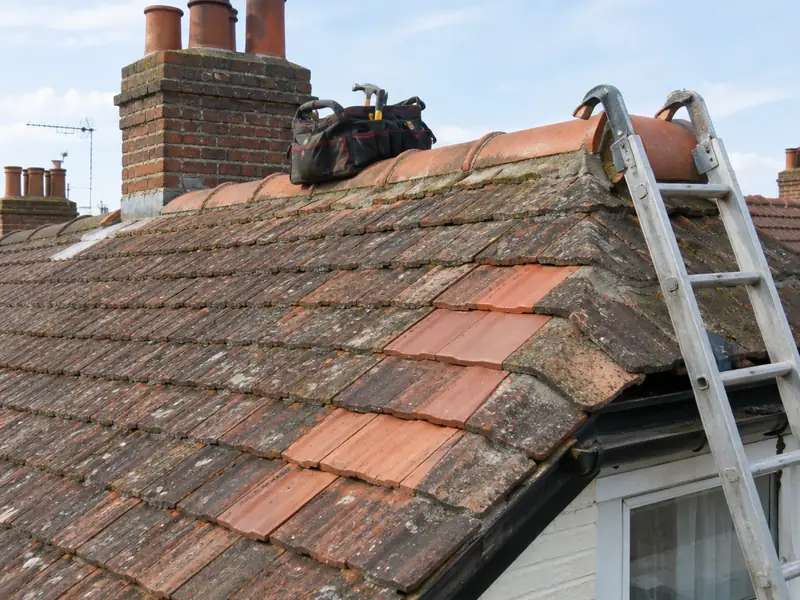
Roof repairs fix specific faults in a pitched or flat roof, such as slipped or cracked tiles, loose ridges, failed flashing, leaking valleys or chimney defects, to stop water getting in without replacing the whole roof.
We offer roof repairs across Kent, and Dover is one of the places we cover, along with nearby Folkestone, Deal and Canterbury. Before anything is agreed we visit, check the existing structure and talk through your options. You then receive a written quote setting out the full scope; for most homes in the South East it sits within £350–£1,700 including VAT.
- Guide price
- £350–£1,700 inc VAT
- Time on site
- Half a day to 3 days for most repairs
- Postcodes
- CT14, CT16 and CT17
- Planning rules
- England
- Local area
- Kent
- Survey
- Free, with a written quote
Roof repairs prices in Dover
What will roof repairs cost in Dover? Our guide range is £350–£1,700 including VAT. That figure is adjusted for the South East, about 12% above the national guide, and is intended for planning a budget. A firm written price for your chosen specification follows a free survey at your home.
| Type of job | What it usually involves | Guide in Dover |
|---|---|---|
| Minor repair | Replacing a handful of slipped or broken tiles from ladders or a roof ladder. | £200–£550 |
| Ridge, flashing or valley repair | Rebedding a ridge run, renewing flashing or relining a short valley. | £450–£1,350 |
| Larger repair with scaffolding | Several faults, chimney work or repairs on high roofs needing scaffolding. | £1,100–£3,400 |
Expect these to shape the final quote:
- Number and type of faults to repair
- Access: ladders, roof ladders, towers or full scaffolding
- Roof height and steepness
- Hidden damage to battens, felt or timbers found during repair
What do you get?
- Inspection to trace the source of leaks or damage
- Photos of the problem areas and a clear written explanation
- Replacement of slipped, cracked or missing tiles and slates
- Ridge, hip and verge rebedding or dry-fix conversion
- Lead flashing, valley and chimney junction repairs
- Temporary weatherproofing where a full repair must wait
Building in Dover
Kent's older buildings include oast houses, weatherboarded cottages, Wealden timber-framed houses and Kentish ragstone walls. Medway towns have long rows of Victorian terraces, Margate and Ramsgate have Regency and Victorian seafronts, and Ashford, Maidstone and Dartford have seen large new estates alongside interwar and post-war housing.
Victorian terraces suit loft rooms and rear extensions; weatherboarded and timber-framed buildings may need cladding repairs and lime work. Newer estate homes often take garage conversions, porches and landscaping.
That mix of housing shapes how we approach roof repairs in Dover: the age and construction of your home affect the materials, the method and, in the end, the price.
Planning and building rules in Dover
Each UK nation sets its own consent rules, and Dover is in England. What follows is a plain summary; we check the specifics for your property with the council before pricing anything.
Re-roofing a house with similar materials does not usually need planning permission in England. Listed buildings and conservation areas may need consent if the covering changes.
Replacing more than a quarter of a roof’s covering counts as renovation under Building Regulations, so the work is notified and the roof insulation may need upgrading. Bats are protected across the UK; if they roost under roof tiles, soffits or fascias, work stops and a licensed ecologist advises before it restarts.
Rules change and every property is different, so we check the planning history and constraints for your address before we quote.
From survey to handover
Free site survey
Book a visit and we'll come to you. The survey covers measurements, the state of what's there now and any obvious constraints, so the price that follows is based on your actual home, not an average.
Quote in writing
You get the price in writing, itemised so you can see where the money goes. As long as the specification stays the same, that is the price you pay for roof repairs.
Booking the work
We handle the paperwork side: checking whether planning permission or building control approval is needed, submitting applications where they are, and scheduling the trades and materials around your dates.
Build and hand over
During the work we protect the areas around it and tidy up at the end of each day. Once complete, we check the finish, remove our materials and hand over paperwork such as building control sign-off where it applies.
How we work
Frequently asked questions
How long will roof repairs take?
On a typical home, allow Half a day to 3 days for most repairs. Larger projects, older buildings and extra work found once things are opened up can extend that, while simpler jobs may be shorter. Your quote includes an estimate of time on site, and your point of contact keeps you updated on the programme as the work progresses.
Do I need planning permission in Dover?
It depends on the work, the size of the project, your property type and whether the building is listed or in a conservation area. Dover is in England, so England's rules apply. Many smaller jobs need no planning application, but some still need building control approval. We check what applies to your address before quoting.
Is it worth repairing an old roof?
Repairing an old roof is worthwhile when the problem is isolated and the rest of the roof is sound. If tiles are widely porous, battens are rotten or the felt has perished, repeated repairs may cost more over time than a new roof. We look at the overall condition, explain the likely lifespan and give you prices for both where it makes sense.
How much does a roof repair cost?
A typical roof repair, such as replacing slipped tiles, rebedding a ridge or renewing flashing, costs £350–£1,700. Small repairs reachable by ladder sit at the lower end, while jobs needing scaffolding or several repairs cost more. Matching old tiles or slates and hidden damage to battens can also affect the price. We explain what we find and confirm a fixed price before starting.
What is dry-fix ridge and is it better than mortar?
Dry-fix ridge systems use screws, clips and weather seals instead of mortar to hold ridge and hip tiles in place. They avoid the cracking and loosening that mortar suffers over time, need less upkeep and are now common on new roofs. Mortar-bedded ridges suit some period or conservation-area roofs. We recommend the method that suits your roof and its location.
Nearby towns
We welcome enquiries from all CT14, CT16 and CT17 postcodes in Dover, plus Folkestone, Deal and Canterbury. Each one gets the same survey at no charge and a written price fixed for the work described.