
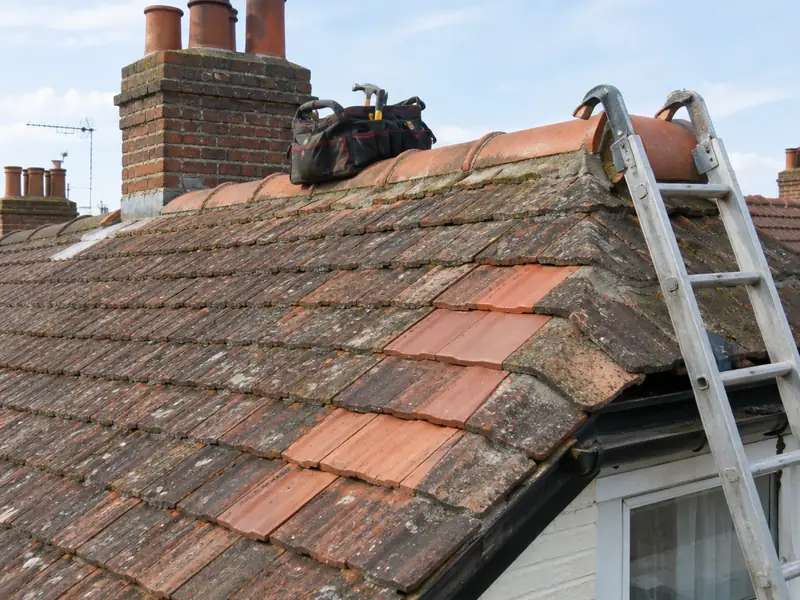
Roof repairs fix specific faults in a pitched or flat roof, such as slipped or cracked tiles, loose ridges, failed flashing, leaking valleys or chimney defects, to stop water getting in without replacing the whole roof.
Addresses across CT19 and CT20 fall within our coverage for roof repairs, so if your home is in Folkestone we can arrange a survey on a day that works for you. We inspect the existing building, discuss materials and layout, and then price the agreed specification in writing. Expect a guide range of £350–£1,700 including VAT before that visit.
- Guide price
- £350–£1,700 inc VAT
- Time on site
- Half a day to 3 days for most repairs
- Postcodes
- CT19 and CT20
- Planning rules
- England
- Local area
- Kent
- Survey
- Free, with a written quote
Roof repairs prices in Folkestone
No two jobs cost exactly the same, but the ranges below give a fair picture of roof repairs in Folkestone. Pricing for the South East runs about 12% above the national guide, and the overall guide is £350–£1,700 with VAT included. We'll confirm your figure after surveying the property for free.
| Type of job | What it usually involves | Guide in Folkestone |
|---|---|---|
| Minor repair | Replacing a handful of slipped or broken tiles from ladders or a roof ladder. | £200–£550 |
| Ridge, flashing or valley repair | Rebedding a ridge run, renewing flashing or relining a short valley. | £450–£1,350 |
| Larger repair with scaffolding | Several faults, chimney work or repairs on high roofs needing scaffolding. | £1,100–£3,400 |
What moves the price up or down:
- Number and type of faults to repair
- Access: ladders, roof ladders, towers or full scaffolding
- Matching tiles, slates or lead to the existing roof
- Hidden damage to battens, felt or timbers found during repair
Scope of the work
- Inspection to trace the source of leaks or damage
- Safe access by ladders, towers or scaffolding as needed
- Replacement of slipped, cracked or missing tiles and slates
- Ridge, hip and verge rebedding or dry-fix conversion
- Lead flashing, valley and chimney junction repairs
- Clearing debris from gutters and the work area
What are homes like around Folkestone?
Kent's older buildings include oast houses, weatherboarded cottages, Wealden timber-framed houses and Kentish ragstone walls. Medway towns have long rows of Victorian terraces, Margate and Ramsgate have Regency and Victorian seafronts, and Ashford, Maidstone and Dartford have seen large new estates alongside interwar and post-war housing.
One of England's sunnier, drier counties, but Thanet and the coast are windy, and Weald and London Clay soils can shrink in summer.
With that background in mind, here is how we typically handle roof repairs for homes in Folkestone, from the first visit to the finished result.
Permissions for roof repairs in Folkestone
Which rules apply depends on where you live. For Folkestone, the answer is England, and the points below reflect that; we verify them with the council before quoting.
Re-roofing a house with similar materials does not usually need planning permission in England. Listed buildings and conservation areas may need consent if the covering changes.
Replacing more than a quarter of a roof’s covering counts as renovation under Building Regulations, so the work is notified and the roof insulation may need upgrading. Bats are protected across the UK; if they roost under roof tiles, soffits or fascias, work stops and a licensed ecologist advises before it restarts.
Rules change and every property is different, so we check the planning history and constraints for your address before we quote.
The four stages
Survey and measure
A free survey comes first. It gives us what we need to price roof repairs properly, including dimensions, existing materials and access for deliveries, and gives you the chance to ask anything you like.
Your fixed price
We turn the survey notes into a written quote. The price is fixed for the specification we agree, and the document sets out materials, scope and payment stages in plain language.
Plan and prepare
Preparation matters as much as the build. We agree access, parking and working hours with you, order materials in good time, and confirm any permissions so the job isn't held up once it starts.
Finish and handover
The job proceeds in the order set out in the programme, with dust and debris kept under control. Finally we tidy away, inspect the work together and pass the finished project over to you with its paperwork.
Why homeowners choose us
Frequently asked questions
Why is my roof leaking?
Roof leaks usually come from slipped or cracked tiles, failed flashing around chimneys and walls, leaking valleys, blocked gutters overflowing, or perished felt beneath the tiles. Water can travel along timbers before it drips, so the stain on your ceiling may not be directly under the fault. Condensation in the loft can also look like a leak. We trace the source before recommending a repair.
Can you do an emergency roof repair?
After storm damage, a temporary repair such as sheeting or refixing loose tiles can stop water getting in until a permanent repair can be made. We aim to attend as quickly as possible, but availability depends on weather and demand, especially after widespread storms. In the meantime, catch drips in containers, move valuables and switch off lights near any wet ceiling.
Can you combine roof repairs with other work?
Yes. Because we manage several trades under one contract, we can plan roof repairs alongside other work on your Folkestone home, such as new windows with rendering, or a kitchen refit with an extension. Combining jobs can reduce repeat set-up such as scaffolding, skips and access, and every element is listed and priced in the same written quote.
What happens at the survey?
We visit your home at a time that suits you, look at the area involved, take measurements and check access, condition and any services that might be affected. We talk through what you want from roof repairs, explain the options and answer questions. There is no charge and no obligation; afterwards we send a written quote.
What is dry-fix ridge and is it better than mortar?
Dry-fix ridge systems use screws, clips and weather seals instead of mortar to hold ridge and hip tiles in place. They avoid the cracking and loosening that mortar suffers over time, need less upkeep and are now common on new roofs. Mortar-bedded ridges suit some period or conservation-area roofs. We recommend the method that suits your roof and its location.
Nearby towns
Whether you're in the centre of Folkestone or on its outskirts, CT19 and CT20 addresses are covered. We extend the same service, and the same fixed-price approach, to Dover, Ashford, Kent and Deal.