
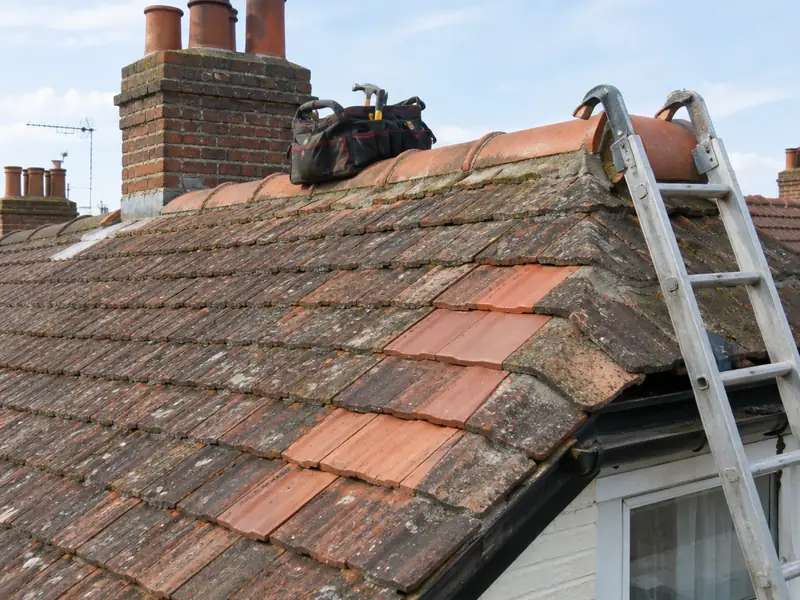
Roof repairs fix specific faults in a pitched or flat roof, such as slipped or cracked tiles, loose ridges, failed flashing, leaking valleys or chimney defects, to stop water getting in without replacing the whole roof.
Getting roof repairs right in Maesteg starts with understanding the house you already have: its age, how it was built and what has been altered over the years. We survey first, then commit on paper to a price that holds as long as the scope stays the same. Across Wales, guide prices run at £300–£1,400 including VAT, and homes in Briton Ferry, Neath and Bridgend are covered too.
- Guide price
- £300–£1,400 inc VAT
- Time on site
- Half a day to 3 days for most repairs
- Postcodes
- CF34
- Planning rules
- Wales
- Local area
- Bridgend
- Survey
- Free, with a written quote
Roof repairs prices in Maesteg
To help you plan, we show what roof repairs typically costs in Maesteg instead of holding figures back for a sales call. The range is £300–£1,400 with VAT, using rates in Wales that are about 8% below the national guide. A free survey then fixes your actual price.
| Type of job | What it usually involves | Guide in Maesteg |
|---|---|---|
| Minor repair | Replacing a handful of slipped or broken tiles from ladders or a roof ladder. | £200–£450 |
| Ridge, flashing or valley repair | Rebedding a ridge run, renewing flashing or relining a short valley. | £350–£1,100 |
| Larger repair with scaffolding | Several faults, chimney work or repairs on high roofs needing scaffolding. | £900–£2,800 |
Your price depends mostly on:
- Access: ladders, roof ladders, towers or full scaffolding
- Roof height and steepness
- Matching tiles, slates or lead to the existing roof
- Hidden damage to battens, felt or timbers found during repair
What does the job include in Maesteg?
- Photos of the problem areas and a clear written explanation
- Safe access by ladders, towers or scaffolding as needed
- Replacement of slipped, cracked or missing tiles and slates
- Ridge, hip and verge rebedding or dry-fix conversion
- Temporary weatherproofing where a full repair must wait
- Clearing debris from gutters and the work area
Building in Maesteg
The Rhondda, Cynon and Merthyr valleys are lined with stone terraces built for mining families, stepped along steep hillsides. Pontypridd, Caerphilly and Merthyr Tydfil have Victorian centres, and Bridgend has grown with large modern estates alongside interwar and post-war housing.
The valleys get heavy rainfall and steep, sloping sites are common, so drainage, retaining walls and render specification matter.
For roof repairs in Maesteg, this means checking things like wall construction, roof structure and existing services before we put a figure on paper.
Do you need permission in Maesteg?
Which rules apply depends on where you live. For Maesteg, the answer is Wales, and the points below reflect that; we verify them with the council before quoting.
Re-roofing with similar materials does not usually need planning permission in Wales, except on listed buildings or where a conservation area restricts materials.
Building Regulations in Wales apply to major re-roofing, including insulation upgrades. Bats are protected across the UK; if they roost under roof tiles, soffits or fascias, work stops and a licensed ecologist advises before it restarts.
Rules change and every property is different, so we check the planning history and constraints for your address before we quote.
The four stages
A visit to your home
We begin by looking at the job in person. During the free survey we discuss options, materials and budget for roof repairs, and photograph or measure anything the quote needs to reflect.
Your fixed price
You get the price in writing, itemised so you can see where the money goes. As long as the specification stays the same, that is the price you pay for roof repairs.
Getting ready
We handle the paperwork side: checking whether planning permission or building control approval is needed, submitting applications where they are, and scheduling the trades and materials around your dates.
Build and hand over
Work goes ahead as scheduled and you deal with one contact throughout. When the last trade leaves, we clear and clean the site, talk you through what has been done and pass on any certificates and care instructions.
What you can expect from us
Frequently asked questions
Is it worth repairing an old roof?
Repairing an old roof is worthwhile when the problem is isolated and the rest of the roof is sound. If tiles are widely porous, battens are rotten or the felt has perished, repeated repairs may cost more over time than a new roof. We look at the overall condition, explain the likely lifespan and give you prices for both where it makes sense.
Why is my roof leaking?
Roof leaks usually come from slipped or cracked tiles, failed flashing around chimneys and walls, leaking valleys, blocked gutters overflowing, or perished felt beneath the tiles. Water can travel along timbers before it drips, so the stain on your ceiling may not be directly under the fault. Condensation in the loft can also look like a leak. We trace the source before recommending a repair.
What happens at the survey?
We visit your home at a time that suits you, look at the area involved, take measurements and check access, condition and any services that might be affected. We talk through what you want from roof repairs, explain the options and answer questions. There is no charge and no obligation; afterwards we send a written quote.
Will my home insurance pay for the repair?
Home insurance policies often cover sudden storm damage but usually exclude wear and tear or gradual deterioration. If you think the damage is storm-related, contact your insurer before repairs, apart from urgent temporary work, and take photos. We can provide a written report and photographs describing the damage and cause to help with your claim. The insurer decides what is covered.
Who do I deal with during the job?
One point of contact manages your project from survey to handover. They schedule the trades working under our contract, keep you updated on progress, and are the person to call with any question. You don't need to coordinate builders, electricians or decorators separately, because that is part of what we do.
Also covering areas around Maesteg
Whether you're in the centre of Maesteg or on its outskirts, CF34 addresses are covered. We extend the same service, and the same fixed-price approach, to Briton Ferry, Neath and Bridgend.