
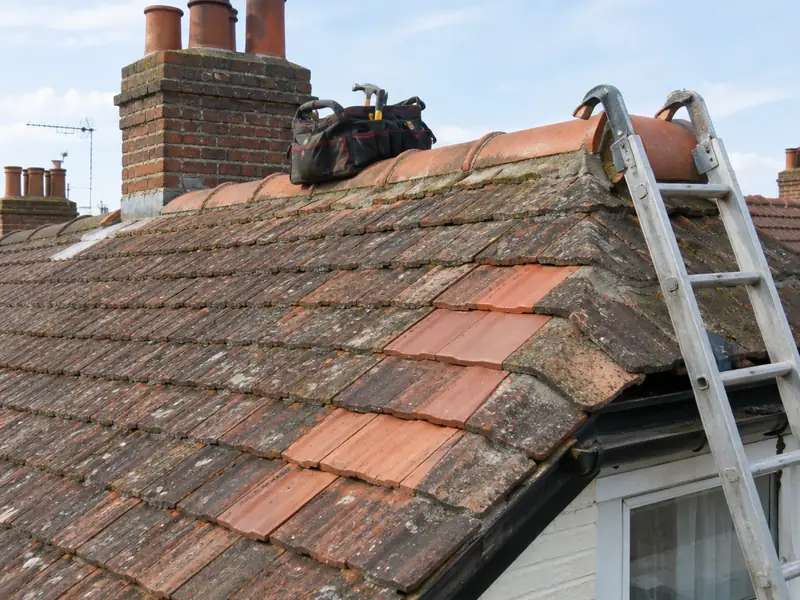
Roof repairs fix specific faults in a pitched or flat roof, such as slipped or cracked tiles, loose ridges, failed flashing, leaking valleys or chimney defects, to stop water getting in without replacing the whole roof.
For a homeowner in Grangemouth, planning roof repairs tends to begin with two questions: what will it cost, and how disruptive will it be? Our guide range is £300–£1,450 including VAT, and a typical job runs to Half a day to 3 days for most repairs. Both numbers firm up once we have seen the property, measured up and agreed exactly what is included.
- Guide price
- £300–£1,450 inc VAT
- Time on site
- Half a day to 3 days for most repairs
- Postcodes
- FK3
- Planning rules
- Scotland
- Local area
- Falkirk
- Survey
- Free, with a written quote
How much do roof repairs cost in Grangemouth?
Every figure below is a guide for roof repairs in Grangemouth, inclusive of VAT. Regional pricing for Scotland works out about 4% below the national guide, and the overall span is £300–£1,450. The survey costs you nothing, and after it we commit to a firm price for your specification in writing.
| Type of job | What it usually involves | Guide in Grangemouth |
|---|---|---|
| Minor repair | Replacing a handful of slipped or broken tiles from ladders or a roof ladder. | £200–£500 |
| Ridge, flashing or valley repair | Rebedding a ridge run, renewing flashing or relining a short valley. | £400–£1,150 |
| Larger repair with scaffolding | Several faults, chimney work or repairs on high roofs needing scaffolding. | £950–£2,900 |
The main things that change the figure:
- Number and type of faults to repair
- Roof height and steepness
- Matching tiles, slates or lead to the existing roof
- Hidden damage to battens, felt or timbers found during repair
What do you get?
- Photos of the problem areas and a clear written explanation
- Safe access by ladders, towers or scaffolding as needed
- Replacement of slipped, cracked or missing tiles and slates
- Lead flashing, valley and chimney junction repairs
- Temporary weatherproofing where a full repair must wait
- Clearing debris from gutters and the work area
Local housing and roof repairs
Stirling's old town has historic stone buildings, with Victorian villas in the King's Park area and newer estates around the city. Falkirk and Grangemouth have industrial-era terraces and post-war housing, and Alloa and the Hillfoots villages in Clackmannanshire mix stone cottages, mill-era housing and harled council homes.
Stone homes commonly need repointing and slate roof repairs, and harled houses need re-rendering. Semis and bungalows suit extensions and loft conversions, and newer homes take garage conversions and driveways.
For roof repairs in Grangemouth, this means checking things like wall construction, roof structure and existing services before we put a figure on paper.
Planning and building rules in Grangemouth
Because Grangemouth falls under Scotland's rules, the guidance below is the version relevant to you. Before sending a price, we check your property's position with the council.
In Scotland, like-for-like re-roofing does not usually need planning permission, except on listed buildings or in conservation areas.
Like-for-like re-covering does not usually need a building warrant, but structural changes or new roof windows can. Bats are protected across the UK; if they roost under roof tiles, soffits or fascias, work stops and a licensed ecologist advises before it restarts.
Rules change and every property is different, so we check the planning history and constraints for your address before we quote.
The four stages
A visit to your home
It starts with a survey at the property, free of charge. We check condition, access and services, ask how you want the finished result to look, and answer any questions you have about roof repairs.
Your fixed price
The quote arrives in writing, not over the phone. It covers the full scope, the finishes you've chosen, any exclusions and the payment schedule, with a fixed price tied to that specification.
Plan and prepare
Next comes planning the work itself. We set a start date that suits you, line up the right trades, and make sure any approvals for roof repairs are in place before the first day on site.
On site to finish
The job proceeds in the order set out in the programme, with dust and debris kept under control. Finally we tidy away, inspect the work together and pass the finished project over to you with its paperwork.
Working with SK Home Improvements
Frequently asked questions
Why is my roof leaking?
Roof leaks usually come from slipped or cracked tiles, failed flashing around chimneys and walls, leaking valleys, blocked gutters overflowing, or perished felt beneath the tiles. Water can travel along timbers before it drips, so the stain on your ceiling may not be directly under the fault. Condensation in the loft can also look like a leak. We trace the source before recommending a repair.
Is it worth repairing an old roof?
Repairing an old roof is worthwhile when the problem is isolated and the rest of the roof is sound. If tiles are widely porous, battens are rotten or the felt has perished, repeated repairs may cost more over time than a new roof. We look at the overall condition, explain the likely lifespan and give you prices for both where it makes sense.
Who do I deal with during the job?
One point of contact manages your project from survey to handover. They schedule the trades working under our contract, keep you updated on progress, and are the person to call with any question. You don't need to coordinate builders, electricians or decorators separately, because that is part of what we do.
What is dry-fix ridge and is it better than mortar?
Dry-fix ridge systems use screws, clips and weather seals instead of mortar to hold ridge and hip tiles in place. They avoid the cracking and loosening that mortar suffers over time, need less upkeep and are now common on new roofs. Mortar-bedded ridges suit some period or conservation-area roofs. We recommend the method that suits your roof and its location.
Can I stay at home during the work?
In most cases, yes. Most people can live at home throughout, and we plan the work to keep disruption down by protecting floors, agreeing working hours and keeping access routes clear. Bigger jobs affecting kitchens, bathrooms or heating may mean a short spell with reduced facilities, and we talk this through with you at the survey.
Nearby towns
Homes across FK3 in Grangemouth are within our coverage, as are those in Falkirk, Alloa and Bathgate. If you are just outside these areas, ask anyway, because we work right across the UK.