
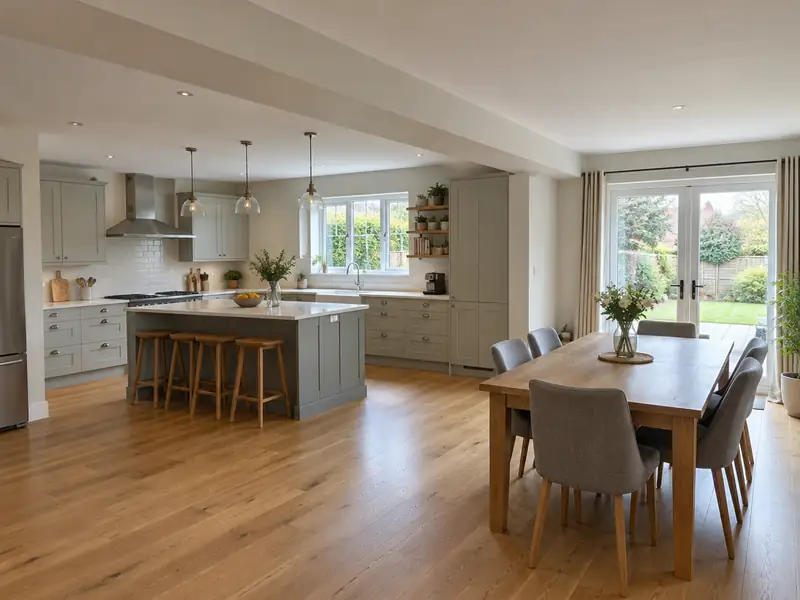
Wall removal is taking out an internal wall to open up rooms; where the wall is load-bearing, a steel beam sized by a structural engineer is installed on padstones to carry the weight above, with the work approved by building control.
From Helensburgh, Dunoon, Oban and Isle of Bute to the quieter corners of Argyll and Bute, homeowners can book a free survey for removing a wall. We look at the building, agree the scope, then send a quote in writing that fixes the cost of that scope. Work follows the rules for Scotland, and our published range for Scotland, £2,900–£7,700 with VAT, gives you a sense of budget before we visit.
- Guide price
- £2,900–£7,700 inc VAT
- Time on site
- 1–3 weeks including making good
- Planning rules
- Scotland
- Price level
- About 4% below the national guide
- Towns listed
- 4
- Survey
- Free, with a written quote
Wall removal and steel beams prices in Argyll and Bute
The costs listed here are typical for removing a wall around Argyll and Bute and include VAT. They reflect labour and material costs in Scotland, about 4% below the national guide, giving a range of £2,900–£7,700. Exact pricing depends on your home, so we only fix it once a free site survey is done.
| Type of job | What it usually involves | Guide in Argyll and Bute |
|---|---|---|
| Non-load-bearing wall | Removing a stud or block partition and making good walls, ceiling and floor. | £750–£1,900 |
| Load-bearing wall up to 4m | A typical kitchen-diner knock-through with one steel beam, calculations and building control. | £2,900–£7,700 |
| Wide or complex opening | Openings over 4m, posts, flush beams or chimney breast removal. | £7,700–£15,500 |
The main things that change the figure:
- Beam size, posts, flush fixing and padstone details
- Services in the wall that need rerouting
- Floor and ceiling repairs where the wall stood
- Engineer, building control and any party wall costs
Scope of the work
- Structural engineer's calculations and beam specification
- Building control application and inspections
- Temporary propping and dust protection during the work
- Wall taken down and waste removed from site
- Steel beam installed on padstones and packed tight
- Beam boarded or treated for fire protection
Homes in Argyll and Bute
Much of Argyll and Bute is rural and coastal, with whitewashed or harled stone cottages, slate roofs and island homes. Helensburgh has Victorian villas, Oban, Dunoon and Rothesay have Victorian seaside terraces, and post-war and newer housing surrounds the main towns.
Stone cottages need lime harling, repointing and slate roof repairs; villas may need roof and window renewal. Island and remote properties need the programme planned around ferries, deliveries and weather.
One of the wettest and windiest parts of the UK, with high exposure on the coast and islands, so roof and render details must suit severe weather.
Do you need permission in Argyll and Bute?
England, Wales, Scotland and Northern Ireland each handle planning a little differently. Argyll and Bute comes under Scotland, covered below, and we raise any questions with the council before your quote is finalised.
Removing an internal wall does not need planning permission in Scotland unless the building is listed.
Removing a load-bearing wall needs a building warrant and a structural engineer’s design. In tenement flats, the common parts and other owners’ interests also have to be considered.
Rules change and every property is different, so we check the planning history and constraints for your address before we quote.
How does the job run?
Survey and measure
We arrange a free site survey on a date convenient to you. We measure up, look at the existing structure and access, and discuss your plans for removing a wall so the price reflects your home.
Written quote
After the survey we send a quote for removing a wall that fixes the price for the scope we've agreed. If you want to change materials or scope, we revise it in writing before anything is booked.
Plan and prepare
We handle the paperwork side: checking whether planning permission or building control approval is needed, submitting applications where they are, and scheduling the trades and materials around your dates.
Finish and handover
The work is carried out to the agreed specification, with floors and furniture protected and the site kept tidy. At the end we clean up, walk through the finished job with you and hand over any certificates.
How we work
Questions about removing a wall in Argyll and Bute
How long will removing a wall take?
On a typical home, allow 1–3 weeks including making good. Larger projects, older buildings and extra work found once things are opened up can extend that, while simpler jobs may be shorter. Your quote includes an estimate of time on site, and your point of contact keeps you updated on the programme as the work progresses.
Can I have a beam that does not show?
A flush or hidden beam sits within the depth of the ceiling so there is no visible downstand, giving a clean, open look. It is possible where the floor joists can be connected into the side of the beam, which takes more steel and labour. It costs more than a standard beam below the ceiling. The engineer confirms whether it suits your house.
Which postcodes in Argyll and Bute do you cover?
We cover G84, PA23, PA34 and PA20, along with the rest of Argyll and Bute. If your postcode is not listed, get in touch anyway: our coverage is UK-wide, and we can usually arrange a survey wherever you live. Enter your postcode in the guide-price tool or contact form and we will confirm.
How disruptive is removing a wall?
Removing a wall is dusty and noisy, but the most disruptive part is short, usually one to three days for propping, demolition and installing the steel. We seal doorways with dust screens, protect floors and keep a safe route through the house. Making good, plastering and floor repairs follow over the next week or two. Most people stay at home throughout.
What is a steel beam and why is it needed?
A steel beam, often called an RSJ, is a strong steel section installed where a load-bearing wall used to be, so the weight above is carried across the opening to the walls at each end. It sits on padstones that spread the load. The size depends on the span and the load, which a structural engineer calculates. The beam is then boxed in or plastered.
Towns in Argyll and Bute
These are the towns in Argyll and Bute where you can book a free survey for removing a wall. Each has its own page with guide prices and coverage details.