
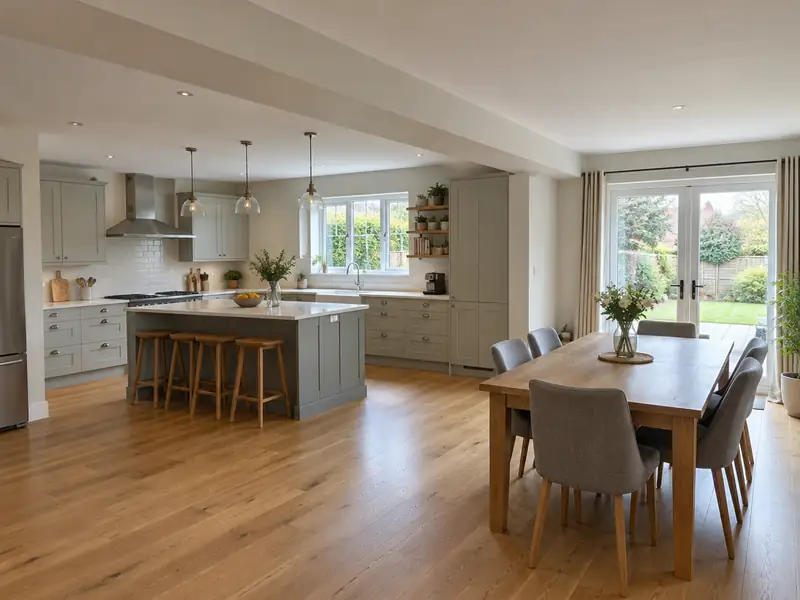
Wall removal is taking out an internal wall to open up rooms; where the wall is load-bearing, a steel beam sized by a structural engineer is installed on padstones to carry the weight above, with the work approved by building control.
For a homeowner in Oban, planning removing a wall tends to begin with two questions: what will it cost, and how disruptive will it be? Our guide range is £2,900–£7,700 including VAT, and a typical job runs to 1–3 weeks including making good. Both numbers firm up once we have seen the property, measured up and agreed exactly what is included.
- Guide price
- £2,900–£7,700 inc VAT
- Time on site
- 1–3 weeks including making good
- Postcodes
- PA34
- Planning rules
- Scotland
- Local area
- Argyll and Bute
- Survey
- Free, with a written quote
What should you budget for removing a wall in Oban?
Below is a breakdown of typical costs for removing a wall in Oban. Because rates in Scotland are about 4% below the national guide, the overall guide comes to £2,900–£7,700, including VAT. Size, materials and access move the figure, and a free-of-charge survey settles it.
| Type of job | What it usually involves | Guide in Oban |
|---|---|---|
| Non-load-bearing wall | Removing a stud or block partition and making good walls, ceiling and floor. | £750–£1,900 |
| Load-bearing wall up to 4m | A typical kitchen-diner knock-through with one steel beam, calculations and building control. | £2,900–£7,700 |
| Wide or complex opening | Openings over 4m, posts, flush beams or chimney breast removal. | £7,700–£15,500 |
The main things that change the figure:
- Opening width and the load the wall carries
- Beam size, posts, flush fixing and padstone details
- Floor and ceiling repairs where the wall stood
- Engineer, building control and any party wall costs
What does the job include in Oban?
- Survey to establish what the wall supports and where loads go
- Structural engineer's calculations and beam specification
- Building control application and inspections
- Wall taken down and waste removed from site
- Steel beam installed on padstones and packed tight
- Plastering, flooring repairs and making good ready for decorating
Building in Oban
Much of Argyll and Bute is rural and coastal, with whitewashed or harled stone cottages, slate roofs and island homes. Helensburgh has Victorian villas, Oban, Dunoon and Rothesay have Victorian seaside terraces, and post-war and newer housing surrounds the main towns.
Stone cottages need lime harling, repointing and slate roof repairs; villas may need roof and window renewal. Island and remote properties need the programme planned around ferries, deliveries and weather.
With that background in mind, here is how we typically handle removing a wall for homes in Oban, from the first visit to the finished result.
Planning and building rules in Oban
Planning law differs across the UK. For a home in Oban, it is the Scotland rules below that count, and we check them with the council ahead of any quote.
Removing an internal wall does not need planning permission in Scotland unless the building is listed.
Removing a load-bearing wall needs a building warrant and a structural engineer’s design. In tenement flats, the common parts and other owners’ interests also have to be considered.
Rules change and every property is different, so we check the planning history and constraints for your address before we quote.
What happens after you get in touch?
We look at the job
We begin by looking at the job in person. During the free survey we discuss options, materials and budget for removing a wall, and photograph or measure anything the quote needs to reflect.
Your fixed price
The quote arrives in writing, not over the phone. It covers the full scope, the finishes you've chosen, any exclusions and the payment schedule, with a fixed price tied to that specification.
Dates and permissions
We handle the paperwork side: checking whether planning permission or building control approval is needed, submitting applications where they are, and scheduling the trades and materials around your dates.
Build and hand over
On site, the agreed plan is followed and any change is put in writing first. At completion we do a final clean, go through the snagging list with you and leave you with the relevant documents.
Why homeowners choose us
Frequently asked questions
How much does it cost to remove a load-bearing wall?
Removing a load-bearing wall of about 3–4m with a steel beam typically costs £2,900–£7,700, including structural calculations, building control and making good. A non-load-bearing partition costs much less. As a rough guide, allow around £600–£1,600 per metre of opening plus fixed costs for the engineer, approvals and propping. Wider openings, posts and flush beams cost more. We confirm a fixed price after the survey.
Who do I deal with during the job?
One point of contact manages your project from survey to handover. They schedule the trades working under our contract, keep you updated on progress, and are the person to call with any question. You don't need to coordinate builders, electricians or decorators separately, because that is part of what we do.
What is a steel beam and why is it needed?
A steel beam, often called an RSJ, is a strong steel section installed where a load-bearing wall used to be, so the weight above is carried across the opening to the walls at each end. It sits on padstones that spread the load. The size depends on the span and the load, which a structural engineer calculates. The beam is then boxed in or plastered.
Is the price fixed?
Yes, for the specification we agree. Your written quote sets out exactly what is included at a fixed price. It only changes if you ask for something different, or if a problem the survey could not reasonably reveal later needs extra work. In either case we explain the change and confirm it in writing before going ahead.
What happens to pipes and cables in the wall?
Pipes, cables and radiators in a wall being removed must be rerouted before demolition. Electrical work is done and certified by a qualified electrician, and pipework is diverted by a plumber, usually through the ceiling void or floor. We identify services during the survey and include rerouting in the quote, so there are no surprises once work starts.
Also covering areas around Oban
We welcome enquiries from all PA34 postcodes in Oban, plus Fort William, Dunoon and Helensburgh. Each one gets the same survey at no charge and a written price fixed for the work described.