
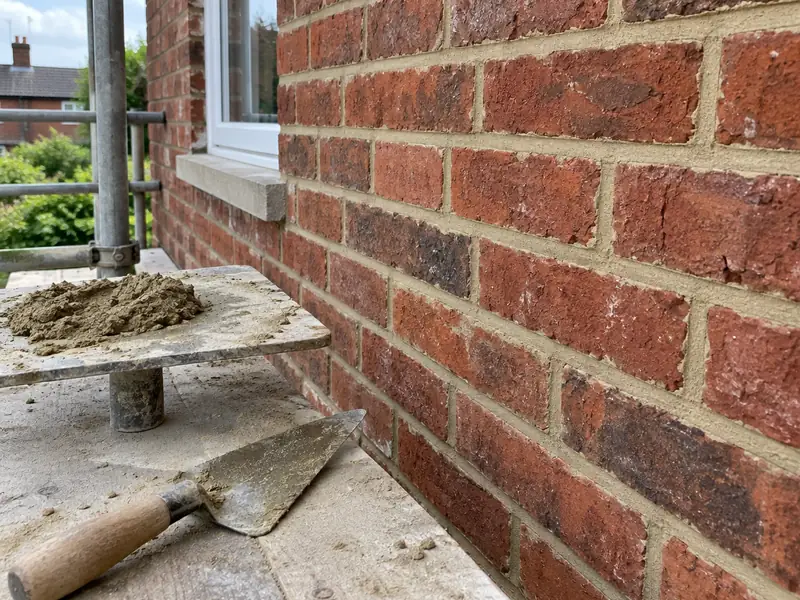
Repointing is raking out old, crumbling mortar from between bricks and replacing it with fresh mortar, sealing the joints against rain and protecting the wall; brickwork repairs replace spalled or cracked bricks and rebuild damaged sections.
Getting brickwork and repointing right in Clydebank starts with understanding the house you already have: its age, how it was built and what has been altered over the years. We survey first, then commit on paper to a price that holds as long as the scope stays the same. Across Scotland, guide prices run at £2,400–£5,800 including VAT, and homes in Erskine, Renfrew and Bearsden are covered too.
- Guide price
- £2,400–£5,800 inc VAT
- Time on site
- 3–10 days for a typical house
- Postcodes
- G60 and G81
- Planning rules
- Scotland
- Local area
- West Dunbartonshire
- Survey
- Free, with a written quote
How much does brickwork and repointing cost in Clydebank?
Here is how the guide price for brickwork and repointing breaks down in Clydebank. We start from national figures and adjust for Scotland, which comes out about 4% below the national guide. The resulting range, VAT included, is £2,400–£5,800, and a survey, at no cost to you, firms it up.
| Type of job | What it usually involves | Guide in Clydebank |
|---|---|---|
| Chimney or small area | Repointing a chimney stack, gable or single wall, including access. | £600–£1,750 |
| Typical semi-detached | Repointing the main elevations of a 3-bed semi, including scaffolding. | £2,400–£5,800 |
| Detached or lime work | Larger houses, or period homes repointed in lime with brick repairs. | £4,800–£9,600 |
Expect these to shape the final quote:
- Wall area to repoint and the height of the house
- Mortar type: cement or lime, and joint style
- Scaffolding and access, including chimneys
- Condition of the existing mortar and how hard it is to remove
Scope of the work
- Survey of mortar, bricks, cracks and the cause of any damp
- Scaffolding or access towers where needed
- Raking out old mortar to the correct depth
- Replacement of spalled or cracked bricks
- Clean-down of brick faces after pointing
- Waste removal and a tidy site
Building in Clydebank
Clydebank was heavily rebuilt after wartime bombing and has tenements and post-war estates, while Dumbarton has sandstone tenements and Victorian housing. Bearsden and Milngavie are known for Victorian villas and interwar bungalows, and Kirkintilloch mixes older terraces with post-war semis and newer developments.
The west of Scotland gets frequent heavy rain and wind, so driving-rain exposure is a key consideration for render and pointing.
That mix of housing shapes how we approach brickwork and repointing in Clydebank: the age and construction of your home affect the materials, the method and, in the end, the price.
Permissions for brickwork and repointing in Clydebank
Clydebank is in Scotland, so the planning and building rules set out below are the ones that apply. We confirm the details with the council before we quote.
In Scotland, repointing and like-for-like masonry repairs are maintenance; listed buildings and conservation areas may need consent if materials or appearance change.
A building warrant is not normally needed for repointing; structural rebuilding of walls or chimneys can need one.
Rules change and every property is different, so we check the planning history and constraints for your address before we quote.
What happens after you get in touch?
Free site survey
We begin by looking at the job in person. During the free survey we discuss options, materials and budget for brickwork and repointing, and photograph or measure anything the quote needs to reflect.
Quote in writing
After the survey we send a quote for brickwork and repointing that fixes the price for the scope we've agreed. If you want to change materials or scope, we revise it in writing before anything is booked.
Getting ready
Preparation matters as much as the build. We agree access, parking and working hours with you, order materials in good time, and confirm any permissions so the job isn't held up once it starts.
Finish and handover
Our trades complete brickwork and repointing while your point of contact keeps you updated. When everything is finished, we clear the site, take away waste and go through the result with you before handover.
Why homeowners choose us
Frequently asked questions
When is the right time of year to repoint?
Repointing should be done in mild, dry weather, usually spring to early autumn. Fresh mortar must be kept from frost while it cures, and lime mortar in particular needs protection from frost, rain and strong sun for several days. We cover fresh work with hessian or sheeting where needed and plan the job around the forecast.
Should my house be repointed with lime or cement?
Houses built before about the 1920s were usually built with soft bricks and lime mortar, and should normally be repointed in lime. Hard cement mortar in these walls traps moisture and can cause the brick faces to crumble. Newer homes built with cement mortar are usually repointed in a similar mix. We check your wall construction before recommending a mortar.
Is repointing messy or noisy?
Raking out old mortar is noisy and dusty, especially when power tools are used on hard mortar. We sheet scaffolding to contain dust, keep windows closed nearby and clear up at the end of each day. The noisy phase moves around the house elevation by elevation. Inside, you may notice some dust on windowsills, so it helps to keep windows shut.
Can you combine brickwork and repointing with other work?
Yes. Because we manage several trades under one contract, we can plan brickwork and repointing alongside other work on your Clydebank home, such as new windows with rendering, or a kitchen refit with an extension. Combining jobs can reduce repeat set-up such as scaffolding, skips and access, and every element is listed and priced in the same written quote.
How much will brickwork and repointing cost in Clydebank?
As a guide, expect to pay £2,400–£5,800 including VAT for brickwork and repointing in Clydebank. That range is adjusted for Scotland, which runs about 4% below the national guide. Where your project lands depends on size, materials, access and the condition of what is already there. We confirm a fixed price in writing after a free survey of your home.
Near Clydebank
Addresses in G60 and G81 are all covered for Clydebank, along with Erskine, Renfrew and Bearsden close by. Give us your postcode when you get in touch and we will confirm the details.