
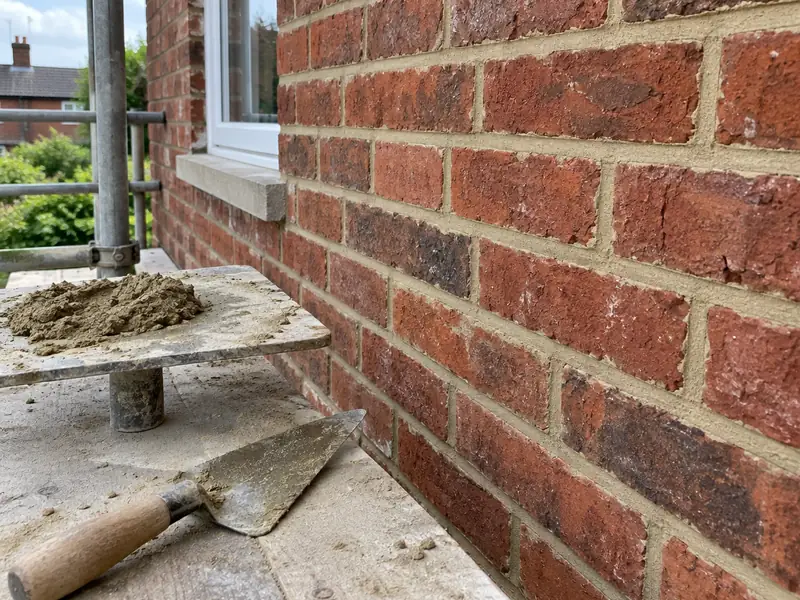
Repointing is raking out old, crumbling mortar from between bricks and replacing it with fresh mortar, sealing the joints against rain and protecting the wall; brickwork repairs replace spalled or cracked bricks and rebuild damaged sections.
Anyone planning brickwork and repointing in Rochester wants three things: a clear price, a realistic timetable and a tidy job. We publish a guide of £2,800–£6,700 including VAT for the South East up front, explain that work normally takes 3–10 days for a typical house, and confirm both in writing after a free survey of your property.
- Guide price
- £2,800–£6,700 inc VAT
- Time on site
- 3–10 days for a typical house
- Postcodes
- ME1, ME4 and ME5
- Planning rules
- England
- Local area
- Medway
- Survey
- Free, with a written quote
Brickwork and repointing prices in Rochester
What will brickwork and repointing cost in Rochester? Our guide range is £2,800–£6,700 including VAT. That figure is adjusted for the South East, about 12% above the national guide, and is intended for planning a budget. A firm written price for your chosen specification follows a free survey at your home.
| Type of job | What it usually involves | Guide in Rochester |
|---|---|---|
| Chimney or small area | Repointing a chimney stack, gable or single wall, including access. | £650–£2,000 |
| Typical semi-detached | Repointing the main elevations of a 3-bed semi, including scaffolding. | £2,800–£6,700 |
| Detached or lime work | Larger houses, or period homes repointed in lime with brick repairs. | £5,600–£11,000 |
The main things that change the figure:
- Mortar type: cement or lime, and joint style
- Number of bricks to replace and how well they match
- Scaffolding and access, including chimneys
- Condition of the existing mortar and how hard it is to remove
What’s included?
- Survey of mortar, bricks, cracks and the cause of any damp
- Scaffolding or access towers where needed
- Mortar mixed to suit the wall, in lime or cement
- Colour and joint style matched as closely as possible
- Replacement of spalled or cracked bricks
- Clean-down of brick faces after pointing
What are homes like around Rochester?
Kent's older buildings include oast houses, weatherboarded cottages, Wealden timber-framed houses and Kentish ragstone walls. Medway towns have long rows of Victorian terraces, Margate and Ramsgate have Regency and Victorian seafronts, and Ashford, Maidstone and Dartford have seen large new estates alongside interwar and post-war housing.
Victorian terraces suit loft rooms and rear extensions; weatherboarded and timber-framed buildings may need cladding repairs and lime work. Newer estate homes often take garage conversions, porches and landscaping.
So when we survey a Rochester property for brickwork and repointing, the first step is working out how it was built and what has been changed since.
Permissions for brickwork and repointing in Rochester
For anyone in Rochester, the relevant framework is England's. The summary below is general, so we always contact the council about your address before putting a price in writing.
Repointing and repairing brickwork with matching materials is maintenance, so it does not need planning permission in England. On a listed building, work that affects its character, including a change of mortar or brick, may need listed building consent.
Building Regulations do not normally apply to repointing or brick repairs, but rebuilding a wall, chimney or structural section can need building control involvement.
Rules change and every property is different, so we check the planning history and constraints for your address before we quote.
What happens after you get in touch?
Survey and measure
Book a visit and we'll come to you. The survey covers measurements, the state of what's there now and any obvious constraints, so the price that follows is based on your actual home, not an average.
Your fixed price
You get the price in writing, itemised so you can see where the money goes. As long as the specification stays the same, that is the price you pay for brickwork and repointing.
Dates and permissions
We handle the paperwork side: checking whether planning permission or building control approval is needed, submitting applications where they are, and scheduling the trades and materials around your dates.
Build and hand over
The work is carried out to the agreed specification, with floors and furniture protected and the site kept tidy. At the end we clean up, walk through the finished job with you and hand over any certificates.
What you can expect from us
Questions about brickwork and repointing in Rochester
How long will brickwork and repointing take?
On a typical home, allow 3–10 days for a typical house. Larger projects, older buildings and extra work found once things are opened up can extend that, while simpler jobs may be shorter. Your quote includes an estimate of time on site, and your point of contact keeps you updated on the programme as the work progresses.
When is the right time of year to repoint?
Repointing should be done in mild, dry weather, usually spring to early autumn. Fresh mortar must be kept from frost while it cures, and lime mortar in particular needs protection from frost, rain and strong sun for several days. We cover fresh work with hessian or sheeting where needed and plan the job around the forecast.
How do I know if my house needs repointing?
A house needs repointing when the mortar between bricks is crumbling, recessed well behind the brick face, cracked or missing. You may be able to scrape it out with a key. Damp patches inside, especially on exposed walls, and plants growing in joints are other signs. Patches of failed mortar can be repointed on their own, but widespread decay usually means a full elevation.
Can you combine brickwork and repointing with other work?
Yes. Because we manage several trades under one contract, we can plan brickwork and repointing alongside other work on your Rochester home, such as new windows with rendering, or a kitchen refit with an extension. Combining jobs can reduce repeat set-up such as scaffolding, skips and access, and every element is listed and priced in the same written quote.
What causes bricks to crumble?
Bricks usually crumble, or spall, when water gets into them and turns to ice, pushing the face off. This is often caused by hard cement mortar or impermeable paint trapping moisture in soft bricks, or by leaking gutters soaking the wall. Damaged bricks can be cut out and replaced with matching ones, or turned round if the back face is sound. We fix the cause at the same time.
Nearby towns
From ME1, ME4 and ME5 to the edges of Rochester and on into Chatham, Strood and Gillingham, we can arrange a site visit and a written quote for your project, planned around dates that work for you.